New routes give climbers a reason to come back. But they shouldn’t have to do all the work.
By Dr Cas Ladha, founder of Griptonite
Picture a climber arriving at your gym after work. Shoes on, shake out, then a scan of the walls to see what’s new.
It’s the new set that gets their attention. They try a few warm ups then get stuck in. Walking out of the door, they chat with a friend and compare beta for the one they both couldn’t quite finish. A perfectly good evening.
Now picture the same arrival a few weeks later. They’ve done most of the climbs they expect to do. The new beta they got didn’t work and the remaining routes feel a bit hard. So, the question they arrive at is predictable: when is the reset?
There may be an entire gym of routes behind them. Yet, as far as they’re concerned, the interesting ones are done with.
That’s a strange problem for a business to have. Their product is still on the wall. The customer still likes climbing. But the invitation for revisit has worn thin.
The usual answer is to put up something new. And of course, as setters we should; good setting is what we’re about. But I think we’ve become too comfortable handing the setting team responsibility for keeping everybody interested. More routes. Another comp. A fresh reason to get excited, followed by another deadline to manufacture the next one.
What happens if, occasionally, we change the game instead of the holds?

We have given grades too much responsibility
Before anyone reaches for a battery to throw, I’m not proposing that we abolish grades. They are useful when choosing what to climb. My point is simply that they are considerably less useful when deciding if you had a good evening.
Take our regular. Suppose they climbed more fluently, figured out a movement they’d been avoiding and helped their friend finish something. Then someone asks how the session went, and still the answer might be: “Not great. Didn’t get that one from last week.”
That’s the exact mindset I want to challenge.
We can spend an astonishing amount of time arguing about whether a climb deserves its number, then accept that same number as a complete assessment of progress. A broad guide to difficulty becomes something closer to a performance review.
Meanwhile, plenty of worthwhile things go uncounted. Learning to trust your feet. Exploring a part of the gym you normally walk past. Completing a meditative session nowhere near your limit. Becoming confident enough to introduce a friend to the sport.
None of those is a consolation prize for failing to climb harder.
My concern isn’t that climbers care about grades. It’s that we offer too few alternatives when the grade stops changing. If the only recognized achievement is the next number, we’ve designed a game that gets increasingly difficult to enjoy without improving.
I’d rather give people more ways to measure a good session.
Why does an old climb stay interesting?
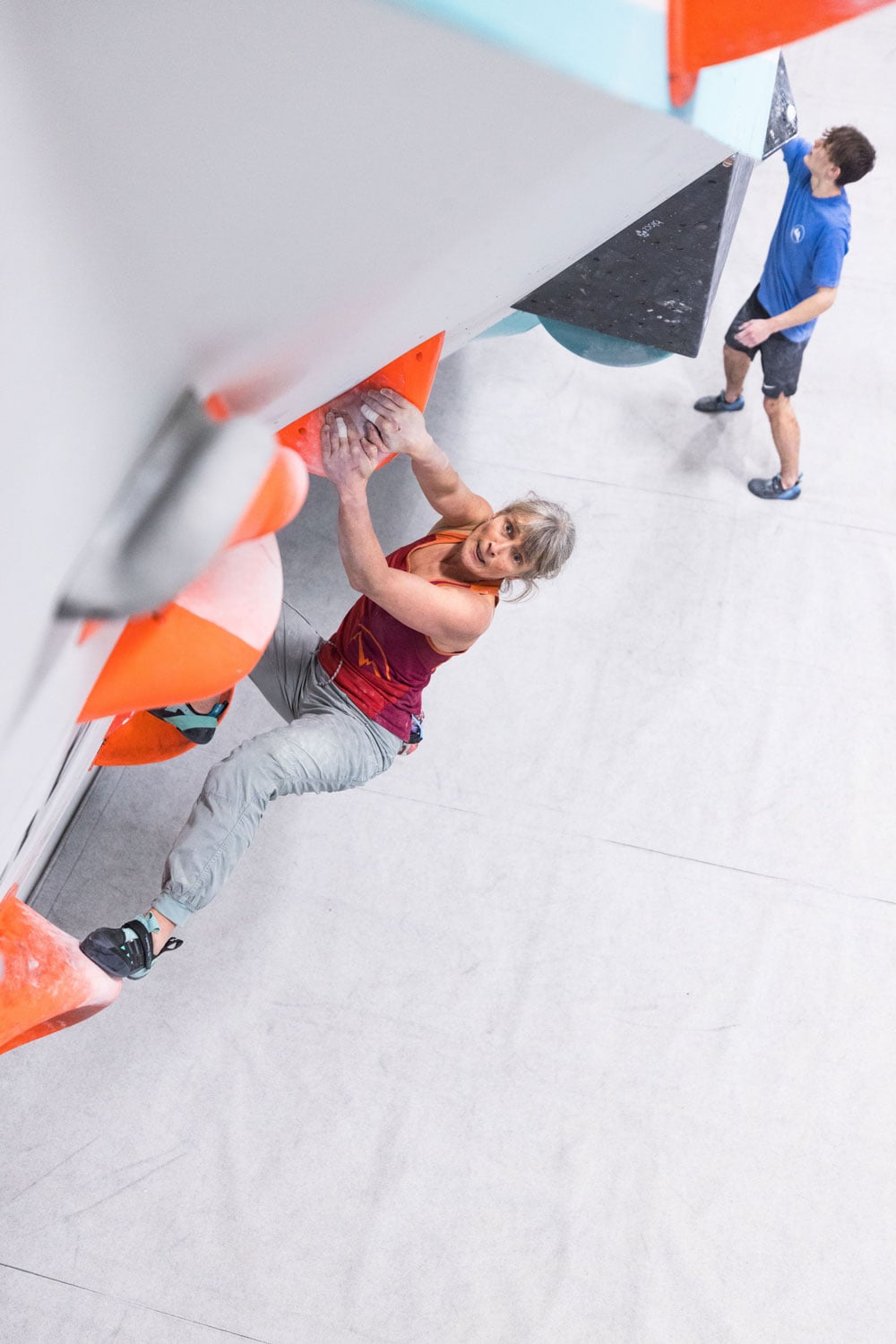
The outdoor comparison is useful here, although not because climbing indoors is somehow less significant. Think about a project you’ve travelled back to. You can picture individual holds. You remember the attempt when your foot slipped, the friend who suggested a different sequence and the forecast you checked before leaving home. The climb has become more than a collection of moves. It has a story, and you’re in the middle of it.
Ive seen people obsess over a Kilter board or spray-wall project. The important distinction isn’t the materials. It’s whether there is still something there you care about resolving and emotionally connect with.
We can describe that pull with a dopamine hit. But research on dopamine and reward learning tells a more interesting story: dopamine signals are involved in chasing expected rewards, not simply celebrating when the send arrives. Research into curiosity has also linked wanting to discover an answer with activity in reward-related brain regions.
Those studies weren’t about climbing, but they offer a useful lens. My hunch is that part of what brings us back is the unfinished business and questions. Would a different foot position work? Can I link those two sections? Have I finally unlocked the timing and pacing?
That makes failure less straightforward than it looks. You can leave without a send and still have discovered something that makes the next visit appealing.
Outdoors, the environment, conditions and consequences add layers to that story. Gyms deliberately control many of those uncertainties, and rightly so. We don’t need worse landings or more danger. However, we have other things to work with: lots of accessible routes, varied movement and people who can meet regularly without organizing an expedition.
So let’s design around those strengths.
Studies of why people keep playing video games offer another useful clue. Feeling capable, having meaningful choices and feeling connected to other people are associated with the motivation to play.
That sounds like a much more interesting brief for a climbing gym than “keep supplying harder things”.
Enough direction to find your own way
Go back to our regular, waiting for the reset. Suppose they get an invitation to explore several parts of the gym with a Setters Pick in each one. Some of the climbs may be way beneath their limit and others maybe slightly above. There is no suggested starting point other than a map with everything marked.
I think orienteering offers a useful parallel. You have a map and checkpoints, but finding your way between them is your responsibility. The decisions of route finding and planning is part of the enjoyment, not an inconvenience to be removed.
Of course, handing someone a map doesn’t make them an expert navigator. Think instead of a childhood scavenger hunt: a few clues, something to look for, and suddenly a familiar place becomes worth exploring again.
Somewhere between those two sits the experience I’d like gyms to offer. Enough guidance to get started, enough freedom to make it your own. We aren’t trying to turn adults’ evenings into children’s parties, but neither should someone need years of climbing experience to know how to enjoy the place.
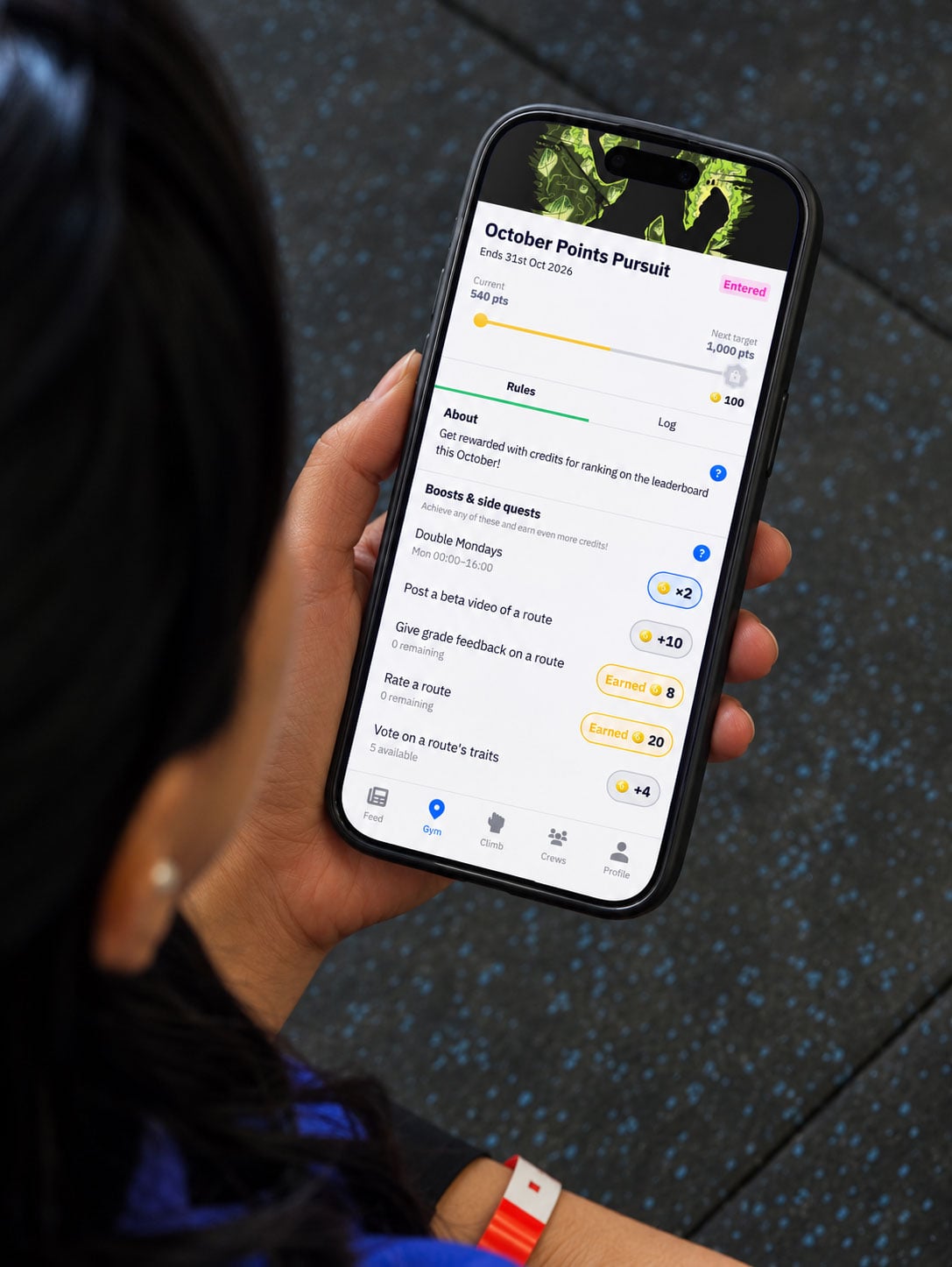
Think of it as a quest: a purpose for the session and a few things to aim for, with room to choose your own way; a challenge framework. A newcomer might follow the suggestions closely. Our regular might use them as a starting point, but spend half the session on a single climb.
Some gyms I see are ahead of the curve on this concept and already have dedicated circuits in place that give a comfortable, safe-feeling introduction to new climbers. In Germany, Urban Apes’ Boulder Mission, offers eight stations introducing the basics, with a free drink alongside the experience. In the UK, TCH’s Magic Moves is a select circuit designed to teach the basics of footwork and balance. Different formats, but the same principal idea; help and reward a newcomer for taking the time to understand the basics.
A discount on visit two is much more appealing when visit one gave you something you’d like to repeat.
Someone showed us the way
Climbing already has a tradition of helping people towards independence. We call it an apprenticeship.
In a trad climbing apprentiship, its common to start by following a more experienced partner: seconding routes, removing their protection and seeing how they’d placed it. With practice, instruction and sound judgement, you’d work towards leading yourself. You weren’t simply collecting completed routes. You were learning how to become a climber, equipment choice, route selection, ethics etc.
That tradition hasn’t disappeared. But an indoor version might look like a friend lending you some chalk and showing you around a bouldering gym. You go together a few times. Gradually, you know what to try, understand terminology, recognize a few faces and feel comfortable turning up even when that friend can’t make it.
Eventually, our regular is the one offering a hand. Perhaps they share a short beta video showing how they solved that slab, for the next person who gets stuck. Perhaps they leave a useful note for the setters about the balance move they enjoyed, rather than simply arguing about the grade.
I see these sorts of activities as side quests to the main climbing: complementary actions that make the gym better for the wider community. A useful contribution to the community that should be recognized as such.
The conversation that started Quests
At Griptonite, we’re currently bringing the concept of quests and side-quests to life with a healthy dollop of referral bonus’ and of-peak boosts. They will be part of a new feature to help gyms create and run the sort of aforementioned experiences around their own climbing and with their communities. The concept was born at the 2025 CWA with a conversation about options for customer loyalty software.
I asked a customer why they paid for a separate platform (Perkville) to run their membership referral programme. Their explanation was straightforward. The member got points. Their friend had the enrolment fee waived. The gym could then build campaigns around it: double referrals this month, Free Friend Fridays, and so on.
It made sense. A benefit for the member, an incentive for the friend and something for the gym to promote.
But the arrangement they described left me with a question: where was the climbing?
We were talking about rewarding the introduction to a gym, but not the experience that followed it. Surely that was where the most interesting opportunity lay.
Suppose the member and their friend had a few useful climbing prompts to explore together. Enough to help the newcomer find their feet, with room to follow whatever catches their interest. At the end, they could sit down with the drinks they’d earned and talk about the climbing they’d just done.
To me, that is a better story than two people satisfying the conditions of a promotion. The reward marks an experience rather than substituting for one.
Strava’s Sponsored Challenges take a related approach, connecting activity goals with rewards from participating brands. What interests me isn’t the promise of another discount. It’s the opportunity for a campaign to become part of someone’s sport instead of an interruption to it.
Of course, putting a prize at the end doesn’t automatically make the journey enjoyable. I wouldn’t want a gym full of people grinding through climbs they dislike for a reward they barely want. My test is simple: would there still be something worth doing if the prize disappeared? If the answer is yes, the drink can be a lovely finishing touch.
So why now? Because only recently have all the practical pieces come together.
We’ve spent years trying to understand why climbers return and why they drift away, sharing our work on churn and retention in 2024 and attendance and engagement in 2025. Alongside that, we’ve built a solid route database connecting what setters put on the walls with what climbers do on them. Those pieces were already there.
What was missing was the handover to the rest of the business. A reward still has to be recognized at the counter, recorded properly and accounted for in the stock and reporting. Otherwise, a good session can end with the climber explaining a promotion to a confused receptionist.
Our recent integration work provides that connection. The route database can now talk to the systems gyms use to manage customers, accounting and purchases. That gives us the foundation to build the reporting, stock keeping and straightforward redemption into the experience, rather than leaving staff to stitch it together afterwards.
For our two friends, it should feel simple: finish their climbing, claim their coffees and sit down together. Behind the scenes, the gym needs a clear record of what has been earned, what has been redeemed and what it has cost the gym to run the scheme. That’s the experience we’re bringing together with Quests.
We’re currently in beta testing phase but the vision is one joined-up experience for the climber, with very little extra administration for the gym. It still takes people who understand their gym to make a Tuesday evening worth coming back for. We want them spending their time on that, not untangling paperwork.
Before you buy anything
Try a small version next week.
Choose a group you’d like to serve better. Ask a setter to select suitable climbs already on the walls. Give people a clear starting point, room to choose and someone to welcome them. A paper card is enough to begin.
Don’t start by inventing a complicated points economy. Start by watching what happens. Did someone try a part of the gym they normally ignore? Did they talk to someone new? Could they tell you what they’d achieved, even though their grade hadn’t changed?
Then ask whether they’d come back for it. Count who actually does.
There will still be a place for new sets, hard projects and fiercely contested competitions. This isn’t an argument for taking any of those away. It’s an argument for not asking these things to carry the whole experience.
Think back to the regular at reception, waiting for something new. Next time, perhaps the answer isn’t a date on the setting calendar. Perhaps it’s an invitation to a session they hadn’t considered, with a goal they hadn’t thought of and someone they haven’t met yet. A few weeks later, they might be the one making that introduction.
What could you help someone achieve next week, using the routes already on your walls?
CBJ press releases are written by the sponsor and do not represent the views of the Climbing Business Journal editorial team.