At this time last year, analysis of the North American climbing gym industry revealed an array of somewhat contrasting trends; commercial gym development was booming, whereas operators of preexisting climbing gyms—that is, gyms that were already in operation when the year began—were citing significant headwinds. This year, as we reflect on the trends of 2025, we can say that the overall trends were more aligned and many key indicators trended downward.
Specifically, the number of new climbing gyms that opened in North America was down for 2025 compared to 2024, and so too was the total amount of climbing wall surface built across those new gyms. And based on the results of CBJ’s first Gyms & Trends Survey, traffic and revenues were largely flat or down at many preexisting gyms around the continent. Adding to these hurdles, and perhaps playing a major role in consumer habits throughout 2025, was an uptick in expenses and general macroeconomic woes referenced in the survey responses—all of which prompted some gyms to scale back their plans for growth and expansion.

In short, it’s safe to say 2025 was a challenging year for the climbing gym industry in North America. “Boom times are over,” summed up one operator at a multi-location climbing gym business. “Profitability is much harder unless you have scale and infrastructure to support institutional growth or mergers and acquisitions.”
That assessment echoed many others expressed via CBJ’s Gyms & Trend Survey—more of which will be featured throughout this report. We also highlight key statistical takeaways from the survey results, which span 240 climbing facilities (85% United States, 8% Canada, 3% Mexico, 4% other countries) and can be viewed in full in the CBJ Climbing Gym Operators Forecast Dashboard. The interactive dashboard displays in-depth trends from 2025 in climbing facility revenues, expenses, traffic, prices, programs, amenities and more, as well as expected trends for 2026.
While feelings of “uncertainty” and “concern” underscore much of this year’s analysis, there were also some bright spots that shone through the data, including a rise in youth program sign-ups that buoyed some gyms last year. Read on for more high-level takeaways from the survey results, and more statistics on new climbing gym development in North America can be found at the end of this report and in the CBJ Climbing Gym Industry Growth Dashboard.
In tandem with this report and the accompanying dashboards, be sure to check out the 2025 CBJ Gym List Awards, which lists all the new climbing gym openings and closures in North America last year, as well as the leading gyms and suppliers.
Key Statistics on North American Climbing Gym Growth in 2025
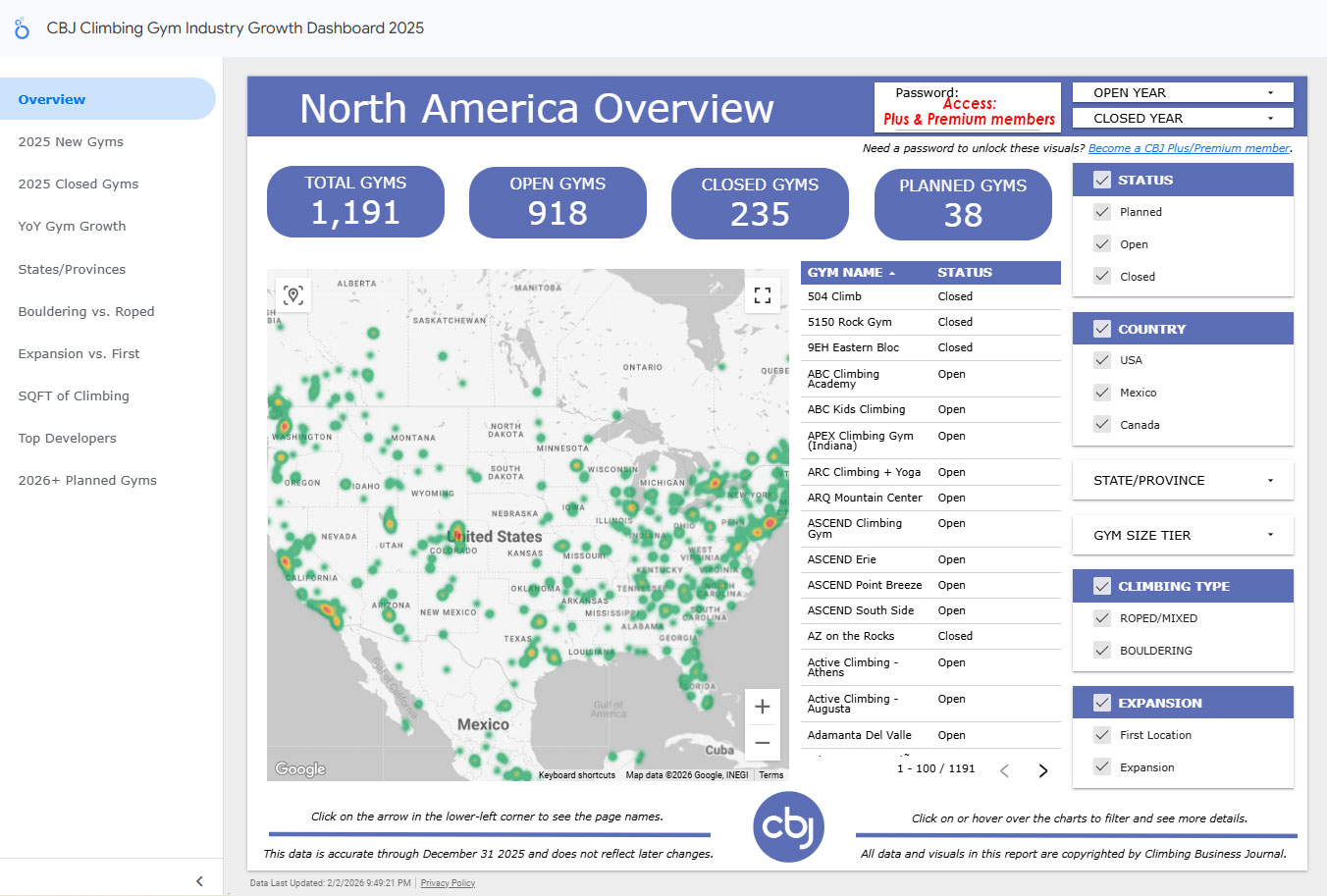
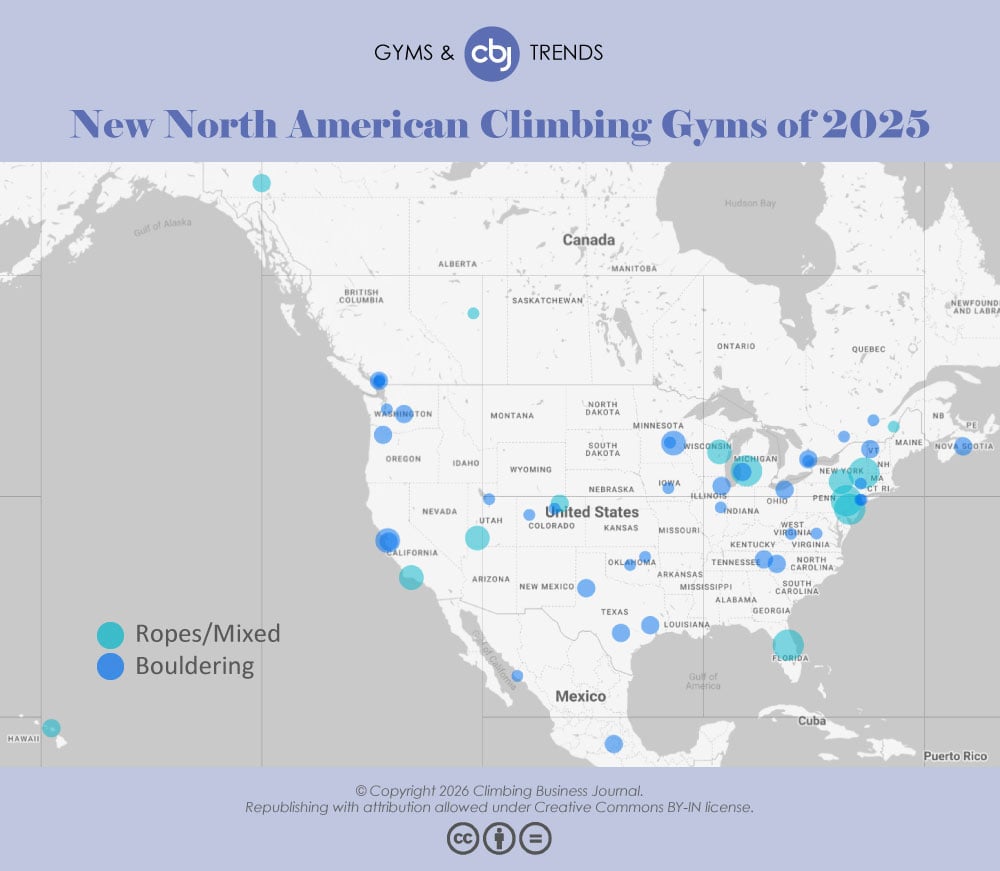
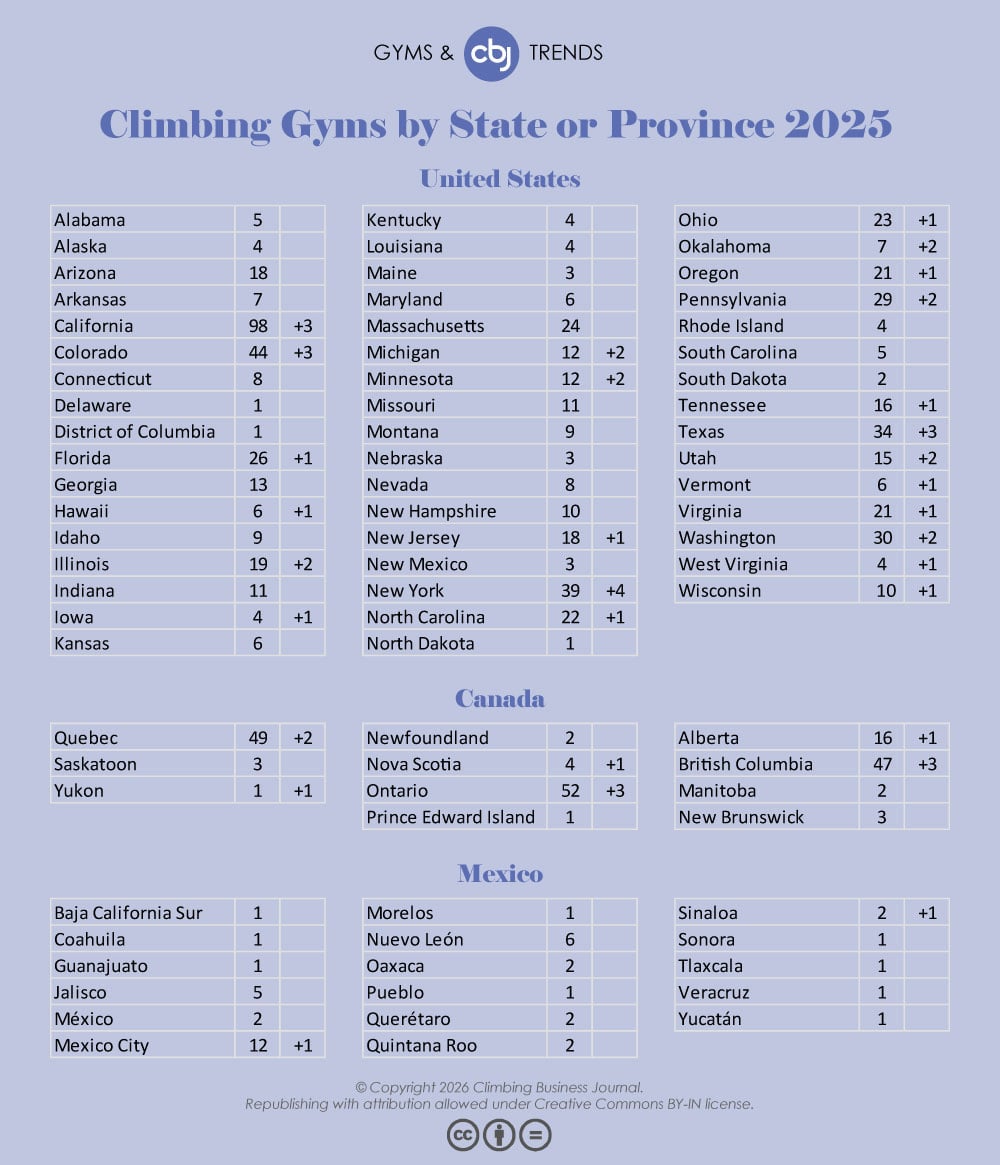
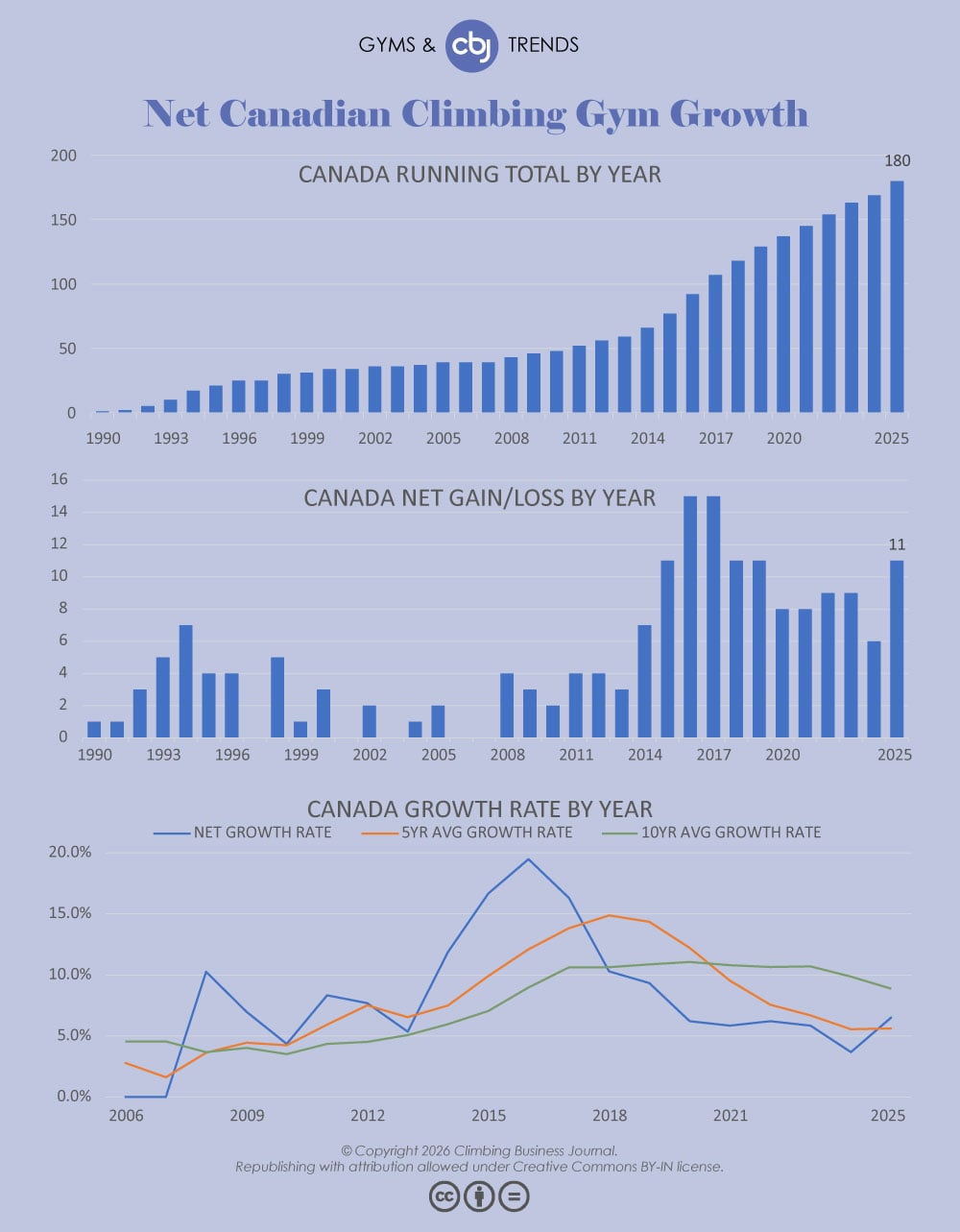
53 newly opened climbing gyms (40 USA, 11 CAN, 2 MEX)
(60 in 2024: 48 USA, 7 CAN, 5 MEX)
12 permanent climbing gym closures (12 USA, 0 CAN, 0 MEX)
(8 in 2024: 7 USA, 1 CAN, 0 MEX)
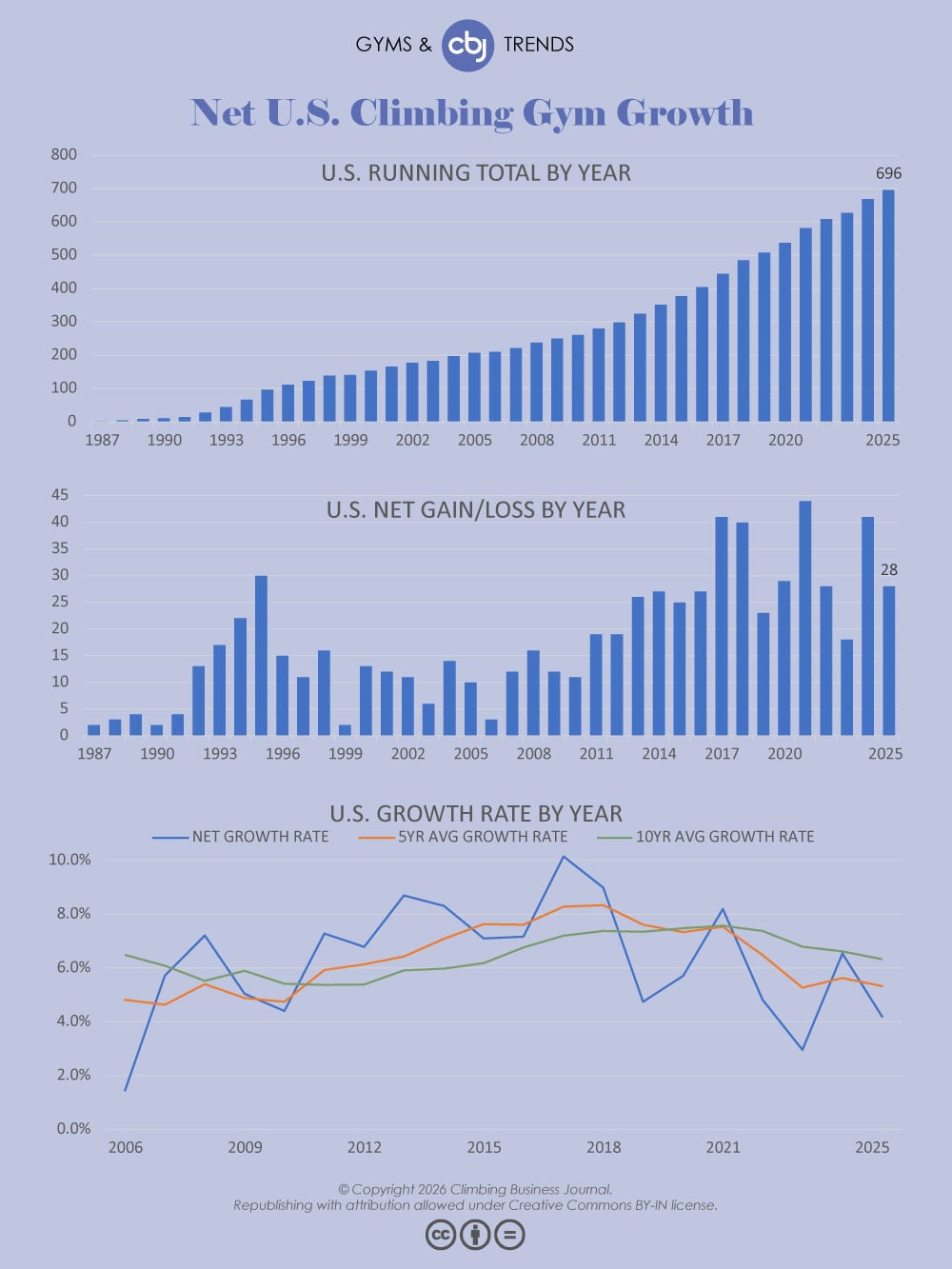
41 net new climbing gyms (28 USA, 11 CAN, 2 MEX)
(52 in 2024; 41 USA, 6 CAN, 5 MEX)
4.7% net growth rate (4.2% USA, 6.5% CAN, 5.0% MEX)
(6.3% in 2024; 6.5% USA, 3.7% CAN, 14.3% MEX)
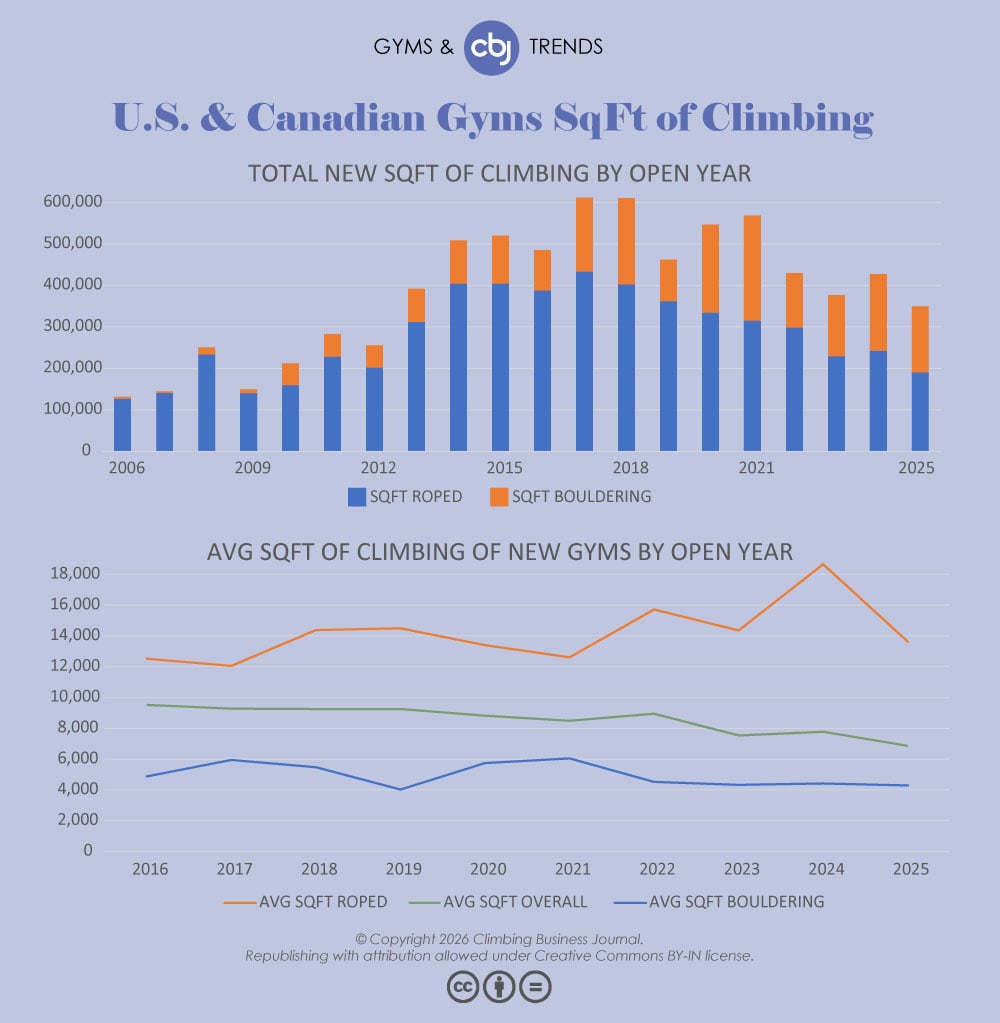
356,314 square feet of climbing across new gyms (307,832 USA, 41,562 CAN, 6,920 MEX)
(460,997 in 2024; 404,311 USA, 23,200 CAN, 33,486 MEX)
Access the Report & Dashboards
Want to access the report and dashboards?
- Took the survey? We sent you an email with information on accessing the results for FREE (please reach out here if not).
Missed last year’s survey? Keep an eye out for this year’s, so you can get free access to the results and help us make the sample size even more meaningful.
- CBJ member at any paid level? Just log in to view the report!
- CBJ member at the Plus or Premium level? You can also access the CBJ Climbing Gym Operators Forecast Dashboard here and CBJ Climbing Gym Industry Growth Dashboard here!
- Not yet a CBJ member? Don’t miss out! Learn more and enroll here. Every paid level is packed with valuable benefits starting at $150/year.
Economic Conditions
Perhaps no trend stood out more from 2025 than the shifting economic context in which climbing gyms and brands do business. Of all the reasons surveyed gym operators gave for the flat or down year they saw last year, references to economic instability topped the list.
Part of that instability was tied to the changing landscape of international trade—and, in particular, the new U.S. tariffs of 2025 and their fluctuations throughout the year. While the impact of the tariffs on supply chains may be more obvious, several gym operators who took the survey observed an effect on consumer demand at their gym, as well.
“It used to be that whether business was good or bad that it was predictable. Now, I feel like I can’t figure it out,” lamented Dana Caracciolo, General Manager at Doylestown Rock Gym in Pennsylvania. “One day you think you know, then more tariffs are announced. Whether it makes an actual impact is irrelevant because people (the ones who come to the gym and pay) are reacting.”

On the supply side of the equation, multiple suppliers of climbing gyms noted an increase in tariffs, and uncertainty around how they would evolve, made it more challenging to serve gyms in the U.S. “It’s been difficult to give our U.S. clients a clear idea of how we’re going to handle things, especially since the tariffs are constantly changing,” Francis Larose, CEO of Montreal-based OnSite, told CBJ in April. And in August, Calgary-based Flashed reported on its Instagram that it would be discontinuing its retail sales in the U.S. due to the tariffs situation.
Inflation, and a continuation of rising costs in practically all aspects of life, also impacted business in 2025 and were often mentioned in the survey comments. At times these factors were closely related to the aforementioned tariffs, while at other times they were continuations of trends seen well before the tariffs were enacted. Altogether, these economic conditions likely contributed to a flattening or reduction of gym traffic at many U.S. gyms in 2025, based on the survey responses, with consumers’ widespread cost cutting resulting in less visitations to recreational and leisure outlets like climbing gyms.
Key Statistics on Economic Conditions
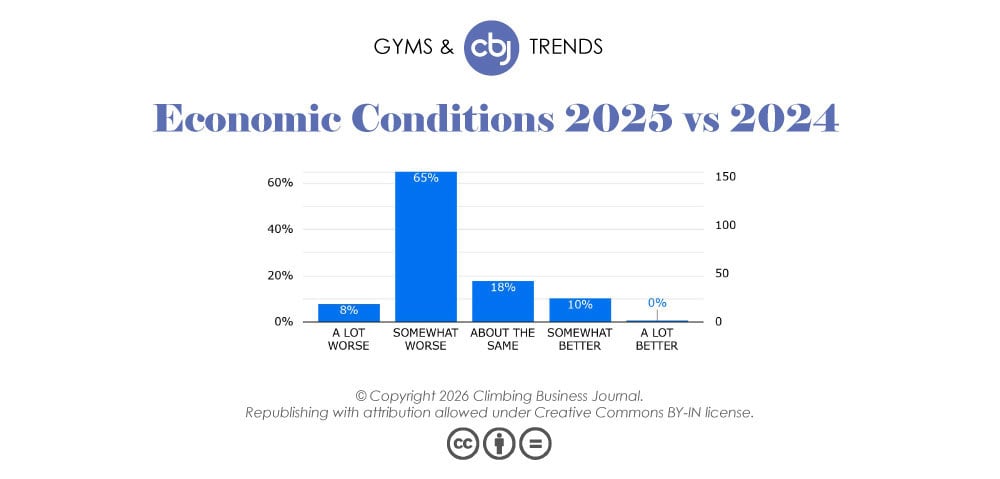
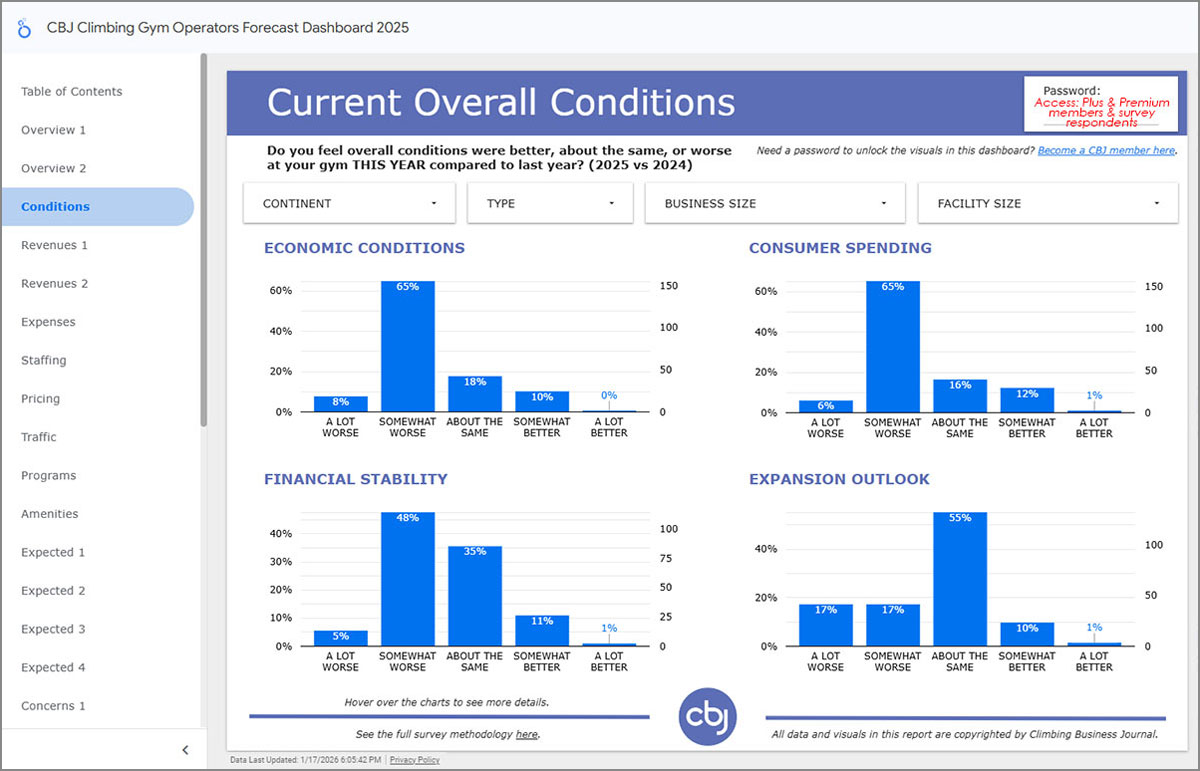
73% of surveyed gym operators said economic conditions at their gym in 2025 were somewhat or a lot worse than in 2024, compared to 10% who said somewhat or a lot better, and 18% about the same.
What Business Leaders Are Saying
“Economic and political conditions are more challenging for most individuals and businesses.” – Darrell Gschwendtner, Owner, Whetstone Climbing, Fort Collins, Colorado
“The underlying heart of the economy is weak. We have found ways to claw through this a bit, but in general the surge we experienced in 2021 and 2022 have not been seen in a few years now.” – John Pritchard, Owner & CEO, Stone Co. Climbing, College Station, Texas
“I think that there has been a lot of economic uncertainty this year with tariffs and other governmental policies that have played a role in reducing visitor traffic through our gym.” – Javan Bowsher, LLC Managing Member, Granite Arch Climbing Center, Rancho Cordova, California
“The general sense I get from gym owners in the western hemisphere is fear. Not so much in Asia; it’s a brand-new day over there. But in the U.S. it feels like there is a lot of fear of simply going out of business, and in the U.K. the fear is more ‘Will I be able to sell my business to a big chain before the train leaves the station?’” – Miura Hawkins, CEO & Founder, BETA / Chalk Technologies
Consumer Spending Habits
As mentioned above, discretionary consumer spending at North American climbing gyms largely decreased in 2025, based on the responses of surveyed operators. Economic volatility was typically cited as the main culprit, but, more specifically, many gym operators sensed that real wages were not keeping up with rising inflation, and people were simply spending less money on climbing at the gym as a result. As Sharon Knorr, Director of Operations at MetroRock, succinctly put it: “The cost of everything is up and people have less expendable income.”
Aggregate data from Rock Gym Pro—the most widely used climbing gym software in North America—largely confirms that climbing gym visitation, on the whole, was down in 2025. When grouping gyms using Rock Gym Pro into four roughly even quartiles based on their average check-ins—small, medium, large and extra-large, with over 200 gyms per segment—average annual check-ins were lower in 2025 than in 2024 for all four groups, in the aggregate. (More statistics and analysis from Rock Gym Pro on average check-ins, memberships and payment volumes can be found below.)
Tightened budgets did not just equate to less patronage at climbing gyms in 2025. There were ripple effects, such as a drop in groups and party sales and fewer purchases of new climbing gear and other retail products at some gyms, as consumers likely concentrated their spending on food, utilities, and other necessities. Most recently, this trend was evidenced on a macro level (beyond just the climbing industry) in 2025 holiday spending habits, with one news outlet noting that 41 percent of Americans planned to “spend less” on holiday items than in years past.
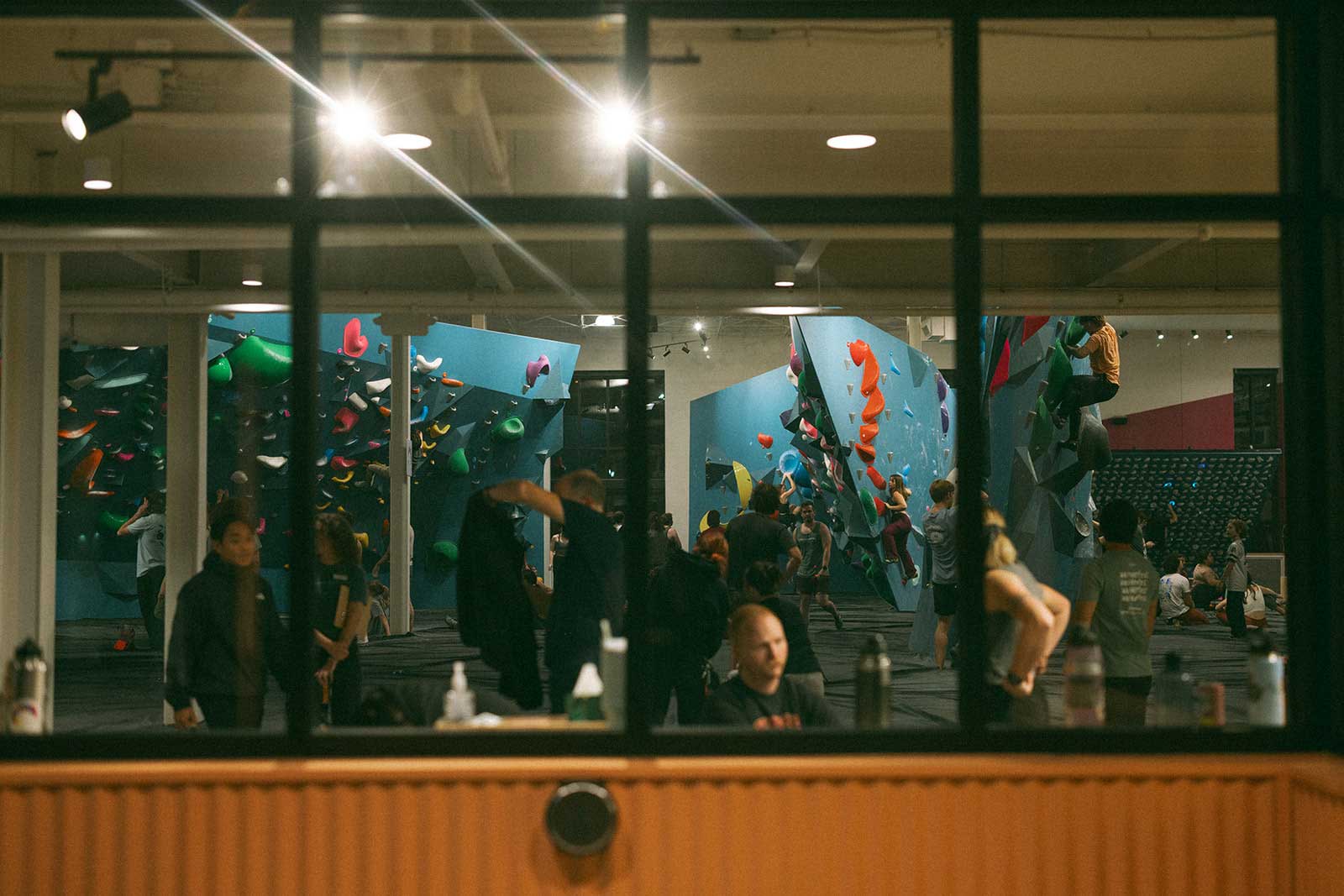
Nathan Craft, Facility Manager at Inner Peaks in Matthews, North Carolina, highlighted an important point, though, which is that the diehard climbers—arguably the most stable customer base—still climbed regularly at the Matthews gym in 2025, and that trend played out at many other facilities represented in the survey, too. In other words, much of the bend in consumer spending likely came from shifting gym use by a more casual climber-clientele (non-members, day-pass users, birthday party attendees, etc.), rather than committed members.
Regardless of that specification, the majority of surveyed gym operators did observe a downtick in patrons’ spending at their gym in 2025, on the whole. “Climbers will climb, but growing our customer and climber base, and spreading the sport of climbing, is a challenge we face as an industry, made more challenging by outside economic factors like high interest rates and an increased cost of living significantly affecting even the basic necessities like food and housing, which, in turn, limits individual’s disposable income” said Lucas Kovalcik, founder of The Gravity Vault.
Key Statistics on Consumer Spending Habits
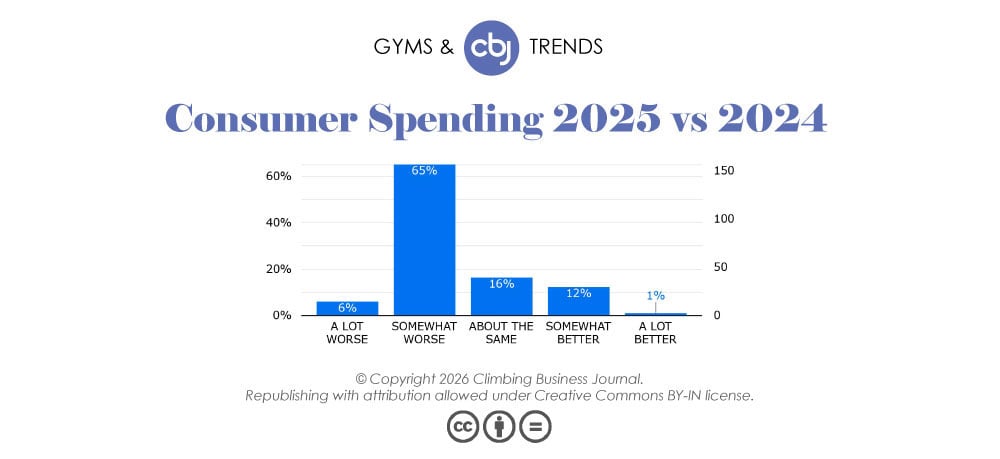
71% of surveyed gym operators said consumer spending at their gym in 2025 was somewhat or a lot worse than in 2024, compared to 13% who said somewhat or a lot better, and 16% about the same.
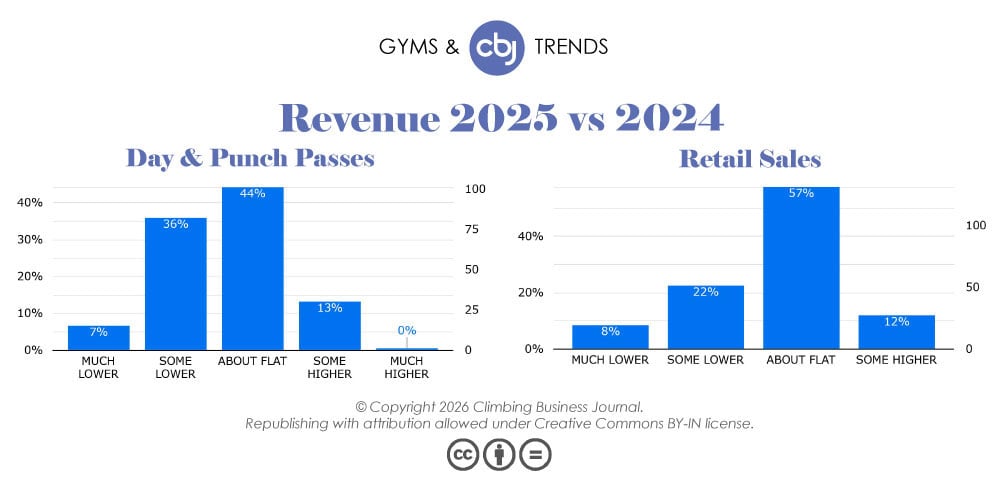
43% said their gym’s day and punch pass revenues were some or much lower in 2025 than in 2024, compared to 13% who said some or much higher, and 44% about flat.
30% said their gym’s revenues from retail sales were some or much lower in 2025 than in 2024, compared to 12% who said some or much higher, and 57% about flat.
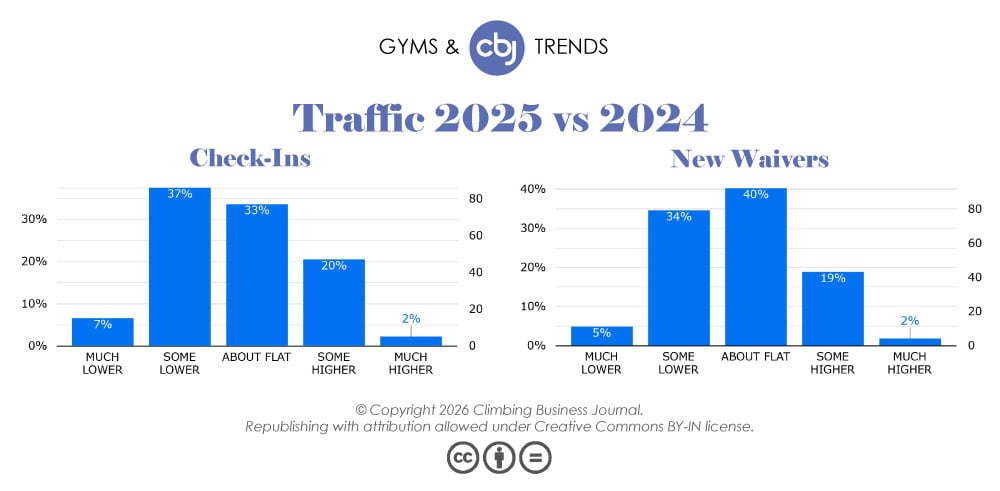
44% said their gym’s number of total check-ins was some or much lower in 2025 than in 2024, compared to 22% who said some or much higher, and 33% about flat.
39% said their gym’s number of new waivers signed was some or much lower in 2025 than in 2024, compared to 21% who said some or much higher, and 40% about flat.
Aggregate Statistics From Rock Gym Pro (200+ Gyms Per Segment)
“Looking at the past three years, the data shows the climbing industry settling into a more normal rhythm after the post-pandemic rebound in 2022 and 2023. Membership counts have continued to grow, but that growth has slowed and largely flattened heading into 2025, especially for larger gyms. Over the same period, average monthly check-ins have trended down across all gym sizes, reflecting changes in how members and visitors are using facilities compared to the rebound years.
What stands out for gym owners is that payment volume has remained steady despite fewer total visits. This suggests many gyms are leaning more heavily on recurring membership revenue and pricing strategies, rather than relying on day-to-day foot traffic alone, to maintain financial stability. Taken together, the data points to an industry that isn’t shrinking, but maturing. As growth normalizes, the opportunity shifts from rapid expansion to sustaining member value, retention, and engagement in a lower-frequency usage environment.” – Katie Hobson, Senior Account Manager at RGP
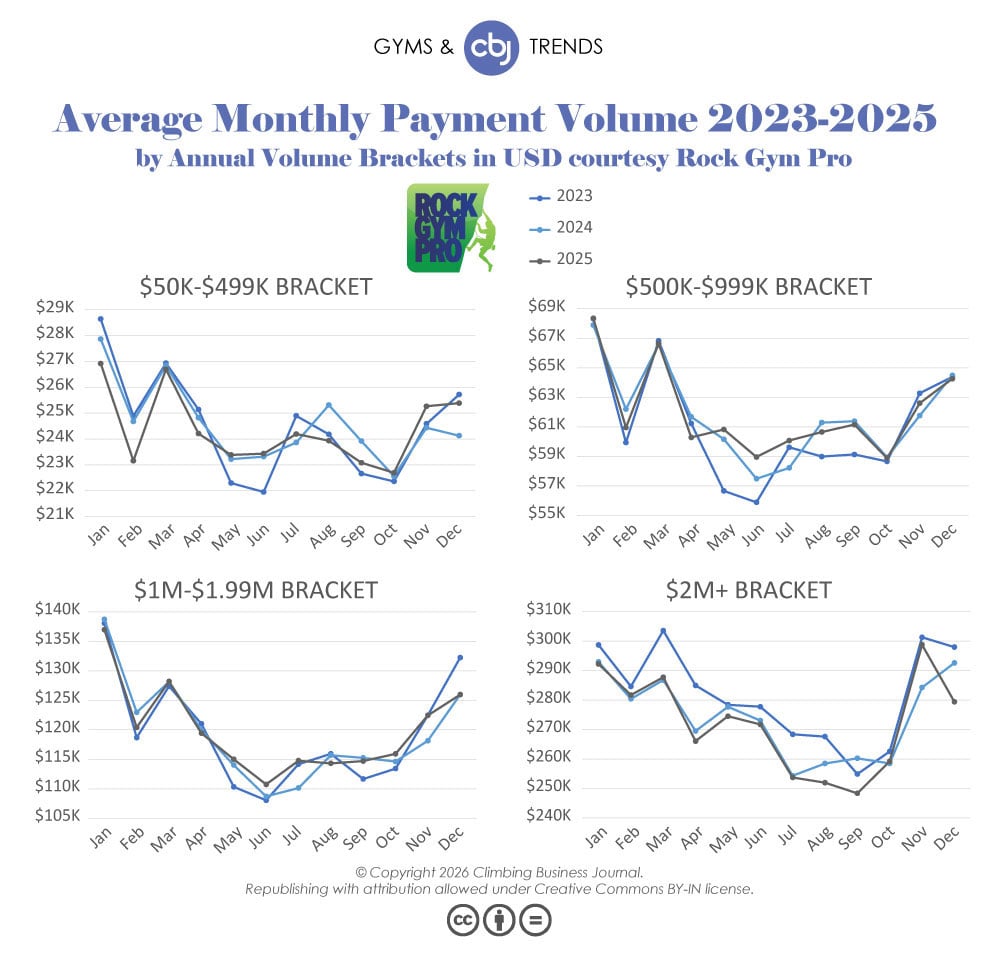
When grouping gyms using RGP into four brackets based on their average payment volume:
On average, facilities with a $50K to $499K (USD) annual payment volume had a 0.9% lower payment volume in 2025 than in 2024.
On average, facilities with a $500K to $999K (USD) annual payment volume had a 0.2% higher payment volume in 2025 than in 2024.
On average, facilities with a $1M to $1.99M (USD) annual payment volume had a 0.5% higher payment volume in 2025 than in 2024.
On average, facilities with a $2M+ (USD) annual payment volume had a 0.7% lower payment volume in 2025 than in 2024.
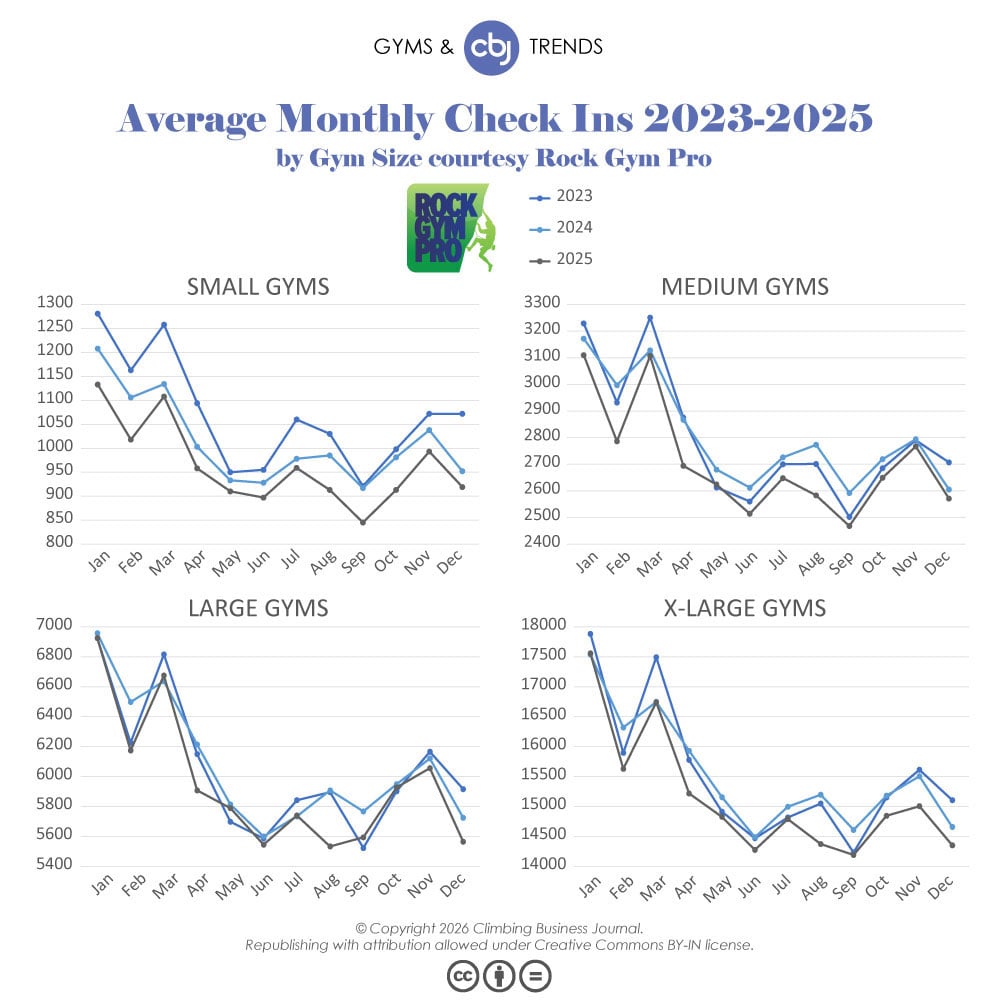
When grouping gyms using RGP into four roughly even quartiles based on their average check-ins:
On average, smaller facilities had 4.9% fewer check-ins in 2025 than in 2024.
On average, medium facilities had 3.4% fewer check-ins in 2025 than in 2024.
On average, large facilities had 2.1% fewer check-ins in 2025 than in 2024.
On average, extra-large facilities had 2.4% fewer check-ins in 2025 than in 2024.
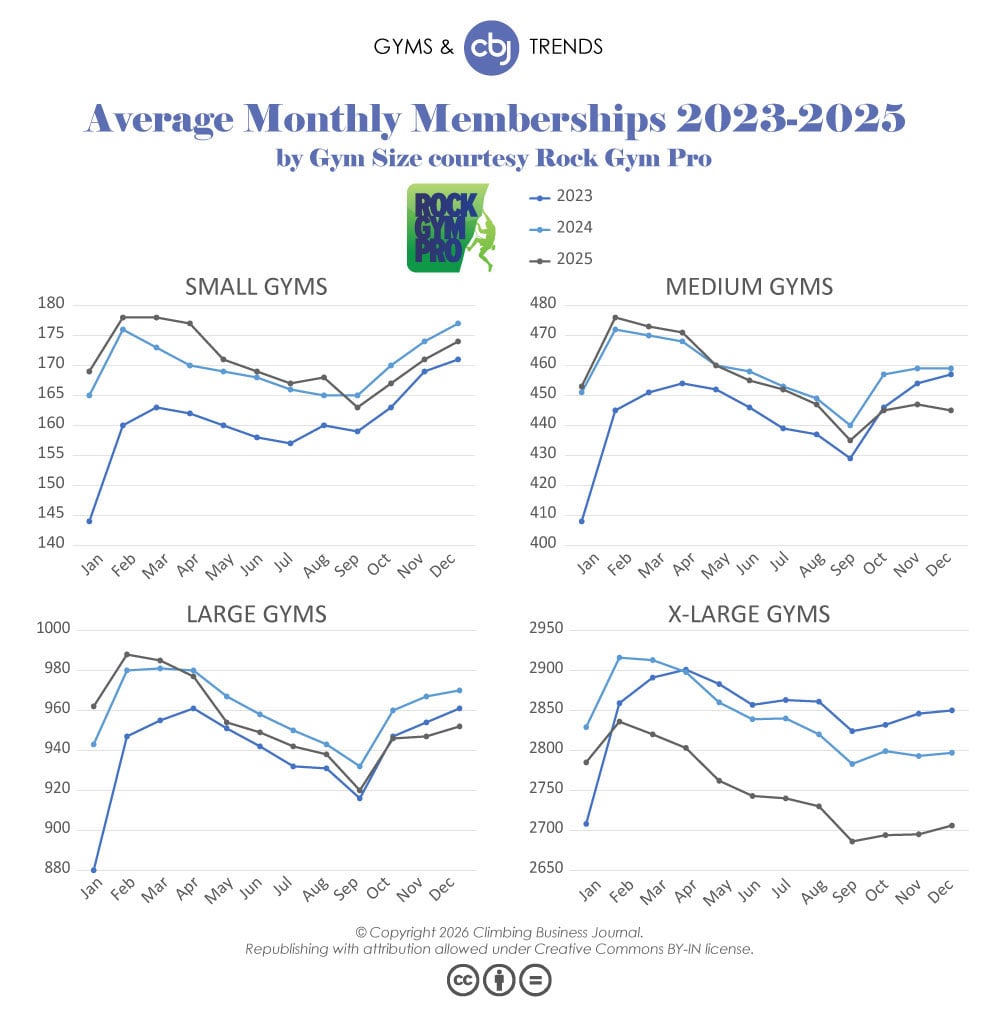
When grouping gyms using RGP into four roughly even quartiles based on their average memberships:
On average, smaller facilities had 0.7% more memberships in 2025 than in 2024.
On average, medium facilities had 0.7% fewer memberships in 2025 than in 2024.
On average, large facilities had 0.6% fewer memberships in 2025 than in 2024.
On average, extra-large facilities had 3.2% fewer memberships in 2025 than in 2024.
[Editor’s Note: RGP’s quartiles based on average check-ins and average memberships do not correspond to the gym size tiers based on square feet of climbing in CBJ’s Climbing Gym Industry Growth Dashboard.]
What Business Leaders Are Saying
“People are experiencing price pressures from every angle.” – Brian Doyle, Owner, Climb Tacoma, Tacoma, Washington
“Dip in day use and retail sales.” – Raymond Stacey, General Manager, The Edge Melbourne, Melbourne, Florida
“Lower revenues, and it seems to be linked to consumer spending trends. Less spending, more uncertainty about jobs, and this spills over into not trying new things.” – Jen Zelen, Owner, Rock Haven Climbing, Gresham, Oregon
“We are seeing an increase in regular users coming in more often, but have seen a decrease in new climbers coming into our facilities, and even less new climbers coming back after their first time.” – Erin Heiser, Assistant Director, Wellness and Recreation Climbing Center, Raleigh, North Carolina
“We see trends in slowing of spending when the economy is uncertain or regressing. Aside from obvious declines in business, we see less tips at parties, parties don’t leave food, low-use members cancel their membership, more folks citing ‘financial reasons’ for membership cancellation (it’s pretty bold to say ‘I can’t afford this anymore’), lots of shoes with holes in the toe trying to eke out one more session, our clearance section is picked clean—all these little things tell us something is not right.” – Dana Caracciolo, General Manager, Doylestown Rock Gym, Doylestown, Pennsylvania
Financial Stability & Facility Expenses
Climbing gym users certainly weren’t the only ones facing rising costs. The vast majority of surveyed gym operators reported that business expenses were up for them, too, which exacerbated the financial strain from lower attendance and revenues.
One operator of multiple climbing gyms told CBJ that construction costs were “much higher” in 2025 and indicated the rising costs of running a gym, combined with “members not being able to afford membership due to high inflation,” made for an unfavorable economic coupling.
Some of the rising operational costs noted by survey respondents included an increase in interest rates for business loans, insurance costs, HVAC expenses and other utilities, recurring maintenance, and the prices of new climbing holds, to name a handful of examples.

But perhaps the biggest impact of this trend was felt at the payroll level, which often comprises the bulk of a climbing gym’s variable expenses. Of the surveyed operators, 85% said their gym’s total payroll expenses were higher in 2025 than in 2024. As the cost of living increases, several operators noted they have needed to increase compensation to keep wages competitive or stay aligned with rising minimum wages, which has shrunk margins further.
At the risk of editorializing, it was simply more expensive to operate a climbing gym in 2025 than it was in previous years. And while a slight increase in operational costs each year is to be expected, some climbing gym operators called the rate of increase in 2025 “alarming.”
Key Financial Stability & Expenditure Statistics
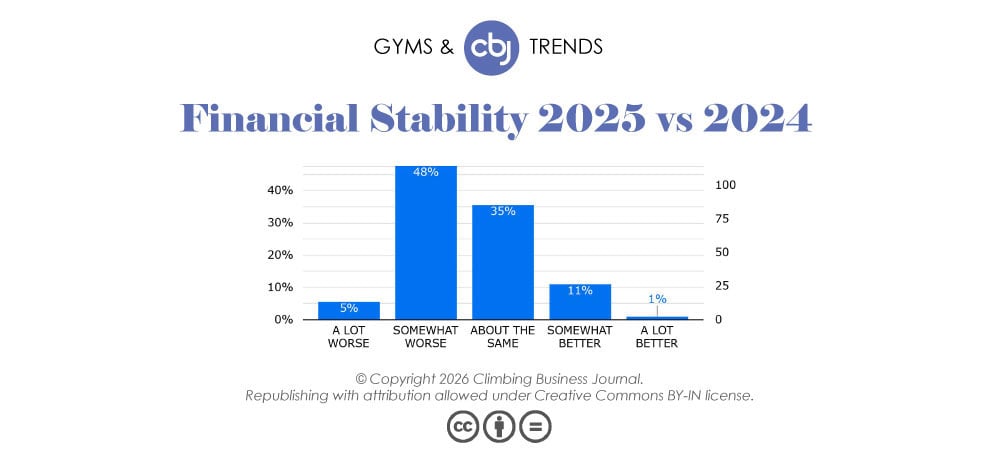
53% of surveyed gym operators said their gym’s financial stability in 2025 was somewhat or a lot worse than in 2024, compared to 12% who said somewhat or a lot better, and 35% about the same.
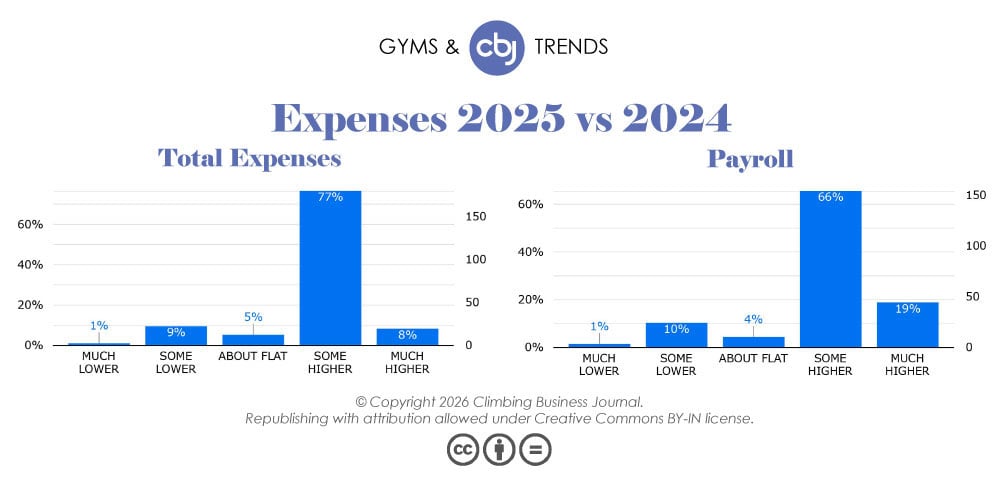
85% said their gym’s total expenses were some or much higher in 2025 than in 2024, compared to 10% who said some or much lower, and 5% about flat.
85% said their gym’s total payroll spend was some or much higher in 2025 than in 2024, compared to 11% who said some or much lower, and 4% about flat.
What Business Leaders Are Saying
“Our climbing gym in what is considered a small to medium market area is struggling. Interest rates on our loans are high—increased by 4+ points from 2021 to today. Additionally, interest rates have reduced discretionary income for our patrons and choices are being made…Operational costs have not gone down. Heating, air conditioning, cleaning, [and] other utilities are more expensive.” – Anonymous gym operator in the USA
“We also saw costs increase across all categories but most significantly in insurance costs, utility costs and labor costs inclusive of benefit costs, taxes, worker’s comp insurance, etc.” – Lucas Kovalcik, Founder, The Gravity Vault, USA
“I believe that inflation and the world is becoming more expensive, and we will continue to struggle to purchase necessary supplies, and pay for necessary services at the same prices we have been seeing. I also believe that minimum wages will continue to increase, which will have direct impacts on our staff budget and keeping our staff wages competitive with the industry.” – Erin Heiser, Assistant Director, Wellness and Recreation Climbing Center, Raleigh, North Carolina
Prices, Programs & Amenities
Another outcome of these economic pressures was that many climbing gyms had to raise their membership prices in 2025 to coincide with their increased operational costs. In the survey comments, some operators lamented a drop in the overall affordability of climbing, and others expressed concerns about losing patrons to lower-priced fitness facilities.
But although much of the downward trends for 2025 paint a darker portrait than in years past, there were still some bright spots throughout the year—anecdotes of climbing gym communities persevering and finding success, amid the economic challenges.
One tactical approach that some climbing gyms—particularly in the Midwest—took was to focus on expanding their youth programs. In fact, 84% of survey respondents in the Midwest said that their gym’s youth program sign-ups were higher in 2025 than in 2024, which could be an avenue that more gyms could utilize to battle the ongoing economic struggle. As one researcher put it in an article last year, “Even amid economic uncertainty, parents see youth sports as a non-negotiable investment in their child’s future.”
“We made [youth programming] more of a focus,” reflected Christopher Deal, owner of Fargo Climbing in North Dakota, explaining that youth programming became a larger priority in part because his gym “needed more sales and more reliable sales we could grow.”
Elsewhere, some climbing gym operators found success in offering new amenities in 2025, providing more value to patrons by adding features like new training boards in their facility or expanding their fitness options. And on the development side, multiple training-board-only gym projects reached or approached the finish line in 2025, including a HIIT-focused gym in Seattle.
Key Pricing & Programming Statistics
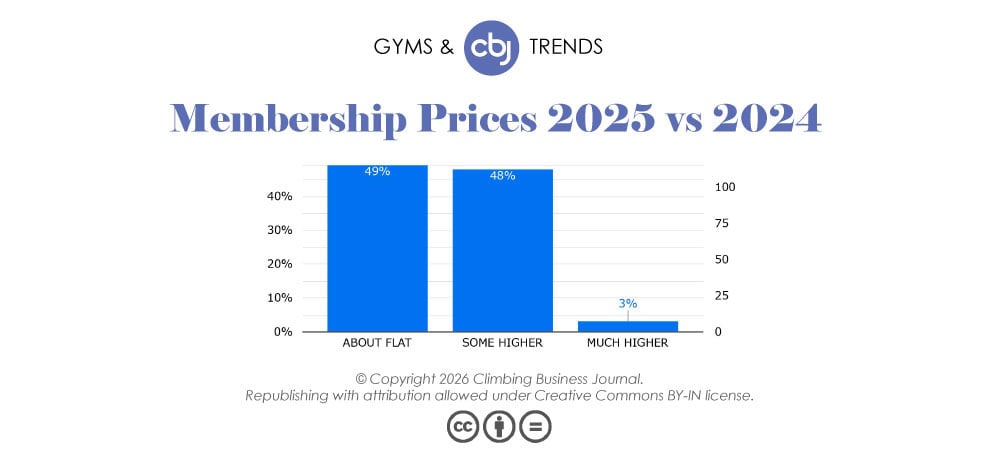
51% of surveyed gym operators said their gym’s membership prices were some or much higher in 2025 than in 2024, compared to 0% who said some or much lower, and 49% about flat.
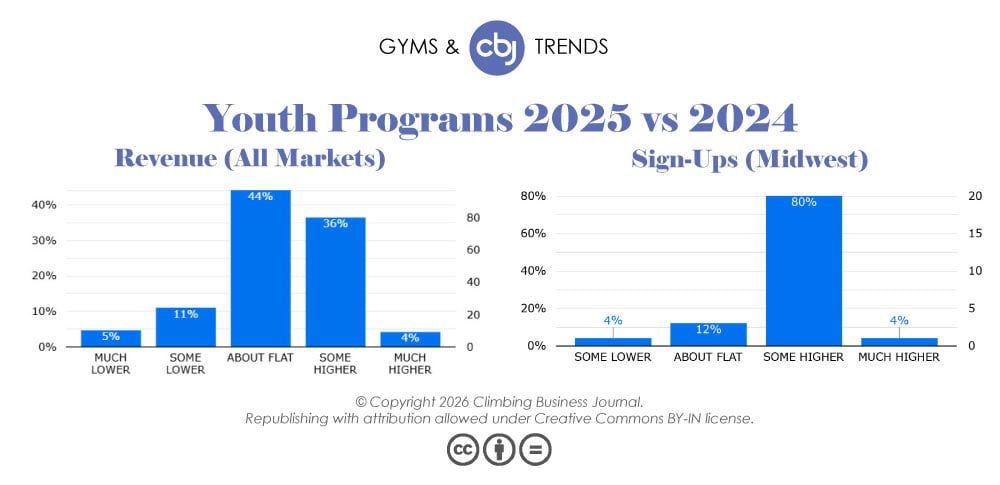
40% said their gym’s youth climbing program revenues were some or much higher in 2025 than in 2024, compared to 16% who said some or much lower, and 44% about flat.
In the Midwest, 84% said their gym’s youth program sign-ups were some or much higher in 2025 than in 2024, compared to 4% who said some or much lower, and 12% about flat.
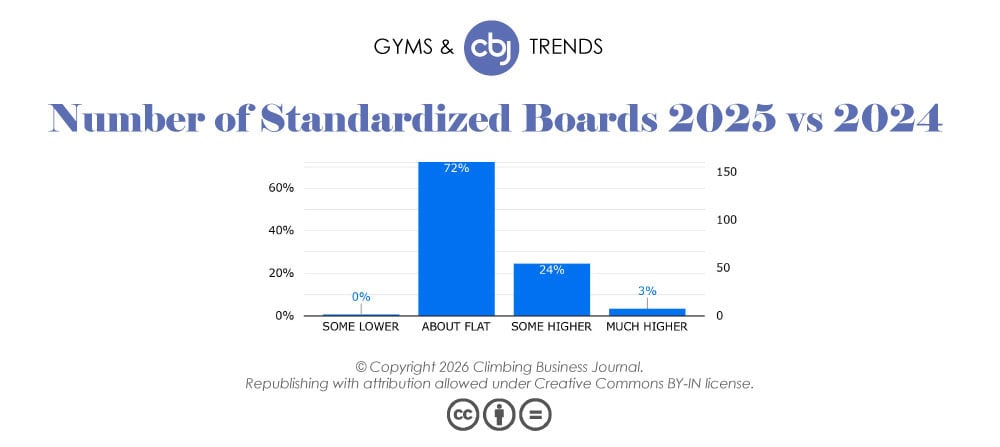
27% said the number of standardized training boards in their gym was some or much higher in 2025 than in 2024, compared to 0% who said some or much lower, and 72% about flat.
What Business Leaders Are Saying
“With our 2025 goal of putting more emphasis on memberships and the value that comes with our membership, we saw a decrease in day pass sales with a record number of membership sales.” – Kegan Minock, Director of Operations & Head Routesetter, Gripstone Climbing & Fitness, Colorado Springs, Colorado
“I think the biggest trend we saw was concern about the economic stability. It continues, and seems like people are hesitant to spend money. That being said, we’ve had more kids sign up for after school and competitive programs.” – Chris Brazeau, Owner, Confluence Climbing, Golden, British Columbia
“Memberships and kids programs were way up – accounting for all of our growth.” – Laura Bellisle, Owner, Black Hill Basecamp, Rapid City, South Dakota
“Consumers seem to continue to invest in their children’s programming, but don’t seem to put the same amount into their own and our adult programming sales have dropped.” – Anonymous gym operator in the USA
Gym-to-Gym Differences
In many ways, the rise of youth programming in 2025 at various Midwestern U.S. gyms was not just evidence of adaptability to the economic hardships; it was also a reminder that trends were not felt evenly throughout the climbing gym industry.
As another example, the survey results indicated that revenues at “smaller gyms” (i.e., those facilities with less than 5,000 square feet of climbing) may have been impacted more by the economic tenor of 2025 than larger gyms. “I think for the industry at large it’s been proven [that] larger corporations in the climbing industry continue to grow while the smaller ones are starting to slowly fade away or getting absorbed,” reflected Nathan Craft at Inner Peaks.
Andrew Hou, owner of Uplift Climbing in Shoreline, Washington, told CBJ that he’s seen it become difficult to stay in business “as a small independent operator.” Hou explained, “Less people climbing, less memberships. I believe this is due to economic conditions and people feeling squeezed with less discretionary spending ability. So, less people are willing to recreate in general. Combined with increased costs (wages, tariffs, insurance)…”
And revenues at climbing gyms in lower-income markets (i.e., gyms in U.S. core-based statistical areas with a per capita income below $43,000) were also likely hit harder by the economic trends of the year, based on the survey results.
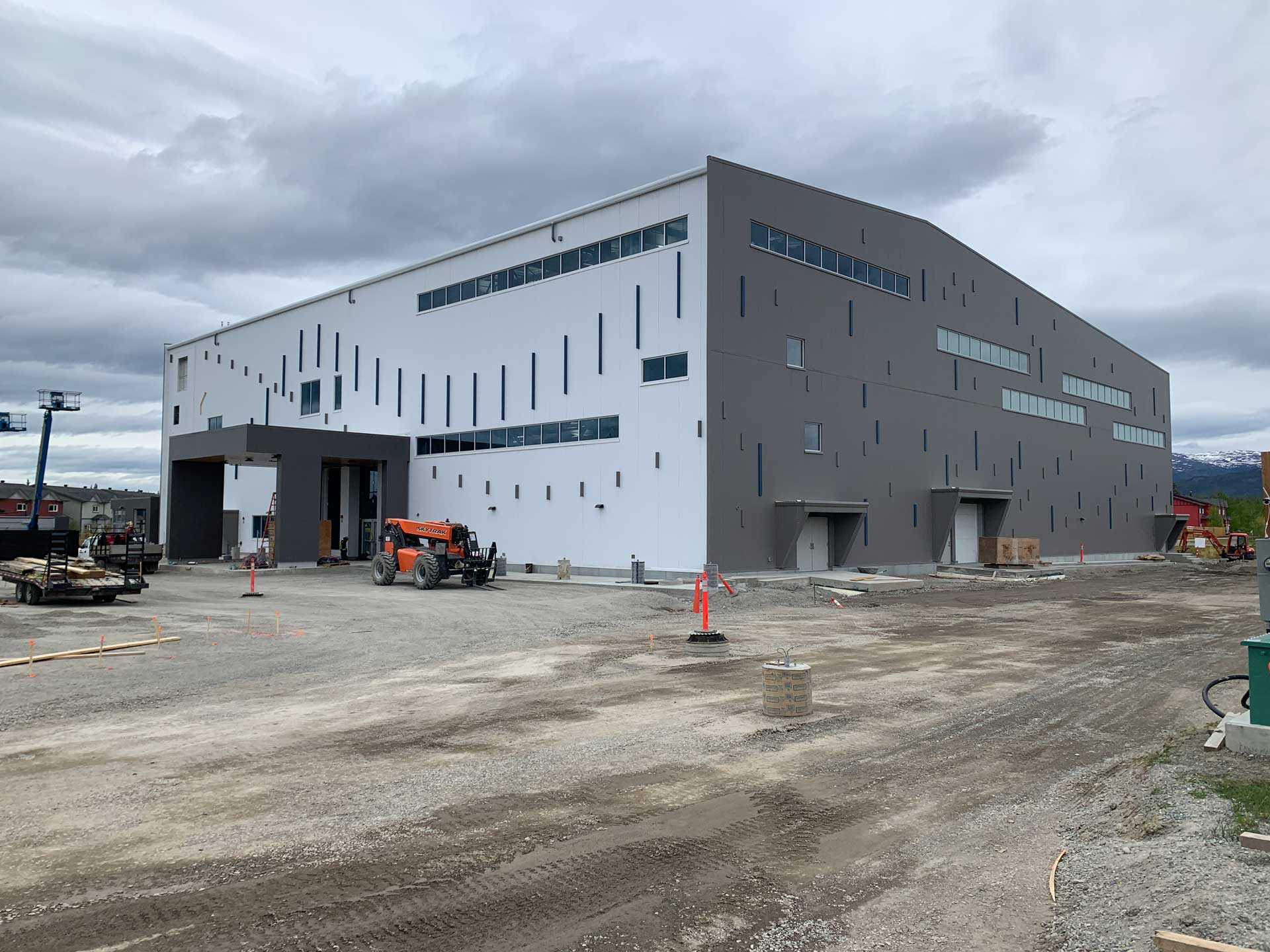
At the national level, while new climbing gym development was down last year in the U.S. and Mexico, development in Canada actually saw an uptick from 2024. In addition to multiple new gyms popping up in British Columbia, Ontario and Quebec, 2025 saw the opening of Climb Yukon Collective—the first full-sized climbing gym in the Yukon territory.
According to Meagan Wilson, Pre-Opening General Manager of Climb Yukon, the project was a “real community and team effort” that came together with the help of the “Government of Canada’s Investing in Canada Infrastructure Program, Yukon Government’s Community Development Fund, City of Whitehorse, Yukon Lotteries, and other organizations and businesses who have supported with time, energy, expertise and donations.”
Key Statistics on Gym-to-Gym Differences
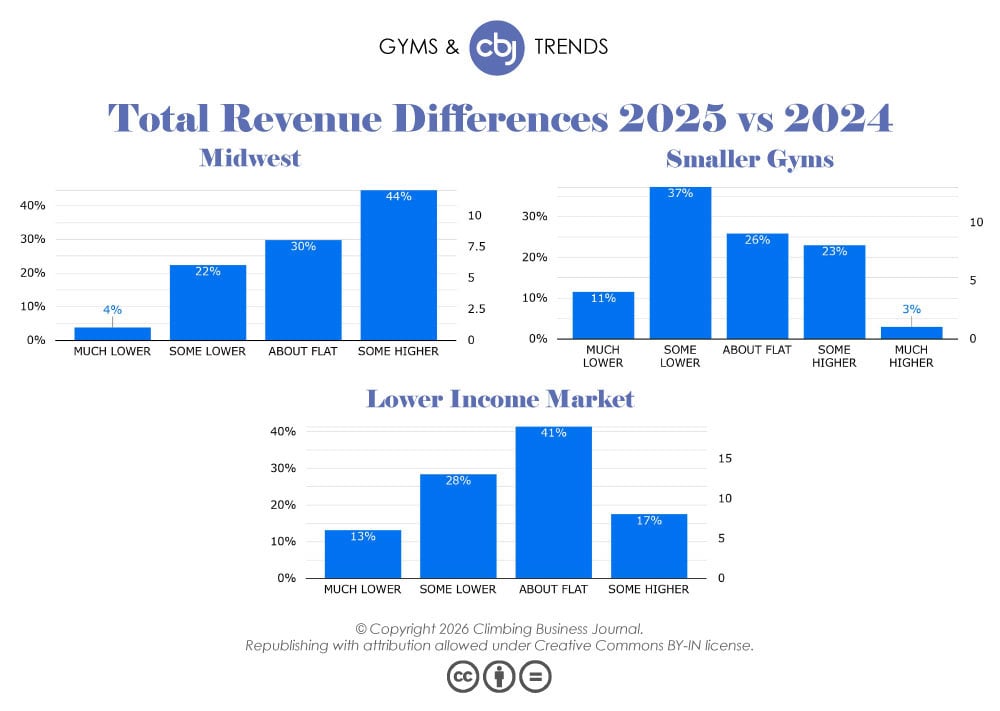
In the Midwest, 44% of surveyed gym operators said their gym’s total revenues were some or much higher in 2025 than in 2024, compared to 26% who said some or much lower, and 30% about flat.
Among operators of smaller gyms with under 5,000 square feet of climbing, 48% said their gym’s total revenues were some or much lower in 2025 than in 2024, compared to 26% who said some or much higher, and 26% about flat.
Among operators of gyms in markets with a per capita income below $43,000 (USD), 41% said their gym’s total revenues were some or much lower in 2025 than in 2024, compared to 17% who said some or much higher, and 41% about flat.
What Business Leaders Are Saying
“I see consolidation coming to the industry as single unit operators look to benefit from economies of scale that multi-unit operations bring. I believe there will be an array of different types of consolidation, from mergers to acquisitions to partnerships. I also foresee a small wave of closures of single unit operations and facilities that are overbuilt or overspent for the markets they serve and cannot meet their financial obligations to remain solvent.” – Lucas Kovalcik, Founder, The Gravity Vault, USA
“We are seeing a lot of consolidation in Europe following the same trend that started in the U.S. A lot of gyms are opening second and third locations, or acquiring and making over existing gyms. The small community-based project is on its last legs (I say this with no joy, this is where a lot of us fell in love with it all). The gym MUST appeal to a wider audience (i.e. not climbers) or else it will fail. The gym MUST do sales and marketing or it will fail, because the one down the street is doing it. The gym MUST find its best angle and work it (insert Tyra Banks GIF).” – Miura Hawkins, CEO & Founder, BETA / Chalk Technologies
Suppliers
Much like the surveyed gym owners and operators, many suppliers in the industry reflected on 2025 as a challenging year for them, as well. It’s difficult to pinpoint whether the supply woes were downstream from the gym woes, or vice versa. But such similitude, with leaders at both gyms and suppliers admitting to a down year, was a marked change from the mixed comments we received for last year’s Gyms & Trends report.
Still, just as some climbing gyms tailored their business strategies in 2025 to the evolving economic times, suppliers also sought ways to adapt to the conditions and stand out from the competition—and often these efforts resulted in new sustainability endeavors.
As mentioned in CBJ’s 2025 Routesetting Trends report, a rise in recyclable grips was the number one holds-related trend mentioned among the 304 routesetters who took last year’s CBJ Grip List & Routesetting Trends Survey. Last year also saw noteworthy sustainability innovations in wall manufacturing: the launch of Walltopia’s bamboo panels and EP Climbing’s eucalyptus panels, to name two high-profile examples.
Once again, these many ventures by climbing suppliers were aligned with macro trends; Harvard University, for instance, reported in September that “Sustainability remains a hot topic in corporate America.”
Also in the wall building space, Shift opened in Michigan last year with an innovative, tiltable boulder thought up by Jonathan Brandt and built by Dreamwall, which is represented by So iLL in the U.S.
Other technological advancements that gained traction in 2025 included Head Rush’s auto belay height sensors, ClimbAlong’s AI-powered routesetting management system, and the use of AI-based software like ChatGPT to try and make operations more efficient, at both gyms and brands.
What Business Leaders Are Saying
“The climbing industry isn’t isolated from what’s happening in the broader economy, and Walltopia is certainly feeling some of those effects. There’s no denying the market has shifted, and like everyone in the climbing space, we’re adapting. Still, with decades of experience, a strong global team, and deep partnerships throughout the industry, we’re confident in our ability to weather the current climate and continue supporting gyms through every stage of growth.” – Liz Pecknold, Sales Director, Walltopia USA
“While we have seen several new and experienced groups pump the breaks on new builds and expansions, there seems to still be some great opportunities and optimism in the marketplace. [I’m] excited for the current 2026 builds that are announced and excited for the ones that will be added to that list shortly.” – Jerad Wells, Owner, Maverick Climbing
“On the bright side, I think people are waking up to the fact that you do need to spend money on the right tools in order to succeed. Simply picking the cheapest tool (be it holds, staff, software) is not the best way to go, although our climber dirtbag sensibilities have a lot of difficulty coping with that reality. I continue to be impressed by some really incredible individuals who are single-handedly pushing for a lot of revolutionizing of the industry. Resilience to change is probably going to be a make-or-break factor in the next few years and there are some people who definitely have it.” – Miura Hawkins, CEO & Founder, BETA / Chalk Technologies
Looking Ahead
Despite the survey results largely pointing to a down year for 2025, there were feelings of hope from survey respondents about the future of the climbing gym industry. “I’m still optimistic that climbing will continue to grow,” said Chris Brazeau, owner of Confluence Climbing in Golden, British Columbia. “I think people are keen to pay for experiences, so our industry will continue to grow.”
In fact, when combining the responses of surveyed gym operators across multiple key variables (current and expected revenues, traffic, conditions and more) into CBJ’s first Optimism Index, on average operators were more optimistic about the future than pessimistic. (See pages 26-30 of the CBJ Climbing Gym Operators Forecast Dashboard for more information on the Optimism Index.) So, while it’s safe to say that, on the whole, surveyed operators were likely not as optimistic about the future of the industry in 2025 as they were in 2024, the responses CBJ received were not all doom-and-gloom. Despite the economic headwinds, the majority of survey respondents said they expect their revenues and traffic figures, for instance, to be higher in 2026 than they were in 2025.
The big question in 2026 is whether that enduring optimism will eventually be met with tangible upticks in gym traffic and revenues. It’s probable that some operators in 2026 will look to the strategies that proved successful for certain gyms in 2025: the aforementioned expansion of youth programming, for example, and the ways gyms have been refocusing their marketing efforts, holding off on certain expenses, and leveraging technology to gain operational efficiency.
Of course, another big unknown is what trickle-down effects the ongoing shifts in tariffs and other international affairs will have on individual gyms, brands and consumers in 2026. “I think that maintaining consistent membership and day pass usage are going to get difficult as the economy, job market, and other aspects of our government and economy continue to crumble,” shared one of the surveyed gym operators. “It seems like it is going to get tough for everyone.”
Only time will tell what 2026 has in store for the climbing gym industry by year’s end. In the meantime, some U.S. gym operators have been taking comfort in another Summer Olympic Games—and the first Paralympics for paraclimbing—drawing closer on the horizon and are hoping the 2028 event in Los Angeles will bring a boost in climbing participation rates on home soil.
Key Statistics About the Future
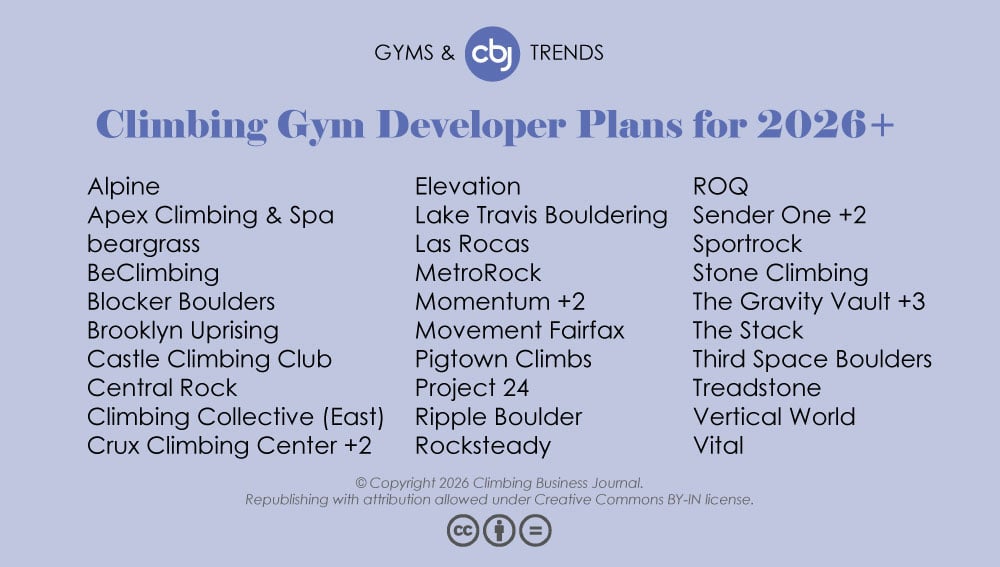
38 planned climbing gyms that could open in North America in 2026+ (36 USA, 1 CAN, 1 MEX)
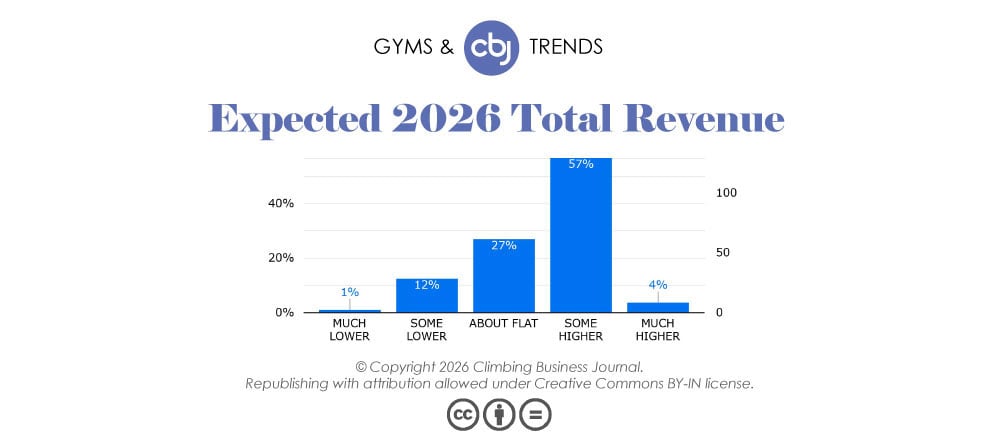
61% of surveyed gym operators said they expect their gym’s total revenues to be some or much higher in 2026 than in 2025, compared to 13% who said some or much lower, and 27% about flat.
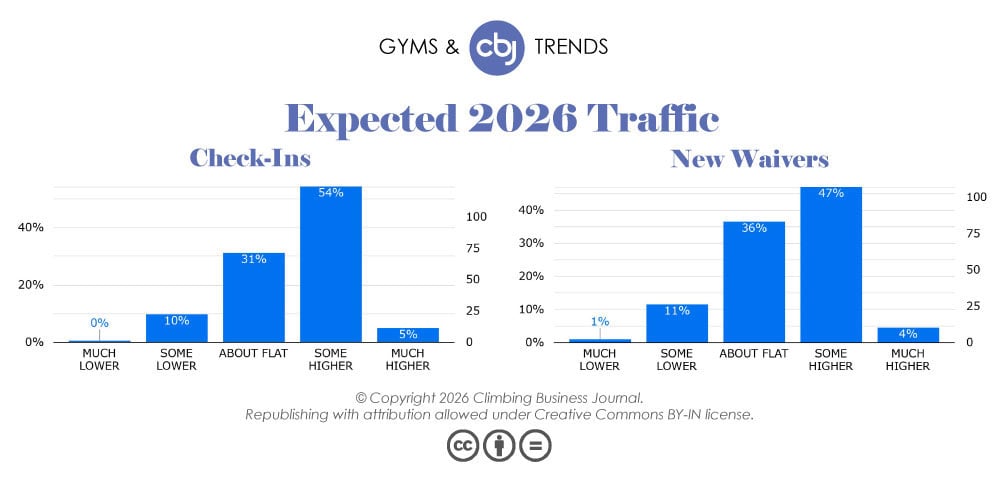
59% said they expect their gym’s number of total check-ins to be some or much higher in 2026 than in 2025, compared to 10% who said some or much lower, and 31% about flat.
51% said they expect their gym’s number of new waivers signed to be some or much higher in 2026 than in 2025, compared to 12% who said some or much lower, and 36% about flat.
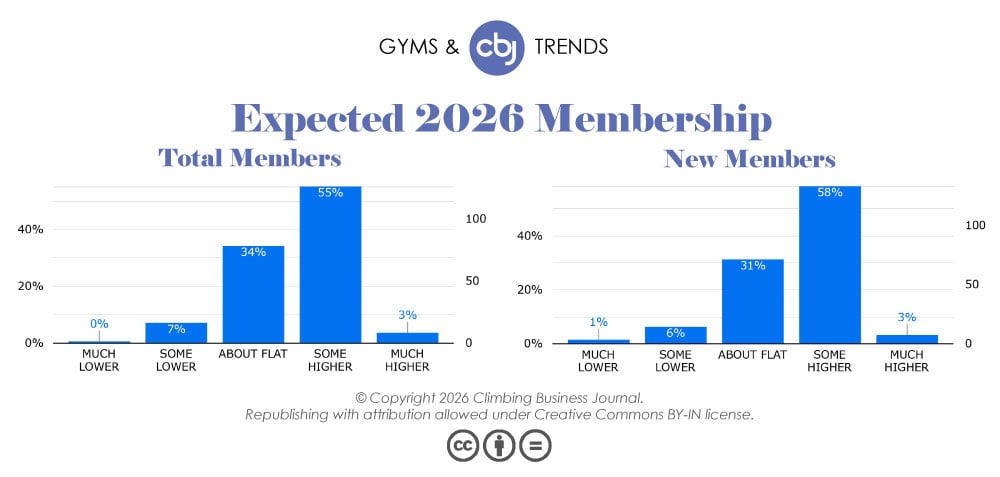
58% said they expect their gym’s number of total members to be some or much higher in 2026 than in 2025, compared to 7% who said some or much lower, and 34% about flat.
61% said they expect their gym’s number of new members to be some or much higher in 2026 than in 2025, compared to 7% who said some or much lower, and 31% about flat.
What Business Leaders Are Saying
“It’s starting to feel like the industry has hit a ceiling on growth (gyms and participants) but the overall outlook feels strong and the LA Olympics should renew some excitement with the next generation of climbers.” – Marlowe Kulley, CFO, Mesa Rim Climbing Centers, San Diego, California
“I expect the economic uncertainty to continue, especially with the very tense geopolitical situations that the world has been experiencing lately. However, we are going to be increasing our marketing efforts to reach a much larger portion of our market to try to counteract reduced check-ins from our normal reach.” – Javan Bowsher, LLC Managing Member, Granite Arch Climbing Center, Rancho Cordova, California
“We are preparing for a similar start to the year but hope to see additional rate cuts in the near term and cost of living to level off and food prices to come back down, allowing folks to have additional disposable income which will drive the market for our industry and offerings. As well as the ramp up in excitement and participation in our sport as we get closer to the Olympics in 2028!” – Lucas Kovalcik, Founder, The Gravity Vault, USA
“I expect 2026 to be relatively flat compared to 2025 with modest single digit growth overall, driven primarily by youth programming and membership gains, particularly through the summer and second half of the year.” – John Wiygul, Partner & President, High Point Climbing and Fitness

“My answers here are again biased by 2025 being our first full year of operation, but I anticipate AI continuing to increase its role in the non-setting aspects of climbing gym management.” – Jonathan Landis, Owner & CEO, Greater Heights Climbing, Fitchburg, Wisconsin
“At home, I expect increased discounted reoccurring gym-use product offerings to target and incentivize new customers and retention. This year we have tightened the belt on our marketing initiatives; we expect more forms of low cost, ‘boots on the ground’ marketing.” – Lewis Yeaple, Gym Director, Iron City Boulders, Pittsburgh, Pennsylvania
“We are offering a more personalized experience for our members. We are focusing on retention as much as new members. We are seeking additional revenue streams to supplement membership and guest pass income. That includes camps, after school, non-climbing activities such as parkour, silks, renting our spaces to dance and other instructors, flexibility in memberships (we are opening family memberships to groups of friends).” – James Reilly Jr., Owner, TamaRocks Climbing and Fitness, Tamarindo, Costa Rica
Methodology, Limitations & Acknowledgements
The 2025 CBJ Gyms & Trends Survey was conducted in 2025 and ran from September 19 to October 19. The survey was posted on Climbing Business Journal’s digital platforms and was distributed by email to the gym operators on CBJ’s mailing lists. Climbing gym operators could respond via the Google Form survey or by completing an Excel version of the survey.
Cohorts
To encourage a higher turnout, multi-gym locations were given the option of submitting answers for individual locations or groups of locations with similar sentiments/outlooks. Respondents were encouraged to complete the survey for each distinct situation and were given a Free Featured Job listing at CBJ and additional entry into the Kilter drawing each time they did, as incentive. Of the 240 facilities represented in the survey, more than half of them had distinct responses.
Respondents
A total of 240 climbing gyms were represented in the survey, spanning nine countries (85% United States, 8% Canada, 3% Mexico, 4% other countries), giving it one of the highest response rates for a North American survey of climbing gym operators in the industry’s nearly 40-year history. A variety of climbing gym regions, types, sizes, ages and markets were represented across the responses, providing a data-driven snapshot into the trends operators have been seeing and expecting, at their own gyms and around the industry.

Topics
The questions in the survey focused on broad year-to-year changes (e.g., much worse, slightly worse, about the same, slightly better or much better) and covered the following:
Current (2025 vs. 2024) facility trends:
- Overall conditions: economic conditions, consumer spending, financial stability, expansion outlook.
- Revenues: total revenues, memberships, day and punch passes, retail sales, groups and party sales, youth climbing programs, adult climbing programs, competitions and events.
- Expenses: total expenses, payroll spend, holds and volumes and other tools for routesetting, marketing and promotions, facility upgrades.
- Staffing concerns: recruiting, training and onboarding, retention, wages increasing, workplace conflicts, union organizing.
- Pricing: day passes, memberships, youth programs.
- Hours: total hours of operation.
- Traffic: total check-ins, new waivers signed, total memberships, new members.
- Programs: number of classes/courses, youth program sign-ups, adult program sign-ups, number of competitions and events, number of sanctioned competitions (e.g., USAC, CEC, etc.).
- Amenities: number of auto belays, number of standardized training boards, usage of advanced technologies (AI, climb tracking cameras, auto belay sensors, etc.).
Expected (2026 vs. 2025) facility trends:
- Overall conditions: economic conditions, consumer spending, financial stability, expansion outlook.
- Revenues: total revenues, retail sales.
- Expenses: total expenses, payroll spend.
- Traffic: total check-ins, new waivers signed, total memberships, new members.
- Pricing: day passes, memberships.
- Amenities: usage of advanced technologies (AI, climb tracking cameras, auto belay sensors, etc.).
- Industry concerns: market saturation, growth trajectory of the industry, standards and professionalism, inflation impact, tariffs impact, gym-to-crag education, unionization, auto belay safety, legal challenges from injuries and accidents, competition climbing governing body (e.g., USAC, CEC, etc.).

Gym Data
To compare responses by various facility characteristics in the CBJ Climbing Gym Operators Forecast Dashboard, each responding facility was matched to the corresponding listing in CBJ’s comprehensive gym and wall map dataset. Facilities were broken down by continent (North America vs. rest of world), business size (multi-location vs. single location), climbing type (full service vs. bouldering-focused), age (years in operation) and facility size (square feet of climbing).
Market Data
Surveyed facilities from the U.S. were further broken down based on their respective regional divisions and metropolitan/micropolitan core-based statistical areas (CBSAs), reported by the U.S. Census Bureau. CBSA total population and per capita income (in 2023 inflation-adjusted dollars) estimates were gathered from the U.S. Census Bureau’s 2023 five-year American Community Survey (ACS) data. CBSA cost-of-living data for 2025 was received from The Council for Community and Economic Research (C2ER). Cost-of-living data for responding facilities in other countries was gathered from WorldData.info in December, 2025.
Privacy
CBJ has a proven track record of taking data privacy very seriously and handling the information shared in surveys with the utmost care. Every effort was made throughout the survey and reporting process to protect the identity of responding operators/facilities and keep responses anonymous. Names of operators/facilities were asked to verify responses and look up basic facility information. The only names appearing in this report are the ones which we have received explicit permission to include. CBJ’s full privacy policy can be viewed here.
Limitations
As with any survey-based project, this one was not without limitations. While CBJ’s 2025 Gyms & Trends Survey received a robust turnout of 240 facility responses, the analysis was limited in part by the use of facility cohorts. In the future, more resources and incentives could be devoted to encouraging higher participation from a greater number of individual facilities.
The analysis was also limited by the use of broader response options for the multiple-choice questions (e.g., slightly lower, about flat, etc.). The survey questions were intentionally structured this way to encourage a higher turnout, but in the future more precise increments (e.g., down 5-10%, up 0-5%, etc.) could be considered or exact figures could be gathered, when possible.

Acknowledgments
Special thanks to everyone behind this year’s Gyms & Trends, including:
- All the gym operators who made this analysis possible by taking the survey!
- Scott Rennak, who spearheaded the data collection and guided each step of this project.
- Joe Robinson, who led the data analysis, built the dashboards and edited the report.
- John Burgman, who drafted the report and has helped these stories come alive for years.
- Naomi Stevens and Megan Cheek, who expertly shaped both the survey and report.
- The entire CBJ team, who keep us going strong.
- And all the advertisers and members in the CBJ family, who power our work.
New Climbing Gym Growth in North America
Growth in North America
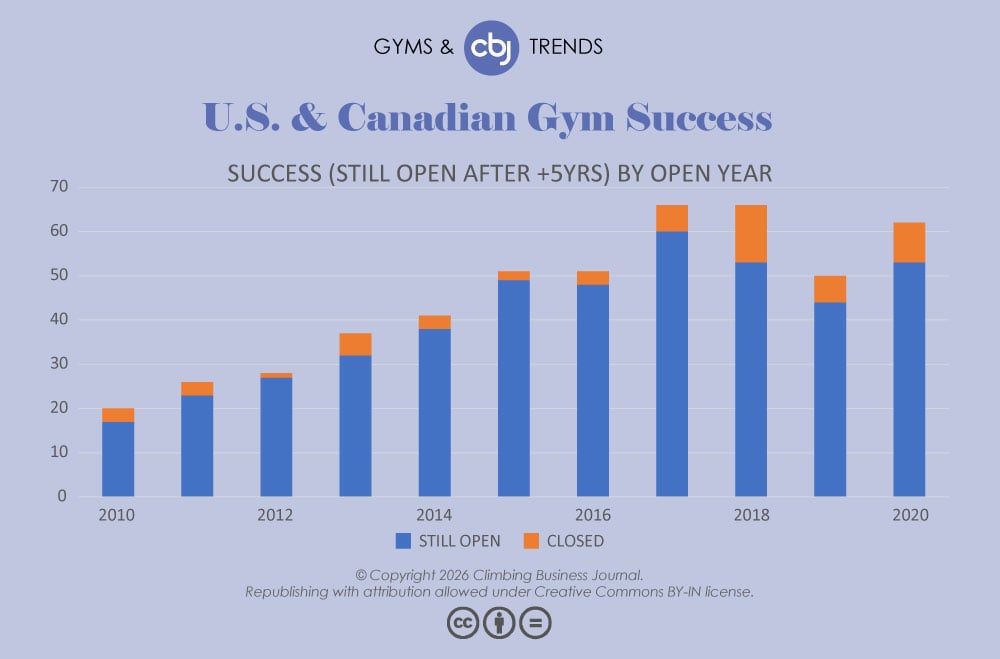
Growth in United States
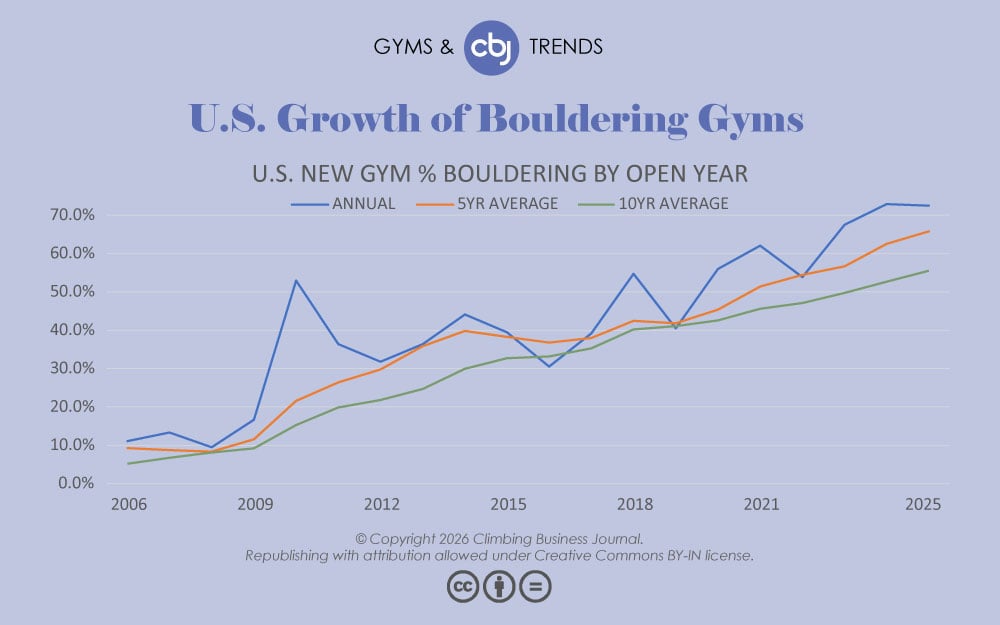
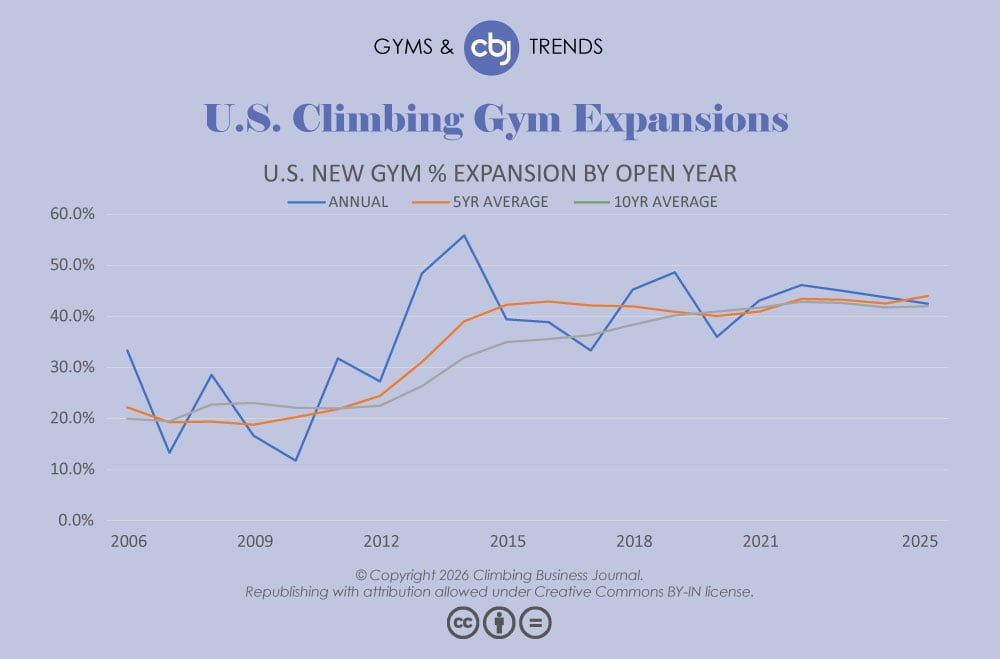
Growth in Canada
Growth by Developer
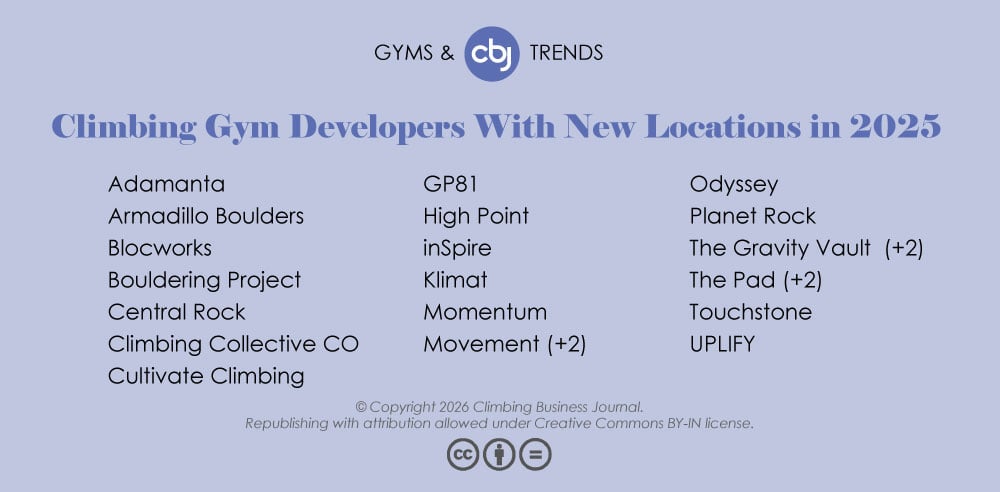
| DEVELOPER | WHERE THEY OPERATE | NUMBER OF LOCATIONS | TOTAL SQUARE FOOTAGE | AVERAGE SQUARE FOOTAGE |
|---|---|---|---|---|
| Movement | CA, CO, IL, MD, NY, OR, PA, TX, VA | 34 | 693,061 | 20,384 |
| Central Rock | CT, FL, GA, MA, NY, RI | 29 | 371,379 | 12,806 |
| Touchstone | CA | 18 | 291700 | 16206 |
| The Gravity Vault | CA, NJ, NY, PA | 16 | 237,690 | 14,856 |
| Bouldering Project | AZ, DC, MA, MN, NY, TX, UT, WA | 13 | 162,624 | 12,510 |
| UPLIFY | BC, NS, ON, QC | 11 | 116,834 | 10,621 |
| Hangar 18 | CA | 11 | 100,500 | 9,136 |
| Climbing Collective | NC, NY, PA | 9 | 82,053 | 9,117 |
| Rock Spot | CT, MA, RI | 9 | 70,588 | 7,843 |
| High Point | AL, FL, TN | 8 | 155,234 | 19,404 |
| Momentum | TX, UT, WA | 8 | 145,142 | 18,143 |
| Vital | CA, NY, WA | 8 | 51,097 | 6,387 |
| First Ascent | IL, PA | 7 | 109,000 | 15,571 |
| Adamanta | Mexico | 7 | 65,954 | 9,422 |
| Vertical Endeavors | IL, MN | 6 | 157,150 | 26,192 |
| Mesa Rim | CA, NV, TX | 6 | 150,679 | 25,113 |
| Triangle Rock Club | NC, VA | 6 | 108,450 | 18,075 |
| Sender One | CA | 6 | 78,046 | 13,008 |
| The Hive | BC, MB | 6 | 54,500 | 9,083 |
| 5.life | OH, PA | 6 | 51,941 | 8,657 |
| Junction/Guelph group | BC, NS, ON | 6 | 42,650 | 7,108 |
| MetroRock | MA, NY, VT | 5 | 90,500 | 18,100 |
| Calgary Climbing Center | Canada | 5 | 76,480 | 15,296 |
| The Spot | CO | 5 | 61,000 | 12,200 |
| Circuit | OR | 5 | 56,500 | 11,300 |
| Climb Gyms | AR, TN | 5 | 56,410 | 11,282 |
| Delire | QC | 5 | 49,060 | 9,812 |
| SportRock | MD, VA | 4 | 82,500 | 20,625 |
| Edgeworks | WA | 4 | 67,728 | 16,932 |
| The Pad | CA, NY | 4 | 40,000 | 10,000 |
With 34 locations, Movement is currently the largest climbing gym developer in the world, and Movement and Central Rock Gym are the only developers with 30+ open or planned gyms in North America. In addition to the developers listed in the table above, 20 others have 3 locations and 55 have 2 locations.