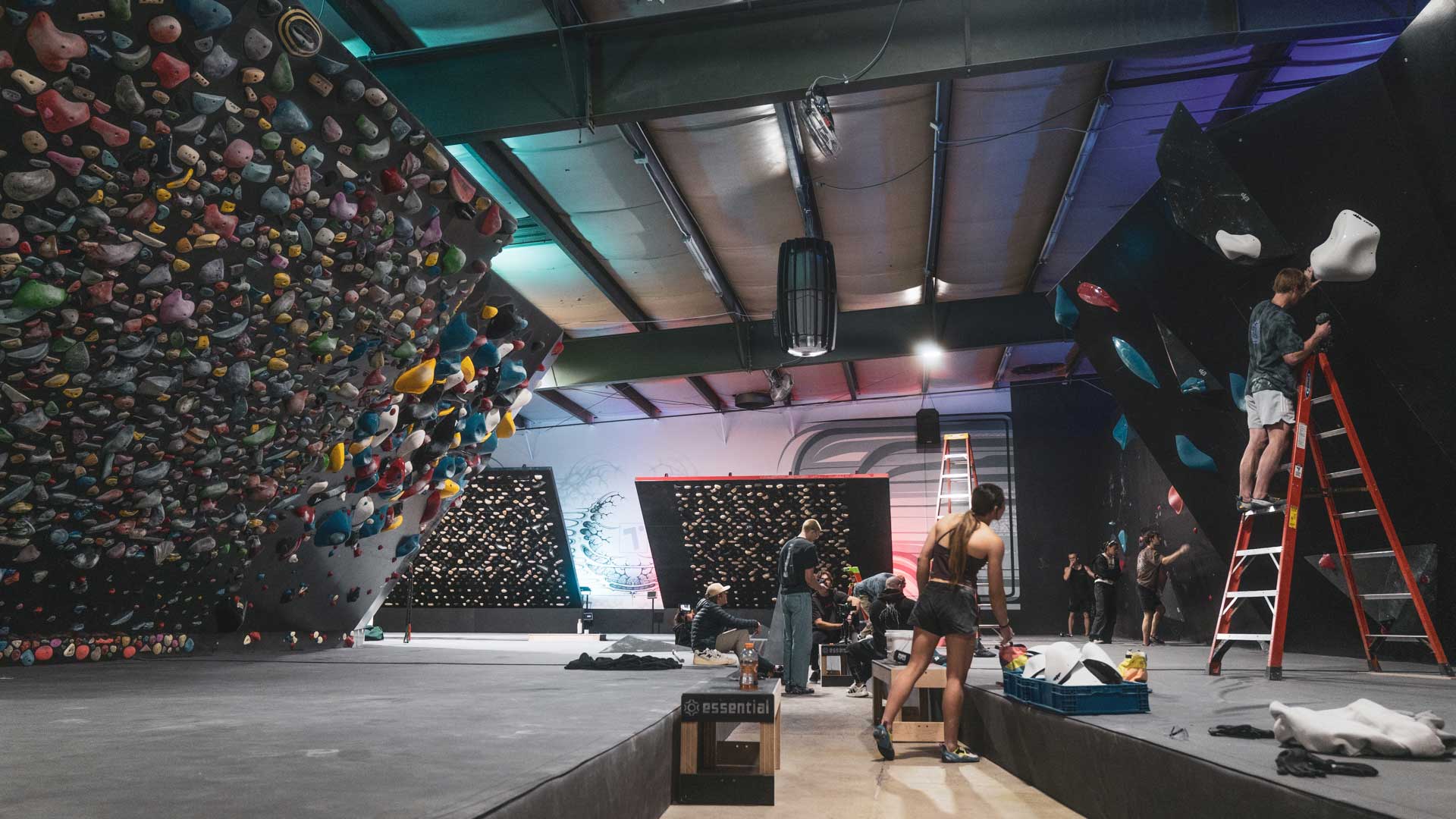
For years, Tension Climbing has occupied a unique place within the climbing industry. The company built its reputation through training tools and systems rooted in performance, experimentation, and a willingness to question convention. But with the launch of Tension Training Center (TTC), the brand is expanding that philosophy beyond products and into physical infrastructure.
Built in collaboration with industry partners EP Climbing and Essential Climbing, the TTC was designed from the ground up as a highly adaptable performance environment. EP Climbing brought Tension’s wall designs to life through its world-class wall fabrication, while Essential Climbing supplied the adjustable wall systems, facility padding, and climbing holds through its family of partner brands. Together, those collaborations helped shape a space intentionally built for iteration, experimentation, and the evolving demands of modern climbing development.
To better understand the vision behind the TTC, we spoke with four key members of the Tension team: Will Anglin (Co-Founder, President), Derek Schad (Managing Director), Ruth Jang (Head Routesetter) and Michael Rosato (Director of Marketing). Together, their perspectives paint a picture of a space designed not simply to train climbers but to rethink how climbing itself is developed, supported and experienced.
A Forward-Focused Facility
For Anglin, the TTC represents something much larger than a new facility. “For me, the TTC is a catalyst for furthering our ability to express our vision for climbing,” he says. “From the very beginning of Tension—over a decade at this point—I wanted to make every effort to avoid being pigeon-holed as a ‘wood hold,’ ‘board’ or ‘training’ company; we’re a climbing company, and in many ways I still feel like we’re just getting started.”
Ironically, the project began with a practical problem: “Strictly speaking, our problem was that we were running out of space in the manufacturing warehouse,” Anglin explains. “We needed to tear down what was the old climbing area in that space, and we also needed somewhere to execute on a broad range of projects.”
As those needs converged, a larger opportunity emerged. “It became clear that if we wanted to keep pushing forward, we’d need something that looked and felt like a climbing gym but was designed from the ground up with our future projects in mind,” says Anglin.
From the outset, Anglin knew a traditional commercial model would not work for the vision they had. “We’re not a very traditional company, and we always choose the hard way,” he says. “Traditional climbing facilities are built on a particular operational model that simply wouldn’t suit our needs.”
Located in Denver, Colorado, the TTC is not a traditional climbing gym. There are no day passes, no large-scale membership drives and no attempt to compete with commercial facilities on volume. Instead, the space functions as something more focused: part experimental performance lab, part routesetting workshop, part media studio and part educational environment.
“The space is smaller, more intimate and fundamentally experimental,” says Schad. “With its foundation rooted in programming—and not solely a member base—it is our belief that the experience provided can be more intentional than a traditional facility, especially as it pertains to climbing and movement.”
That intentionality extends beyond athletes alone. Anglin believes there’s a need for more educational offerings for climbers and industry professionals as well, and he hopes the TTC will help solve that problem.
“I think the climbing industry struggles to produce longevity and growth for both customers and employees,” he says. “Part of that is an industry-wide lack of continued education and growth opportunities. The programming that we will be able to facilitate out of the TTC is an effort to address that.”
The Modern Climbing Athlete
Over the last decade, climbing has undergone a rapid evolution: competition formats have become more dynamic; routesetting has become increasingly athletic and coordination-driven; and, following climbing’s debut at the 2020 Summer Olympics in Tokyo (held in 2021), the level of professionalism surrounding training has accelerated dramatically.
According to Anglin, the biggest changes are not just stylistic—they’re physiological. “Training for climbing has changed most dramatically in the last five to ten years when it comes to our collective understanding of what is likely happening on a physiological level,” he explains. “This understanding has led to some subtle, but important, changes to the very specific ways certain training interventions are applied to achieve certain outcomes.”
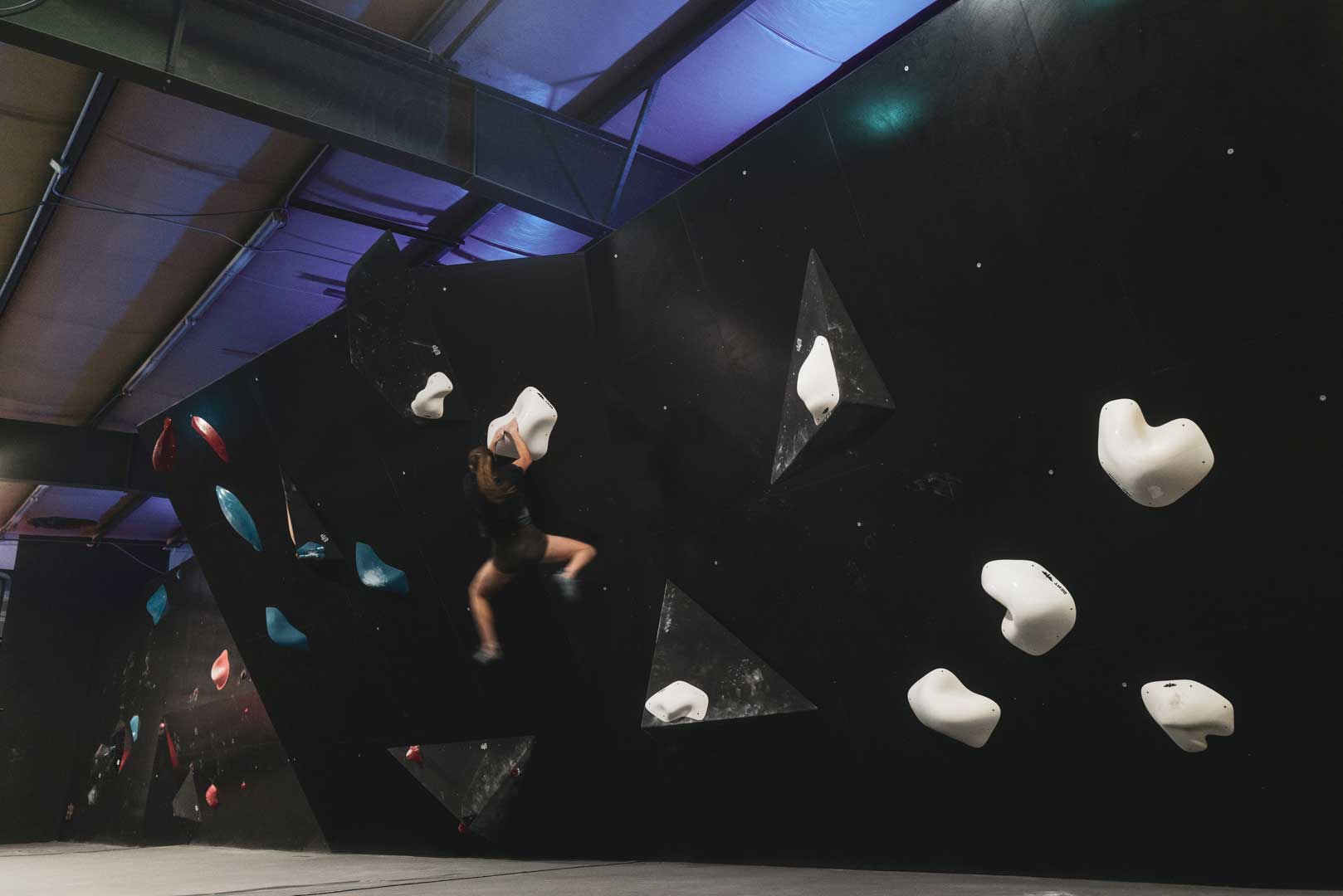
At the same time, he is careful not to overstate novelty for novelty’s sake. “What’s maybe more important, though, is what hasn’t changed,” he continues. “Bodies are bodies and climbing is just another sport. Preparation for high-level performance requires technical skill, force production within requisite ranges of motion, and mental and physical resiliency.”
Still, the demands placed on athletes today are undeniably broader. “The climbing athlete in 2026 is the most athletic climbing athlete in the history of the sport,” Anglin states. “The breadth and depth of skill and physicality in modern climbing requires a much more resilient and generally prepared athlete than we may have been used to in the past.”
That evolution raises an important question: If the sport itself is changing, should the environments supporting it change too? The TTC is Tension’s answer.
One major gap Anglin sees in the American climbing ecosystem that the TTC can help fill is a need for more high-level routesetting designed specifically around athlete preparation.
“One of the biggest challenges for the modern climbing athlete is the lack of relevant routesetting,” he says. “Having a dedicated facility where the material on the wall reflects an intentional interplay between the athlete and the routesetter, with clear outcomes in mind, is something that is underrepresented in the USA at the moment.”
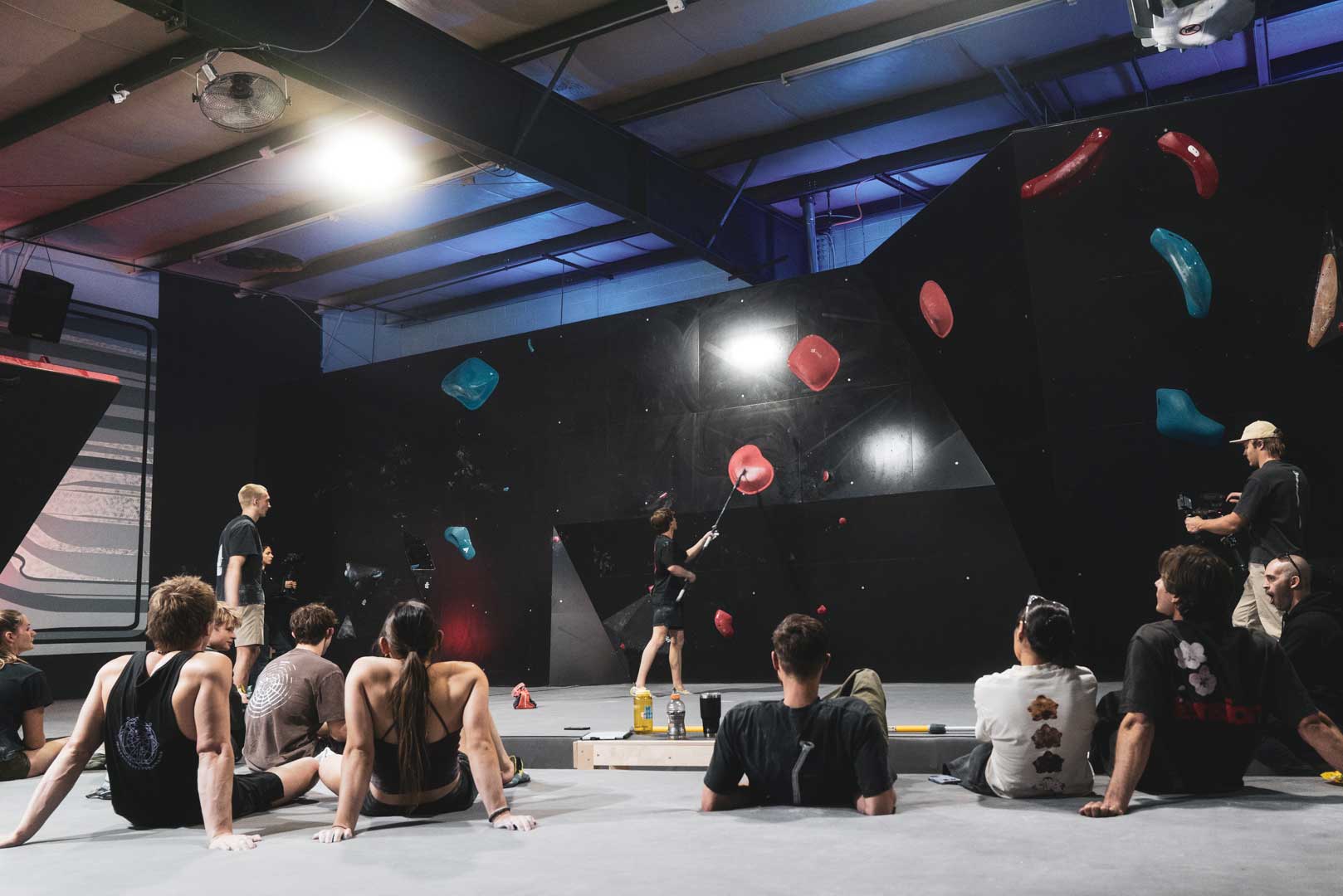
That interplay between athletes and routesetters is central to how the TTC operates. Mock competitions, collaborative setting sessions and targeted training environments all serve the same larger purpose: creating meaningful preparation. “There is a lot to love about mock competitions,” shares Anglin. “Performance under pressure is key for climbers of all persuasions—and there is no substitute for practice.”
At the same time, he sees mock competitions as more than elite preparation: “I’m also very interested in recreational-level mock competitions as a way to grow the general public’s exposure to how fun competition climbing can be and how truly impressive the competitive performance of the best climbers in the world is.”
Routesetting as Relationship
If athlete development forms one pillar of the TTC, routesetting forms another.
For Jang, one of the industry’s biggest flaws currently is the way routesetting has often been separated from the larger climbing ecosystem, including other gym departments and the climbers they serve. “The industry is putting more effort toward valuing routesetters more now than in the past,” she says. “However, the industry tries to do so with a fundamental misconception—that routesetting can only be valuable if it is differentiated and isolated from the rest of the sport.”
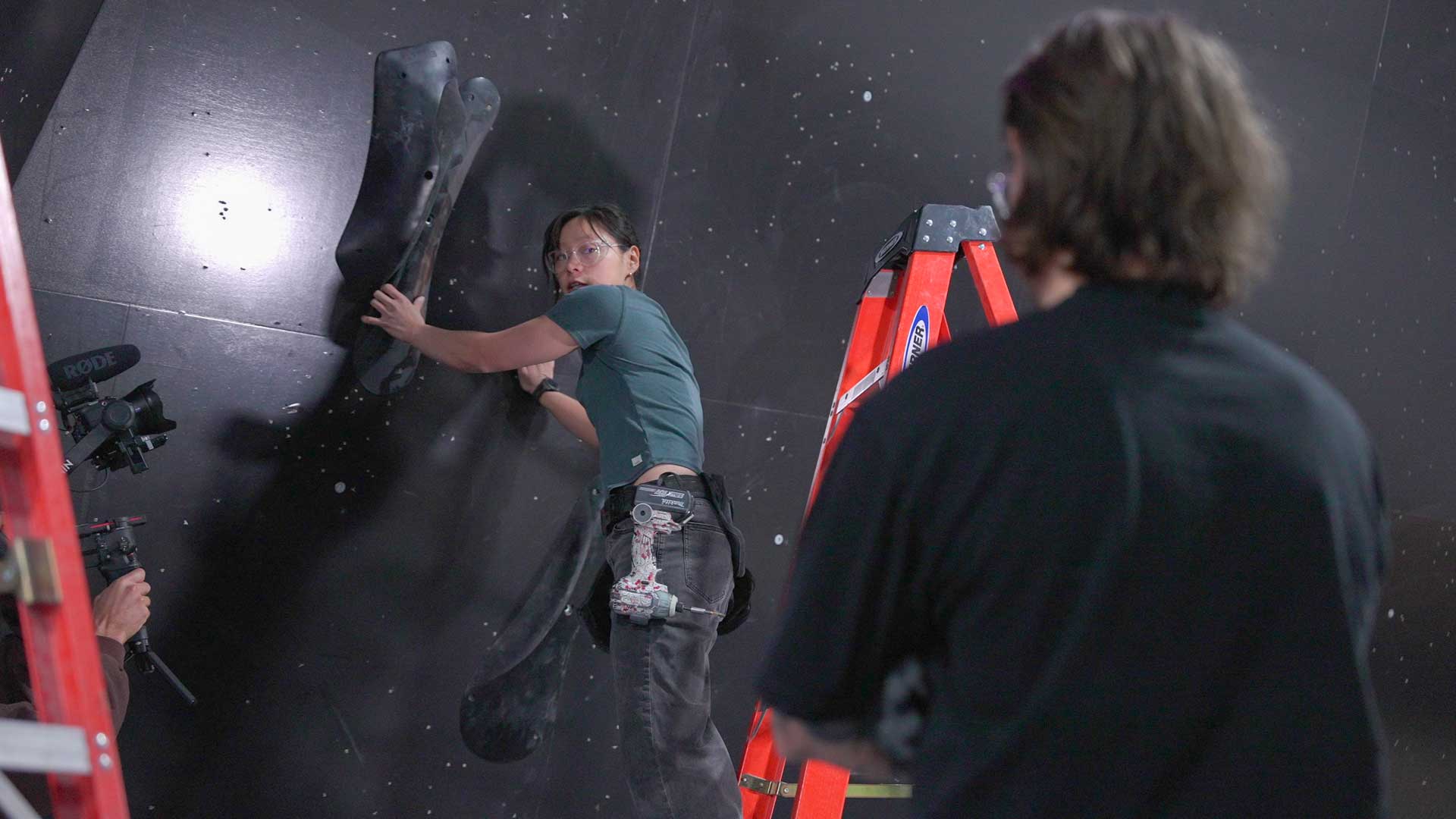
According to Jang, that separation has unintentionally limited growth. “By differentiating and isolating routesetting from the rest of the climbing community, it has effectively become siloed,” she says. “Those within the industry strive to develop the sport without realizing how this core detail directly stunts routesetting’s growth and therefore the sport’s growth and development.”
Interestingly, when asked what routesetters can do at the TTC that they typically cannot do in public gyms, Jang reframes the question entirely. “It isn’t about what you can do here,” she says. “It’s more about how involved you get to be as a routesetter here.”
She describes Tension less as a collection of departments and more as an interconnected organism, where product design, marketing, training and routesetting constantly influence one another. “I might be the head routesetter and the only one in my department,” Jang says, “but Will, Derek, Michael, Kerry—everyone at Tension—are tied into the decisions I make in what ends up on the wall.”
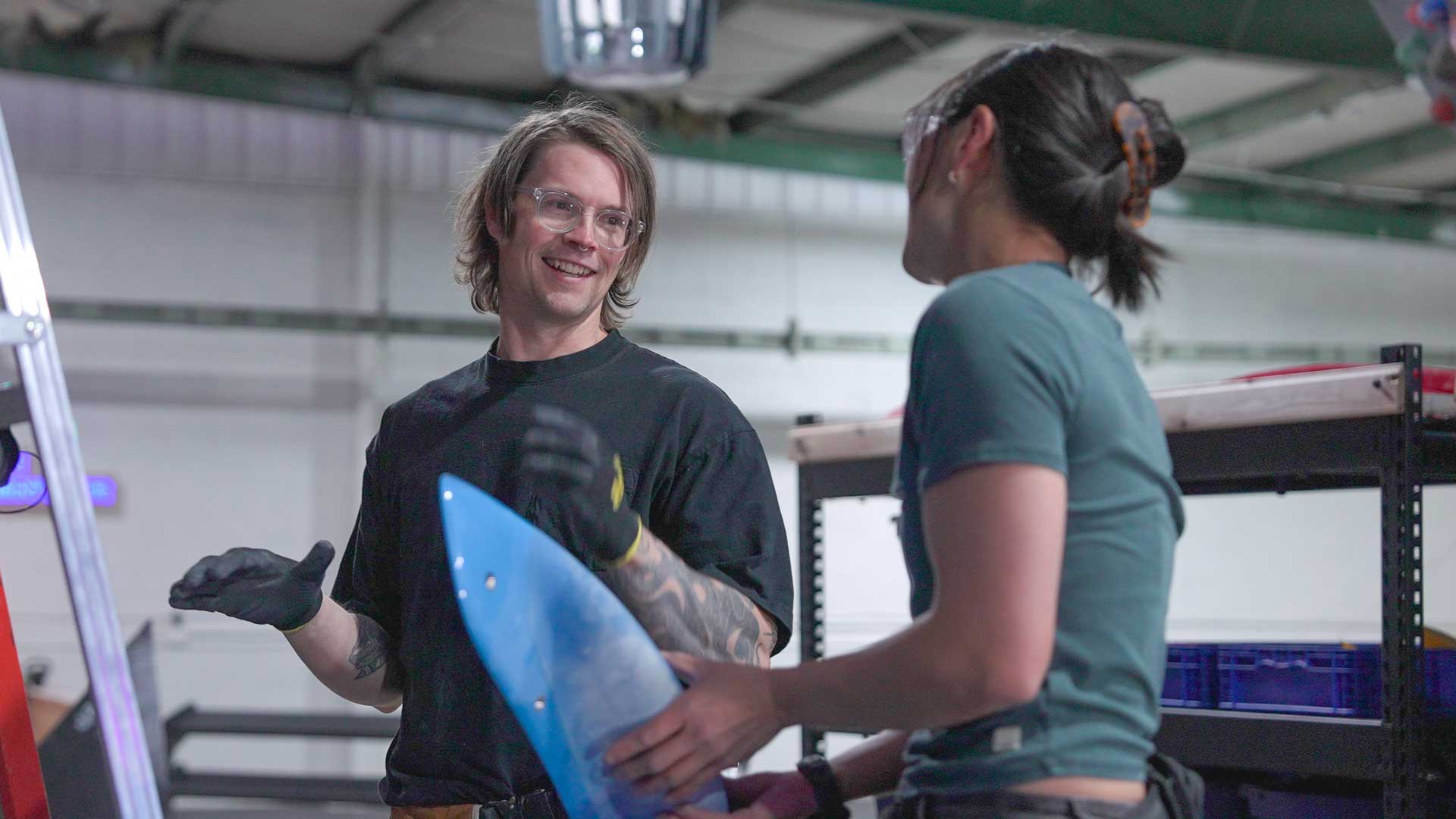
For Jang, success is not necessarily about inventing a new move. It’s about creating a deeper awareness around the process itself at various levels of the sport. “I don’t want guest routesetters or clinic participants leaving here thinking, ‘Oh, I got to set a new move,’” she says. “I consider it a success if they leave here asking, ‘Why did that experience feel different?’”
Performance, Products and Iteration
That same collaborative philosophy shapes Tension’s product development process. “Simply put, the first iteration of an idea is rarely the best one,” Anglin says. “Having a dedicated space and a discerning audience will enhance our iterative process and ultimately lead to better products and services.”
For Tension, product development is increasingly tied to observation rather than pure opinion. “Feedback is an interesting thing,” he explains. “All feedback is valid, but it’s not all helpful. I’m more interested in observing people as they interact with a product than putting too much emphasis on what they say.”
The TTC creates a controlled environment where those interactions can be studied consistently across athletes, routesetters and different climbing populations. “In some ways, performance is the product,” says Anglin. “The physical thing you are interacting with is just a vehicle for that performance.”
That perspective has become increasingly important as climbing performance data grows more sophisticated. “We know more and more about the performance differences that separate climbers of various ability levels compared to ten or even five years ago,” he says. “That continues to inform our product design, but more importantly how we effectively utilize those products in programming.”
A Space Built Around Depth
Despite its private structure, the TTC’s leadership team repeatedly returns to the idea that the project is not about exclusivity. “The TTC is for anyone interested in investing in their climbing,” Schad says. “It is for folks with intent and the mindset that follows, rather than any specific ability level or style preference.”
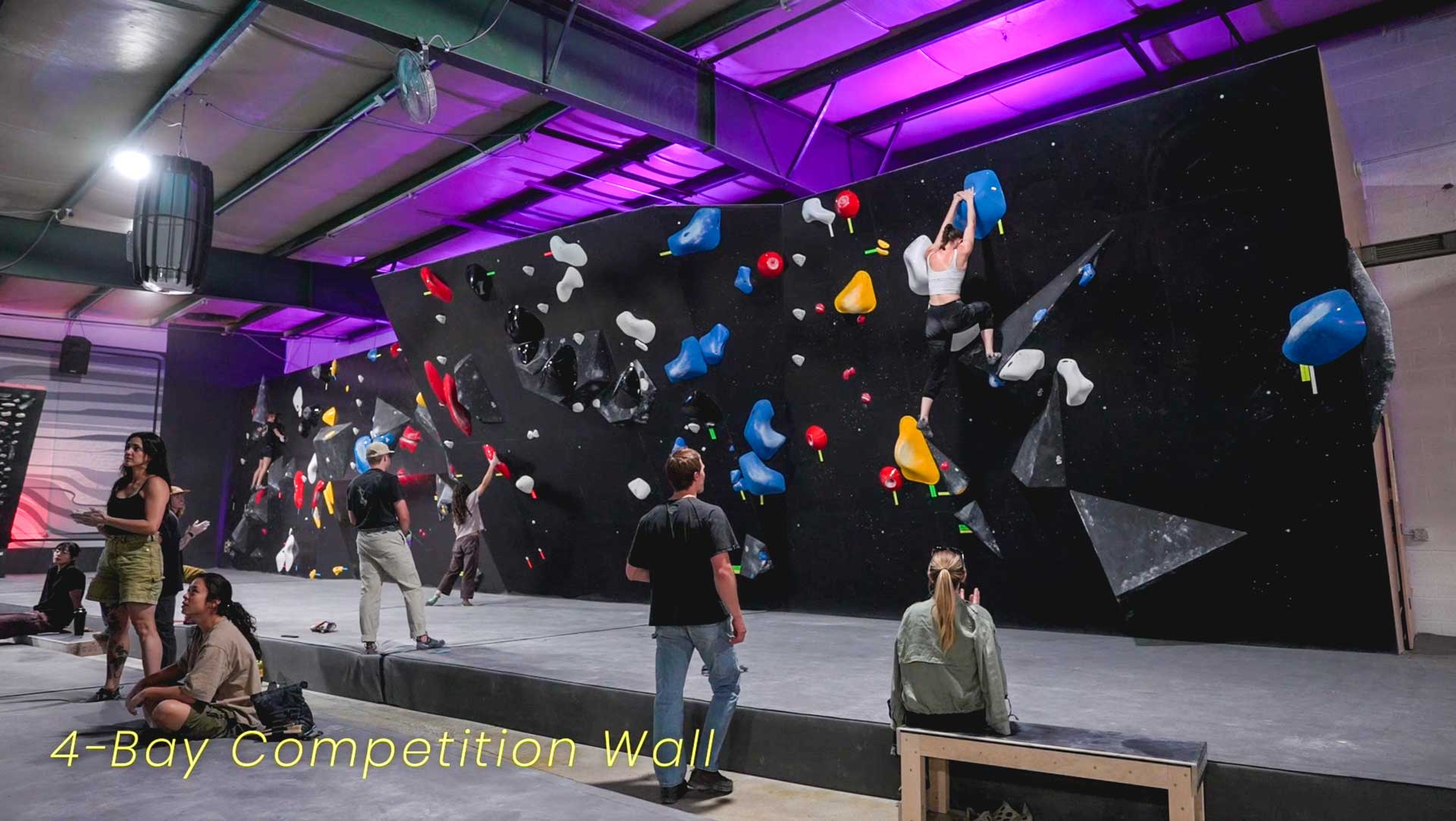
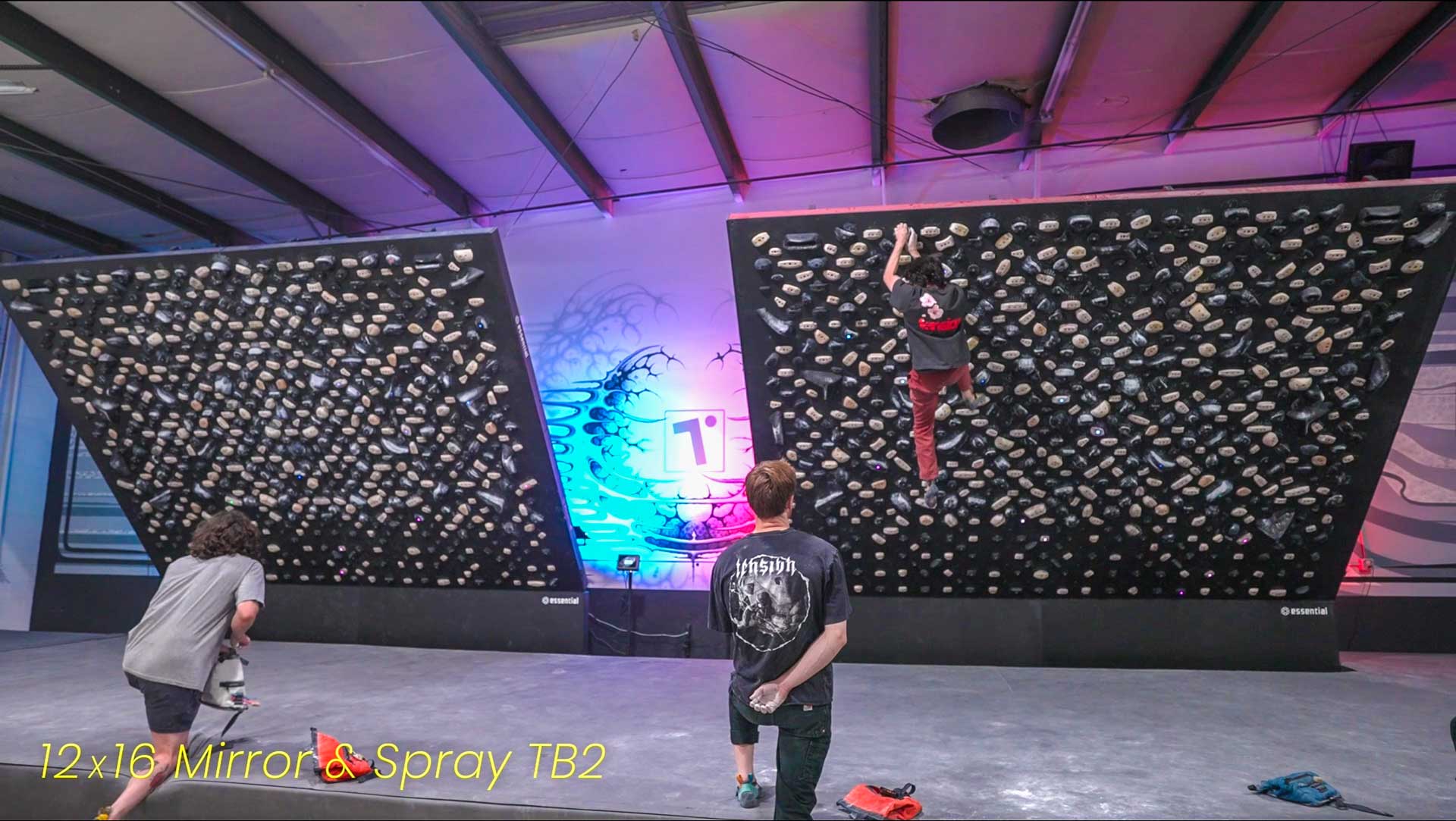
Still, the space is intentionally limited. “We’ve got less than 7,000 square feet to work with,” Schad details. “Four comp bays, a 35-foot spray wall and two 12×16 (HxW) TB2s. We simply can’t accommodate the member base that a typical commercial facility can.”
For Schad, that limitation creates opportunity rather than scarcity. “I’m all about depth in climbing,” he says. “I believe that what we’ve built here has the capacity to do more than make folks better at climbing.”
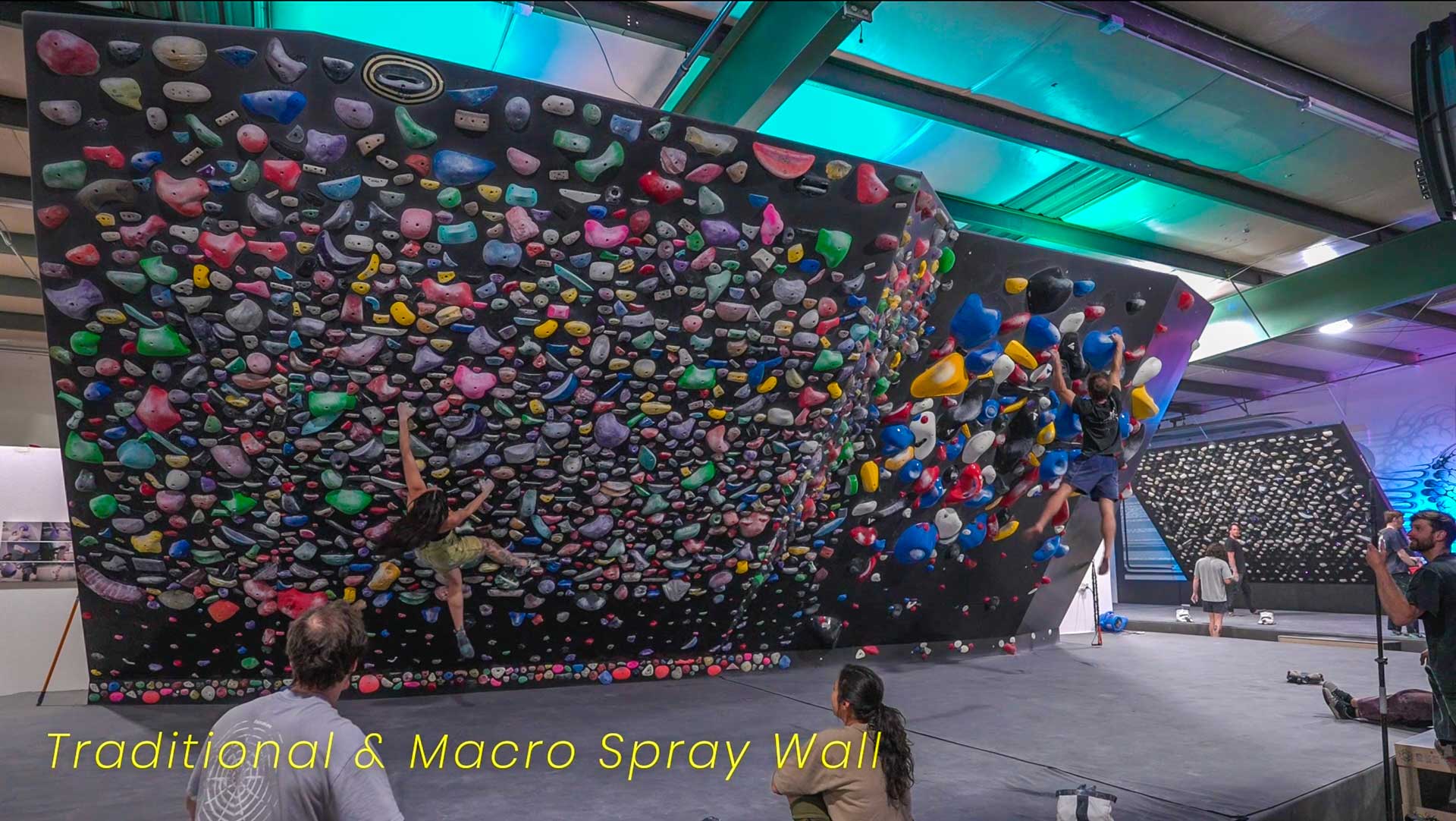
Instead, he hopes the TTC encourages people to think more critically about their relationship with the sport itself. “Why do you climb? Why are you here?” Schad asks. “I hope the TTC inspires curiosity and positive growth not only as it pertains to movement and skill but around the way we all interact with climbing in general.”
Storytelling and the Future of Climbing
The TTC is also reshaping the way Tension approaches media. “Our climbing space has always functioned as both a training facility and a production studio for the majority of Tension’s brand content,” says Rosato. “But the space naturally centered a lot of our media around board climbing. The TTC changes that entirely.”
With dedicated competition-style terrain and more flexible production capabilities, Rosato sees opportunities to tell broader stories about modern climbing culture. “We’re excited to expand our content into the world of high-level competition bouldering in as many ways as we can,” he says. “That includes everything from routesetting and athlete preparation to the behind-the-scenes processes that shape modern competition climbing.”
The TTC also opens new possibilities for livestreams and more immersive event coverage, bringing audiences closer to the experience itself.
Ultimately, though, the Training Center may matter less because of what it physically is and more because of the questions it asks: How do climbers train? How do routesetters develop? How is performance supported? How does the sport grow?
For Jang, growth begins with discomfort. “Supporting the growth of the sport looks like constantly challenging my own routesetting and hoping that this creates positive ripples of change,” she says. “When I find myself struggling to stay in this space, I like to tell myself: ‘Get it wrong. Get it right. Get it messy.’”
In many ways, that philosophy may define the TTC better than any floorplan or programming schedule ever could.
For all TTC inquiries, please contact Tension at TTC@tensionclimbing.com
This article is a sponsored story and does not necessarily represent the views of the Climbing Business Journal editorial team.