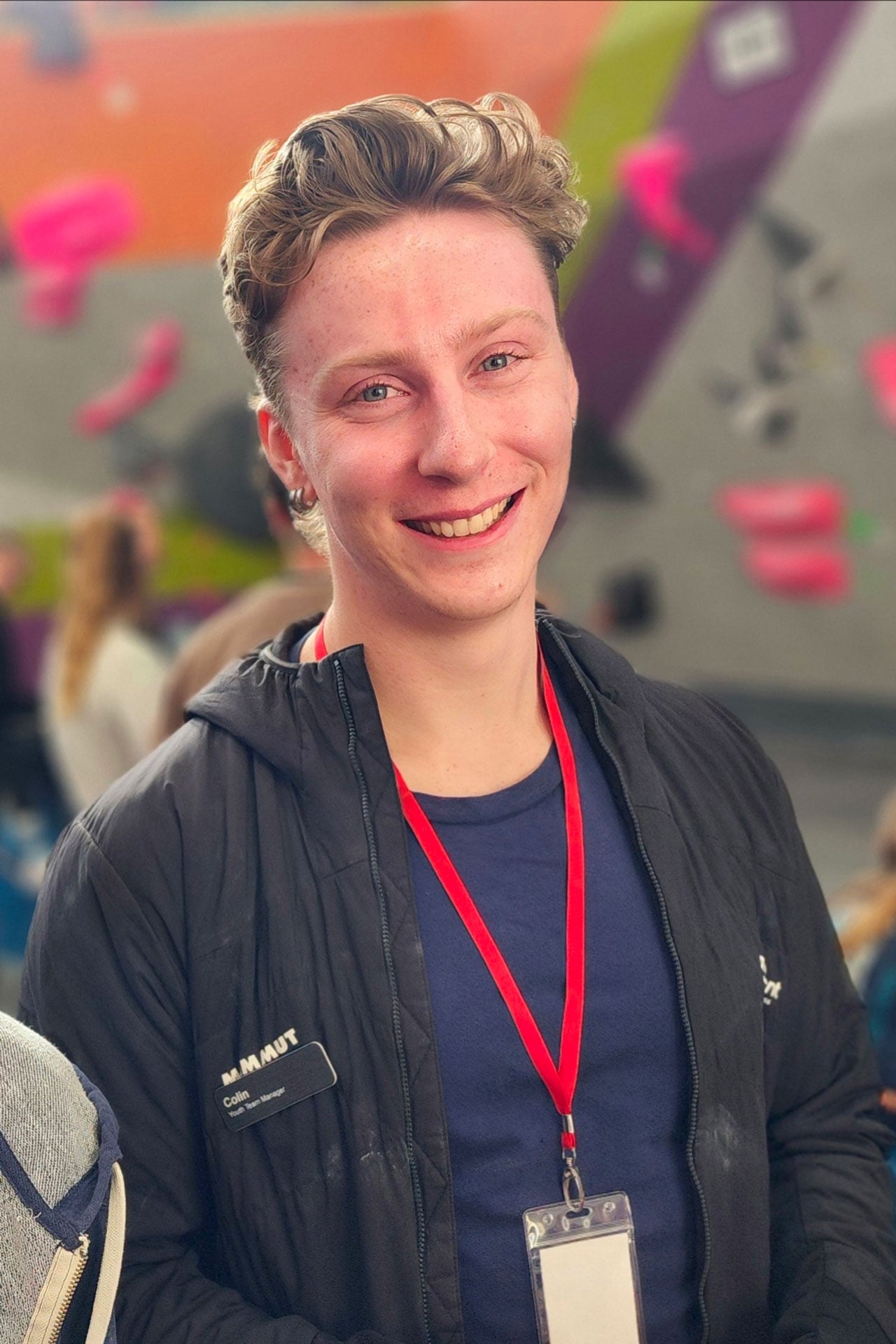
Name: Colin Meyer
Title: Youth Team Manager at Movement Golden
Location: Golden, Colorado
Behind the Desk…is an ongoing series of interviews with professionals from around the climbing industry. For this installment, we connected with Colin Meyer, the Youth Team Manager at Movement’s Golden location in Colorado. Like many team managers and coaches out there, Meyer was an athlete first before becoming a coach himself and mentoring the next generation. Now, after seeing some of his own pupils take up coaching, Meyer says, “I felt like a team kid coaching team kids coaching team kids.”
Meyer reflects on those full-circle moments in the interview below and shares advice for both team athletes and coaches. He highlights what makes a tight-knit team stronger than a group of individuals, how passion and dedication can outlast talent, and why celebrating “even the smallest wins” is so important. And he gives some helpful tips on impactful resources and design considerations for any gym with a youth program.

BURGMAN: Can you tell me a little about your climbing/career background and what being a Youth Team Manager at Movement entails?
MEYER: Climbing has always been a pretty big part of my life. I started climbing at age 11 on a wall at my local rec center, and I was in love right away. I was on that rec team for a few years until I joined the competitive team at Earth Treks (now Movement). At Earth Treks, Will Anglin (now the owner of Tension Climbing) was my coach. Will was amazing at coaching movement and training for climbing. He really made an impact on how I approach rock climbing.
At 17 years old, my career in climbing really started when I began instructing at the same rec center I first climbed at. Later in college I was the head setter of the tiny rock wall we had at campus for one job, and my other job was coaching at Earth Treks. From there I coached higher and higher levels until the role of Youth Team Manager opened up. I wanted that job more than anything. Leading the team that I had been on six years ago felt like it was meant to be.
As a Team Manager, part of my role is developing other coaches so that they can be the best coaches they can be. I also help develop programming for each team level and define the vision for what each team level should be working toward. All of these responsibilities fit into the larger picture of building the vision for the youth team program as a whole to give our families the best experience we can while also giving our athletes access to as many resources, coaching styles, climbing terrain, and experiences as we can.
From my experience as a youth climber to now, I feel strongly that building a well-rounded approach helps our athletes thrive. I care so much about this team, and I am so proud of being the one to lead it.
Is there a specific memory from your role thus far that sticks out?
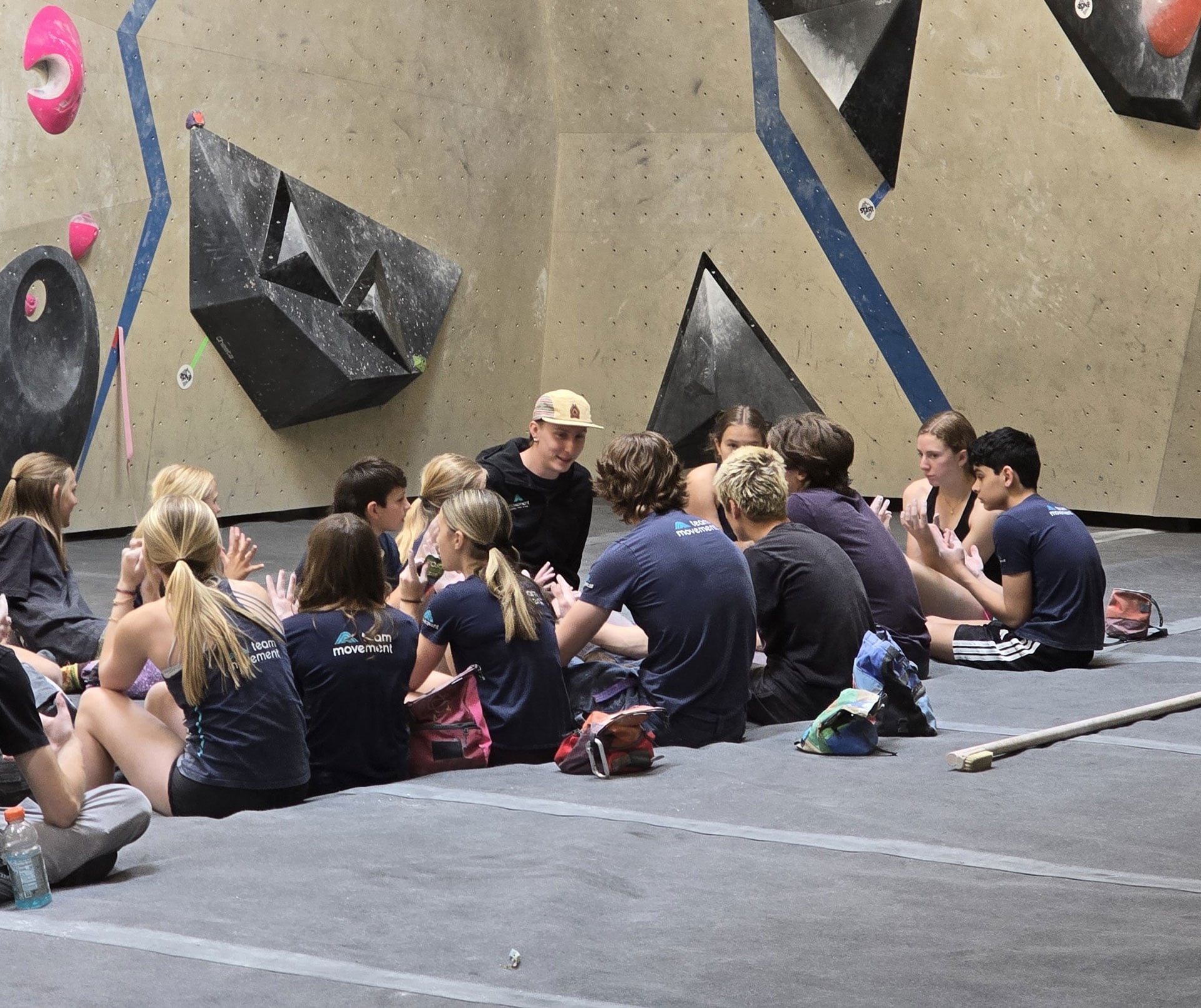
Satisfaction from coaching hit another level when the oldest athletes on my team started aging out and then applying to job opportunities where they coach our youngest kiddos. It felt like a full-circle moment where I saw myself in these kids. I felt like a team kid coaching team kids coaching team kids. Being a youth team athlete was such a pivotal piece of my life and then stepping into coaching was equally meaningful. I am so proud when I see athletes I work with do the same thing for the next generation.
What is a personal quality or characteristic that you think helps someone (or has helped you) significantly in the role of a youth team manager or head coach?
I believe that patience and consistency are key to having a successful youth team. Whether you are working with an individual or looking at the whole team, you need to be consistent with the training, the community building, and every other aspect of what being the manager takes. Those qualities, combined with patience, are very powerful because if you are taking the right steps toward the vision at hand, then it is only a matter of time, but it can feel like forever at times.
When I started as the Team Manager, there were only a handful of athletes going to USA Climbing regionals and even fewer going to divisionals, and there were no athletes competing at nationals. Additionally, I didn’t see much drive and passion for improvement from a lot of our athletes, which is required to perform at a high level. But at the same time, I saw so much potential in our athletes for what they could be. By having patience and committing to holding a vision—where we celebrated motivation, reflection, and passion for climbing—athletes have grown into their love of the sport.
As a result, I am sending more and more athletes to comps and championship events. We have approximately four times as many athletes competing in USAC, three times as many going to regional championships, double the number going to divisionals, and we have sent a couple kids to nationals each year. I truly believe that this success can be attributed to the patience and consistency we have applied in the program.

What’s an aspect of your role that people might not realize or might not see on a day-to-day basis at the gym?
As the manager of the team, there is a lot of coordinating tryouts, planning events, or reading through spreadsheets. It takes a lot of administrative work to run a team of 130 climbers and a staff of 18 coaches.
A lot of the parents and the athletes I work with think that I am only ever on the floor coaching, but the truth is I am only in-ratio working with climbers for about 10 hours each week. The other 20-30 hours a week I am in the office on a computer looking over the compensation versus revenue for each month, trying to hit financial targets, or emailing back the 200+ parents who may be contacting me.
It is really rewarding to lead the community as the Youth Team Manager, and I wouldn’t trade it for the world, but initially I did not anticipate how much admin there would be.
From your experience, what are some keys to running a successful gym program for youth climbers? And what does youth programming require that adult programming might not?
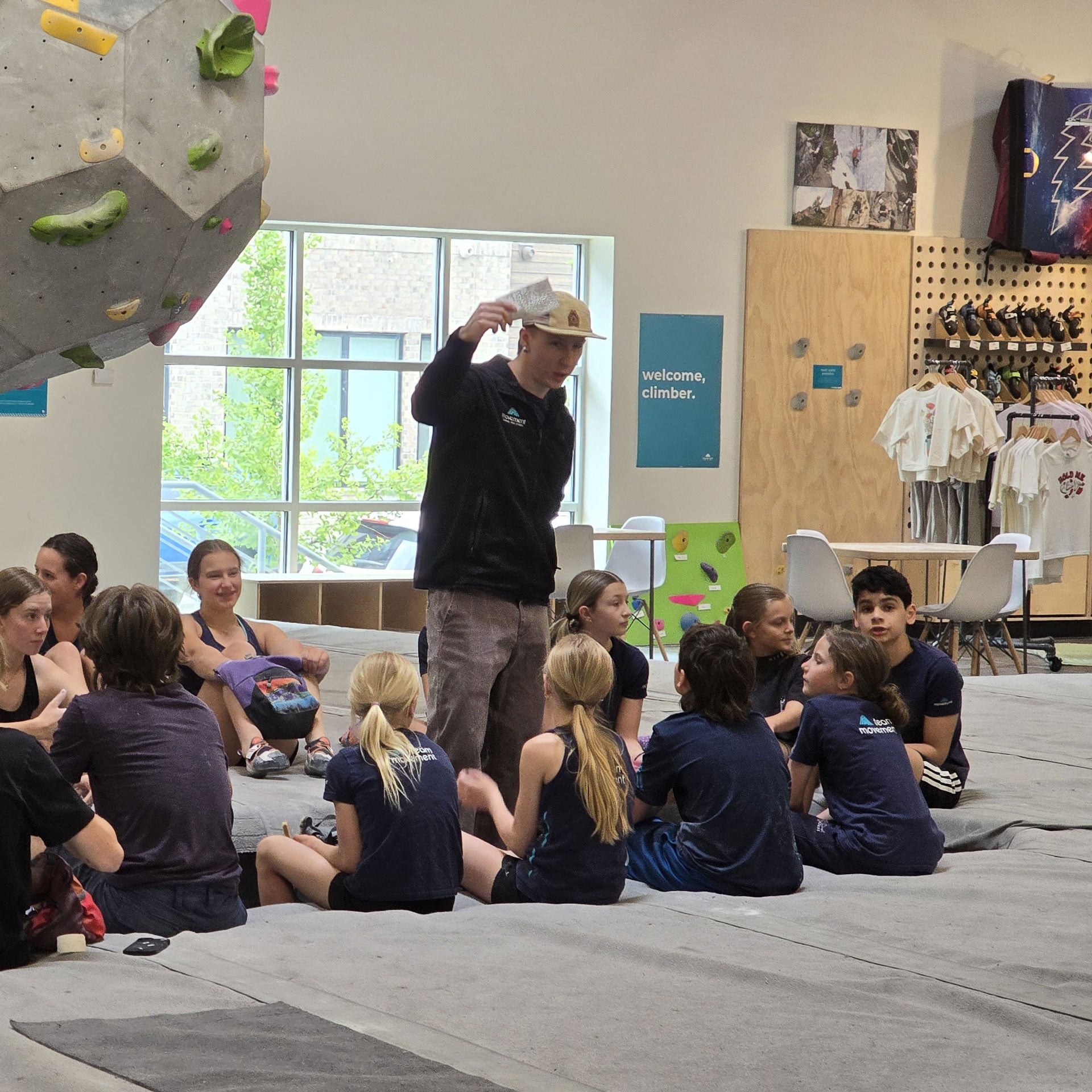
While youth climbing is technically an individual sport, I think one of the best ways to build a successful program is to focus on building a team, rather than just a group of strong individuals. This approach is important because there is a lot of untouched potential in the strength of community.
When athletes have a strong support network of teammates who push each other toward their goals, hold them accountable when they stumble, but understand what they are working toward, you get a team that improves, performs and reflects, even on the hardest days. Athletes on a team can be more vulnerable and push themselves toward higher goals, take productive risks, and try harder because failure becomes a learning opportunity, not something to be scared of.
Additionally, this dynamic pays off as older athletes start to mentor younger athletes. When you have a strong community, everyone can learn from each other’s successes and failures. Mistakes aren’t repeated as often and, when they are, there is more understanding to help that athlete push through and advance.
Above all, focusing not just on talent or climbing grades, but rather on community, integrity, passion, and the why behind each athlete’s love for climbing helps build momentum that carries successful youth team programs.
What are some materials and/or resources that a gym should have on hand at all times for its youth programs?
A few obvious things come to mind right away, like laser pointers or a drill to make some climbs easier or harder, but there are certainly things every gym should have for members and youth team athletes that aren’t as common.
On display in our gym, for example, is a team bulletin board that highlights the team’s successes, events, and little blurbs about climbers on the team. Having this bulletin out where members of our community can see it is a great way to show that these aren’t just hectic kids running around in team shirts; they are individuals who are working toward something and have achievements they are proud of, whether it is a newer athlete sending their first V2 or a seasoned competitor qualifying for nationals.
The best youth teams, in my opinion, also have spaces specifically designed with them in mind. This intentionality includes having competition-style routes and problems for repetition and learning new movements, or space in the gym that is specifically arranged for them to train in or even just goof around and build community. By creating spaces designed with youth team athletes in mind, you allow them to foster skills, build community and get stronger. It also helps to reduce impact on members outside of the team by freeing up training spaces.
What advice would you go back and give yourself, if you could, or give to anyone else starting a youth team manager or head coach role?
New coaches tend to focus on the most talented athletes, but more attention should be given to the more passionate and dedicated athletes. Over the years I have seen several athletes who are very gifted come and go very quickly because they quickly get attached to getting “wins” over seeing progress. The climbers who are truly in love with climbing and not just being the best tend to go farther in the long run.
I am proud of how my current competition-level team is filled with athletes who are absolutely in love with climbing. For a lot of them, their growth through the program was slow, and they have had to work hard to get wins that sometimes easily came to other athletes. But now they have the skills to work through complex problems without getting discouraged. They know how to celebrate even the smallest wins. They are tight knit with their teammates, mentors, and the rest of the program. They uplift all climbers in the gym, because they know what it is like to work hard and fall often. These young climbers have learned how to try hard and work toward their goals, crush them, and then do it again.
It is more sustainable to pursue growth rather than the next hardest climb because it can be years before you climb your next hardest grade, but if you pursue any sort of growth, you get “wins” all the time. Hard work and coachability will always outrank talent.