Memories From America’s First Climbing Gym…is a series of candid reflections and spirited tales about the early days at Vertical Club, the first commercial climbing gym in the United States. Authored by Rich Johnston, co-founder of Vertical Club (now Vertical World), and originally published between 2007 and 2009, the stories chronicle memorable moments from the gym’s past, from backstories that sparked the journey to run-ins with industry legends and rock stars along the way.
In this third installment, Johnston recalls a time when climbing walls and holds were much different than the modern masterpieces that abound today—in fact, a time before walls in the U.S. had any proper holds at all. As Johnston says, it was the “B.H.” era: an age before handholds.
Previous chapters in the Memories From America’s First Climbing Gym series can be read here.
[Editor’s Note: An earlier version of this article was first published on February 17, 2008.]
We are very accustomed to a large variety of handholds, taped routes, and a forum for giving an opinion on the latest sandbag. That world did not always exist, of course.
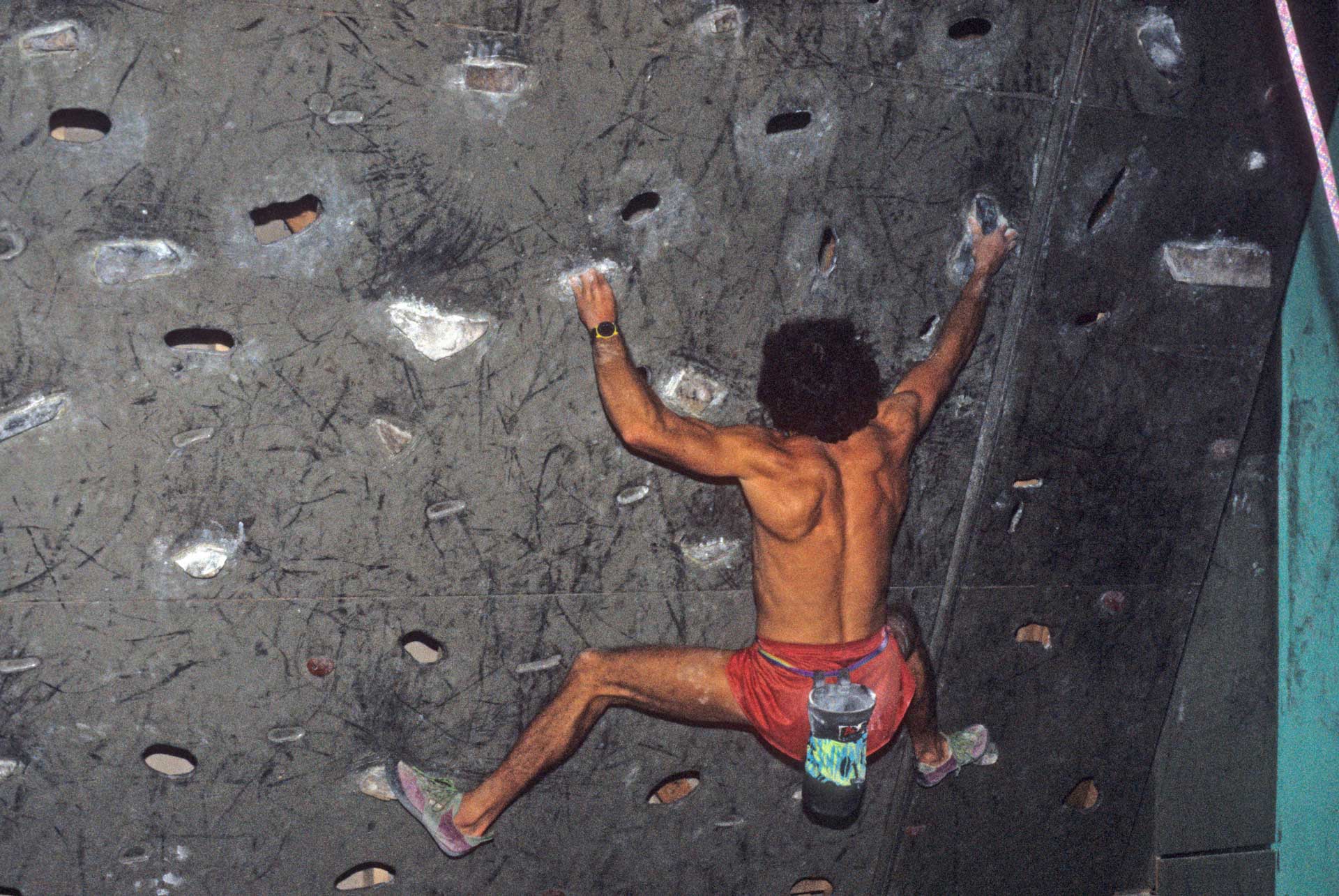
In 1987 when we were starting the first rock gym in the country, there were no such things as handholds. We had to use rocks brought in from our buddies that they picked up on their latest climbing trip.
Handholds [in the U.S.] didn’t come about until late ’88. Metolius was the only source for holds at that time. When we would get a new batch of rocks, we would grab a batch of epoxy glue and slap them up on the brick walls or glue them into routered sections on the plywood walls.
Take a close look at the history wall in the Seattle gym. The gray wall in the workout area is the first climbing wall ever built in a rock gym in the U.S. You will notice that it does have handholds on it. Those were installed after Vertical Club had been in business for more than a year.

We had to do a bit of retrofitting. The scene back then was a climber standing around throwing gravel stones at the intended holds to be used on a route. Once the holds were memorized, then someone would try the route. No one ever heard of taping a route. That didn’t actually take hold until about ’92. I remember trying to get the folks in Redmond to try out the new way of marking routes. That didn’t go over that well. What a weird idea! Putting colored tape on the walls to designate a route?
Fast forward 20 years later. There’s a handhold company in just about every hot-shot climber’s garage, and they are the best and latest shapes and better than anybody else’s. Go shopping for handholds at the Outdoor Retailer show in SLC [Salt Lake City] sometime, or just Google climbing holds and check out the vast landscape of the latest and coolest holds available. It will make your mind spin. There is a significant industry of climbing wall builders and handhold manufacturers, and to think that we were gluing rocks on the walls back in ’87. That is almost like going from the era of radio to the introduction of television.
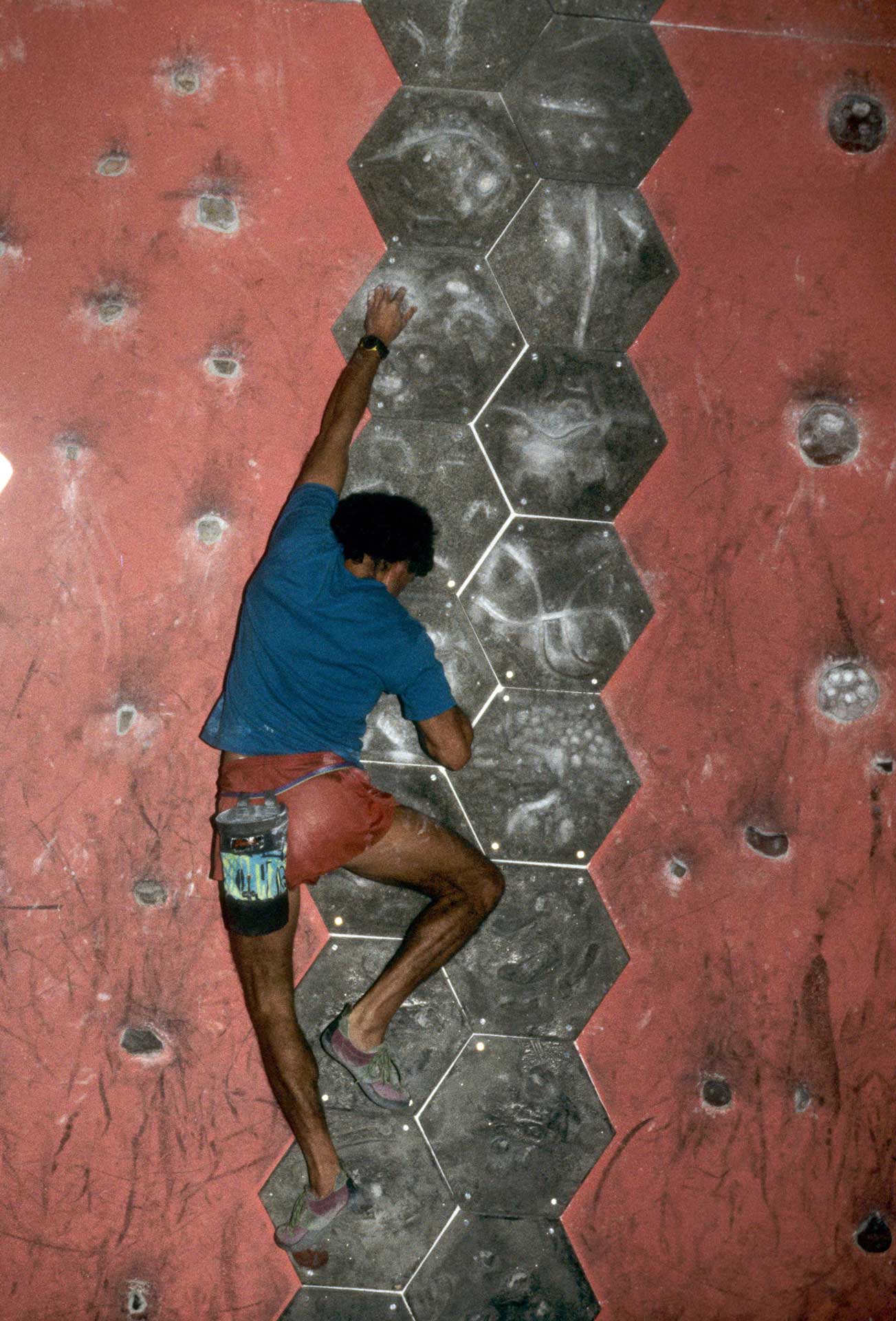
One big consequence of this great evolution in the industry is the loss of the “classic route.” These are the routes that would always be there since they could not be moved. If you go to the U of W [University of Washington] climbing rock, you will always be able to try out classic routes that have been there for over 25 years. You also see it at the cliffs, especially at Smith Rocks.
I remember some of my friends would always get in a run at Churning in the Wake. It didn’t matter if they had done it 100 times. They loved the route and enjoyed doing it. That used to be the case in the gym back before handholds were introduced.
I wonder if we can bring back the “classic route” scene in a few sections of the gym? Let’s glue some rocks on the walls and see what happens. What do you think?
Keep pulling.