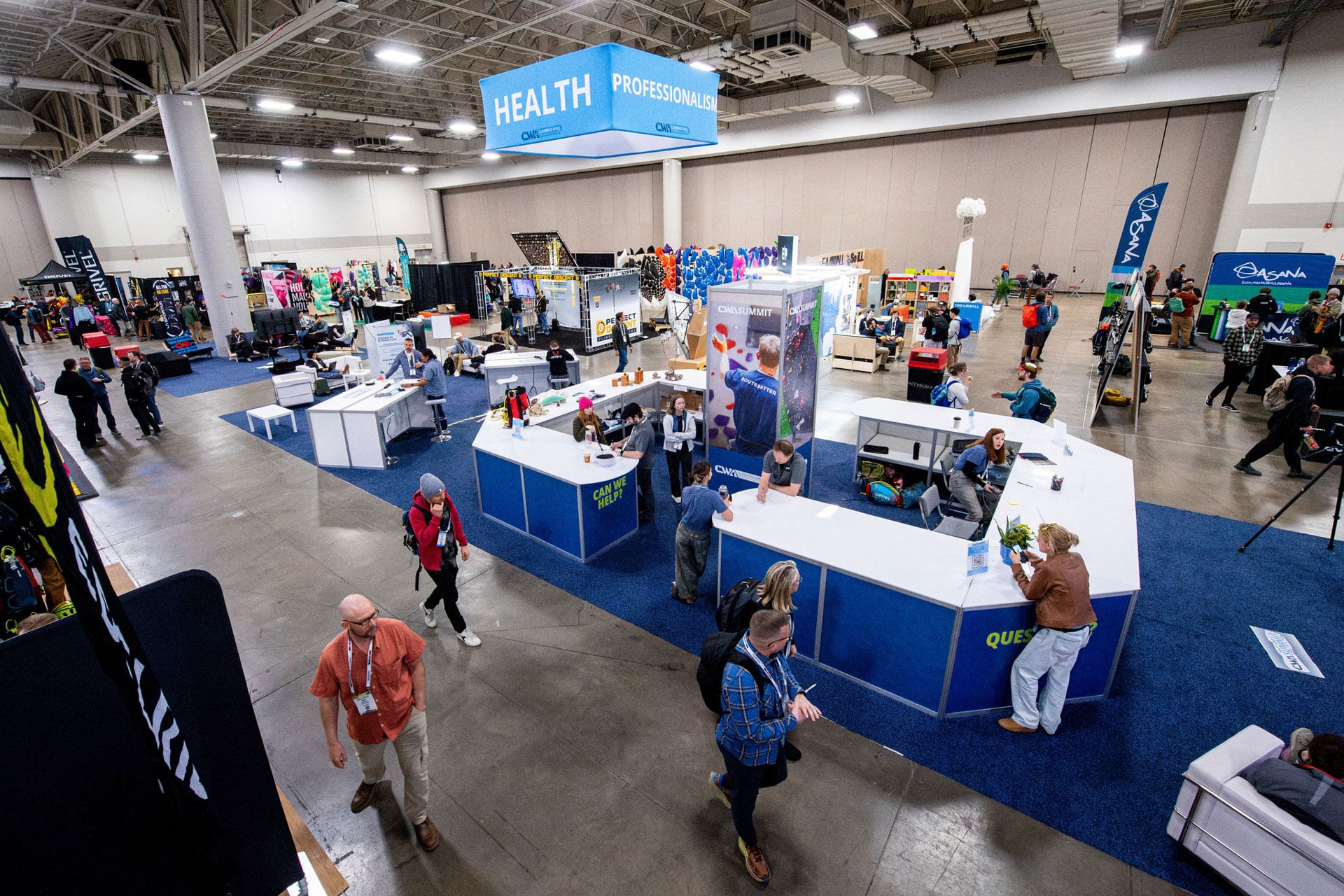
The 2026 edition of the annual CWA Summit—the indoor climbing industry’s largest professional gathering in North America, hosted by the Climbing Wall Association—came and went in Salt Lake City, Utah, last week. It was another packed week, with friendly networking and learning opportunities all around.
This year’s event brought back all the favorites from last year—routesetting certifications, hands-on workshops, collaborative community hubs, education sessions for here and now, a bustling trade show floor, the Women’s Fireside Chat and more—and introduced some new features, like the roundtable keynotes for gym owners, managers, coaches, setters and future operators.
Didn’t get a chance to attend the CWA Summit week on April 11-17, or wondering what other attendees walked away pondering? Below are candid reflections on routesetting, professionalism, marketing, AI, change and more from three industry experts who made the trip to SLC.
- Embracing Responsible Routesetting—Nostalgia and All by Foxman McCarthy-James
- Looking Back: From Bygone Days to a Modern Show by Chris Wall
- Community, Connection, and What Actually Drives Growth by Megan Cheek

Embracing Responsible Routesetting—Nostalgia and All
by Foxman McCarthy-James
I’ve been going to the CWA Summit since 2019. The first year I went, it was in Colorado, and I was overwhelmed by the party vibes. I stayed at my parents house about 45 minutes away, and I felt like I was dragging myself away from a party I wasn’t ready to leave each night.
The mood has been slowly shifting. Since COVID and the move away from the Front Range a few years ago, the Summit has become a little more tame each year, it seems. The same faces are still there, but many of us are getting older, and maybe more…responsible?
And for routesetters, the conversation has been slowly evolving to center around professionalism and career development.
PRS Is on the Rise
It became undeniable to me in 2025, when the routesetting roundtable focused on insurance and professional development. There were fewer hot takes, more talk about liability. Routesetters were wondering if freelance work was even a possibility in the current landscape, and head setters traded tips for setting up exchange programs.
This year, we took another step toward professionalizing routesetting: the Professional Routesetting (PRS) Certification Program is getting buy-in.
It feels like it’s been a long time coming. Since 2022, the CWA Routesetting Committee has been rolling out the PRS Certification Program one level at a time. Each year, we’ve fielded questions about the future of the program and addressed skepticism about its merit.
Lately, it has felt like all that work has been paying off, and that progress was evident in the professionalism of the setting pre-conferences and sessions at the Summit last week.
Certifying Teams Big and Small
At the 2025 Summit, we piloted the first PRS Provider Course. Since then, gyms of all sizes have begun adopting it as part of their staff training.
Some organizations, like Central Rock and Edgeworks, had already implemented the dual-rope system (suspension with a separate fall arrest line) and have begun documenting that practice with a formal certification. Movement started their rollout by certifying their Routesetting Directors as PRS and WAH Providers.
It’s not just the big chains, either. Single location operations like Greater Heights have begun certifying their routesetting staff, too.
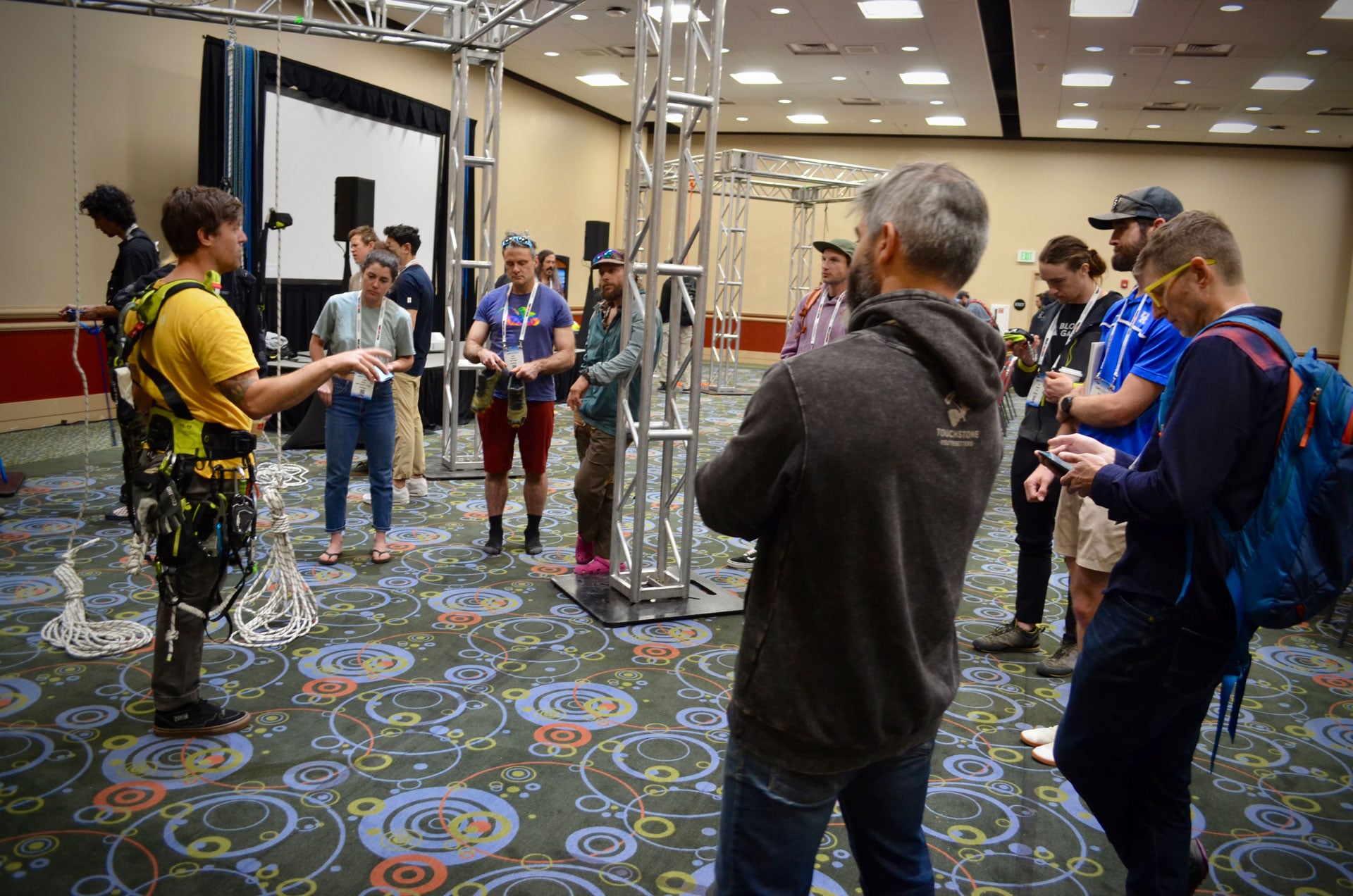
During this year’s Summit, providers for all those organizations made themselves available to answer questions, and they gave guidance to head routesetters and owners interested in adopting the program.
More Gear Is Out There
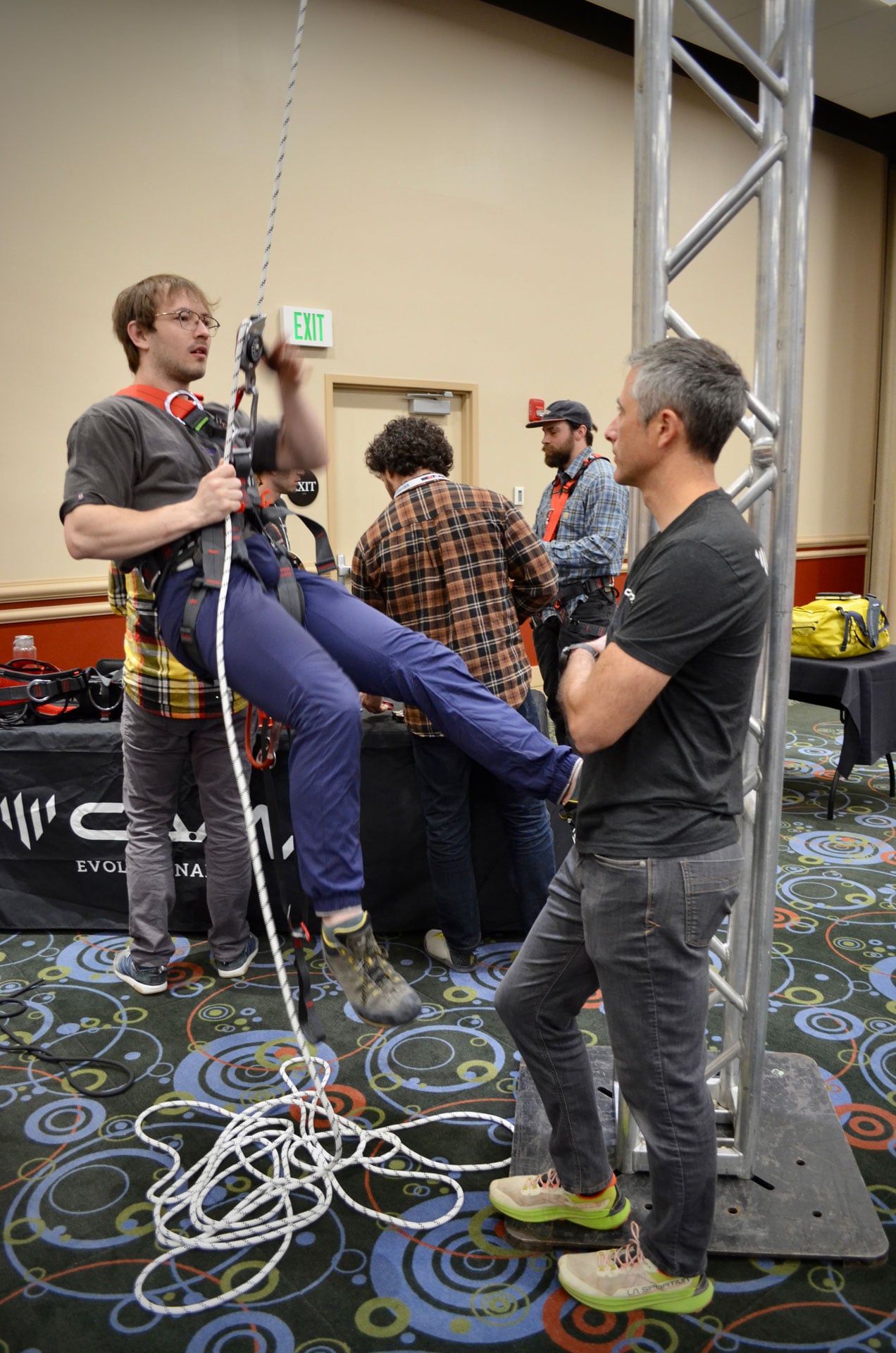
We also saw a huge uptick in interest in Work at Height gear and education.
On Thursday, reps from Camp, Edelrid, Petzl and Trango set up in a conference room to demo their gear. Participants got to try out equipment on scaffolding as the reps answered questions, and Josh Haynes (the CWA Education Manager) and myself answered questions about the certification programs.
The ability to try different pieces of equipment from different companies in the same space was a real game changer for attendees; most of us only get a chance to try the kit provided by our gyms. Personally, I hope we repeat (and expand!) this offering next year.
The Good Kind of Change
I’ll be real, I miss some of the party vibes. The industry is changing, and I get nostalgic sometimes. But it’s also gratifying to see the progress that we’re making.
Routesetters have been working so hard to create professional paths forward in the climbing industry, and I’m starting to see those paths take shape. Whether or not we’re ready, the industry is growing up.
I hope we never lose the weird and wonderful parts of climbing and routesetting that make it so special to so many of us…But I think that some of the changes we’re seeing mean that more of us will be able to pursue the craft we love well into the future. And hopefully it’s a future that comes with it all: the best of the past and the professionalism we need.
About the Author

Foxman McCarthy-James is an owner and consultant with Vortex Routesetting and Routesetting and Work at Height Education Consultant for the Climbing Wall Association. She has brought her background in education into her routesetting career, teaching routesetting clinics and writing Work at Height plans for organizations around the country. She is passionate about continuing the conversation on how we can make our industry more welcoming and inclusive.
Looking Back: From Bygone Days to a Modern Show
by Chris Wall
It had been a long time since I’d last been in the Salt Palace in Salt Lake City, and walking in gave me a weird little time-warp moment.
At first glance, it instantly took me back to the old Outdoor Retailer show days. Same big convention-center energy, same acres of booths, same feeling that you should probably have worn more comfortable shoes.
But the big difference was obvious almost immediately: this event had a near-exclusive focus on indoor rock climbing.
Leaps Forward
There were plenty of hold companies and wall companies at this year’s Summit, which of course makes sense. A climbing gym without holds is just a fancy room full of regret, and a climbing gym without walls is even more of a problem.
But compared to the OR show, there was a noticeably broader range of companies that weren’t directly tied to the physical gear of climbing itself.
Alongside the usual hardware suspects were groups like CBJ, climbing gym insurance providers, legal representatives, software and marketing companies, and other businesses that exist because climbing gyms have grown up and now need adult supervision.
The whole thing felt more polished, more specialized, and honestly more professional than what I remember from OR. Less dirtbag trade show, more “we have a business plan and an insurance rider.”
Refining What Works
In the world of climbing holds, though, it didn’t feel to me like there had been some wild revolution. Since the introduction of polyurethane and monochromatic holds, and then the more recent addition of dual-texture holds, the basic landscape seems pretty familiar. Sure, there are more companies than ever, and more shapes than anyone could ever reasonably need. If you want a hold shaped like a blob, a dish, a spike, a potato, or a philosophical question, someone probably makes it. But the overall story still feels pretty similar. More variety, yes. Total reinvention, not really.
Climbing wall manufacturing, on the other hand, I could tell has definitely come a long way. Like the hold world, there are more companies in the game than ever, and like holds, walls remain one of those pesky essentials that gyms just can’t really do without. But even here, the model is still pretty recognizable: “We design it, we build it, we install it, and here’s a glossy brochure proving we can.”
The biggest shift seems to be that nearly everyone is now trying to angle their way into the adjustable board market. That’s where it felt to me like the real buzz was. Still, beyond the evolution of the mechanical systems, it mostly looks like companies are building bigger and shinier versions of what the originals—Kilter, Tension and Moon—already established, with improved lighting systems, cleaner interfaces, and more software wrapped around the same basic idea: make the board steeper, flashier, and more irresistible to people who enjoy suffering recreationally.
Filling Knowledge Gaps
One thing that did stand out to me as a real addition over the old OR days was the talks. Those felt genuinely useful. There were a lot of chances to hear people speak on a wide range of topics: management, software, training, marketing, operations and more. That gave the whole Summit much more substance for me than just walking around collecting business cards and pretending you’ll follow up with everyone.
As someone who has worked at the same gym since 1992, a lot of the products and even some of the talks felt like old hat. Familiar ground. Still, I found real value in the topics I know less about.
And I think if I were starting a new facility, or planning to add another one, this Summit would become a yearly event for me without much debate. The sheer volume of exposure to gym essentials, industry trends, and useful contacts in this corner of the outdoor industry—or maybe now the indoor industry—would be enough to make my head spin. In this case, that would be a very good thing.
About the Author
Chris Wall is Boulder Rock Club’s head trainer and coach. He has been training and coaching climbers of all abilities for over 30 years. He has written performance and training articles for many climbing and conditioning magazines, and he’s currently the head coach of Team BRC.
Chris holds a master’s degree in exercise physiology and is an NSCA Certified Strength and Conditioning Specialist. He has taught climbing performance camps and seminars across the country and has worked with numerous trainers, exercise scientists and coaches to develop a complete training philosophy and program that is fun and effective.
Community, Connection, and What Actually Drives Growth
by Megan Cheek
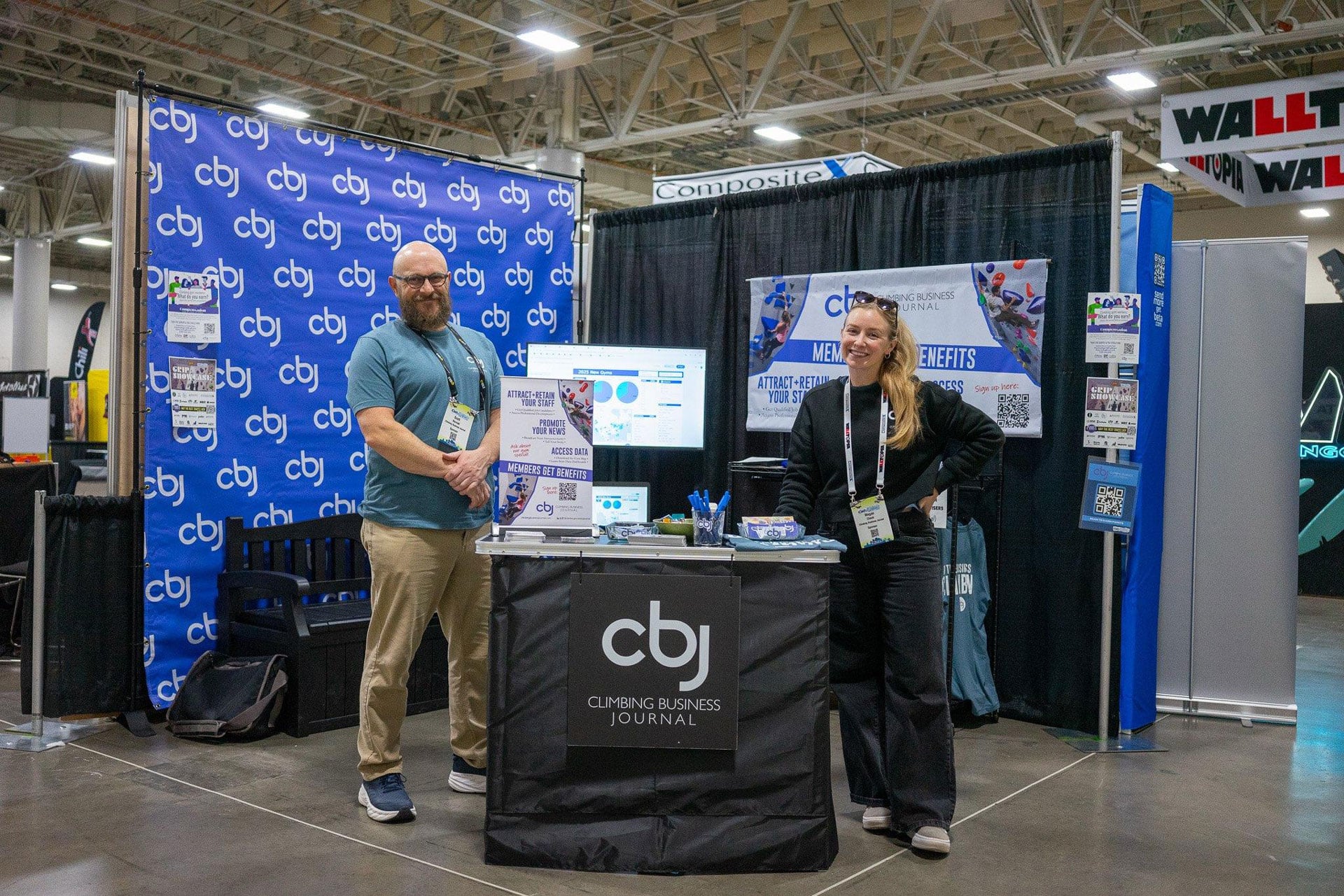
Walking into the trade show floor on Tuesday at this year’s CWA Summit felt a bit like Christmas Eve. Brands were still building out booths, energy was high, and behind the scenes there was a lot more going on than most people ever see.
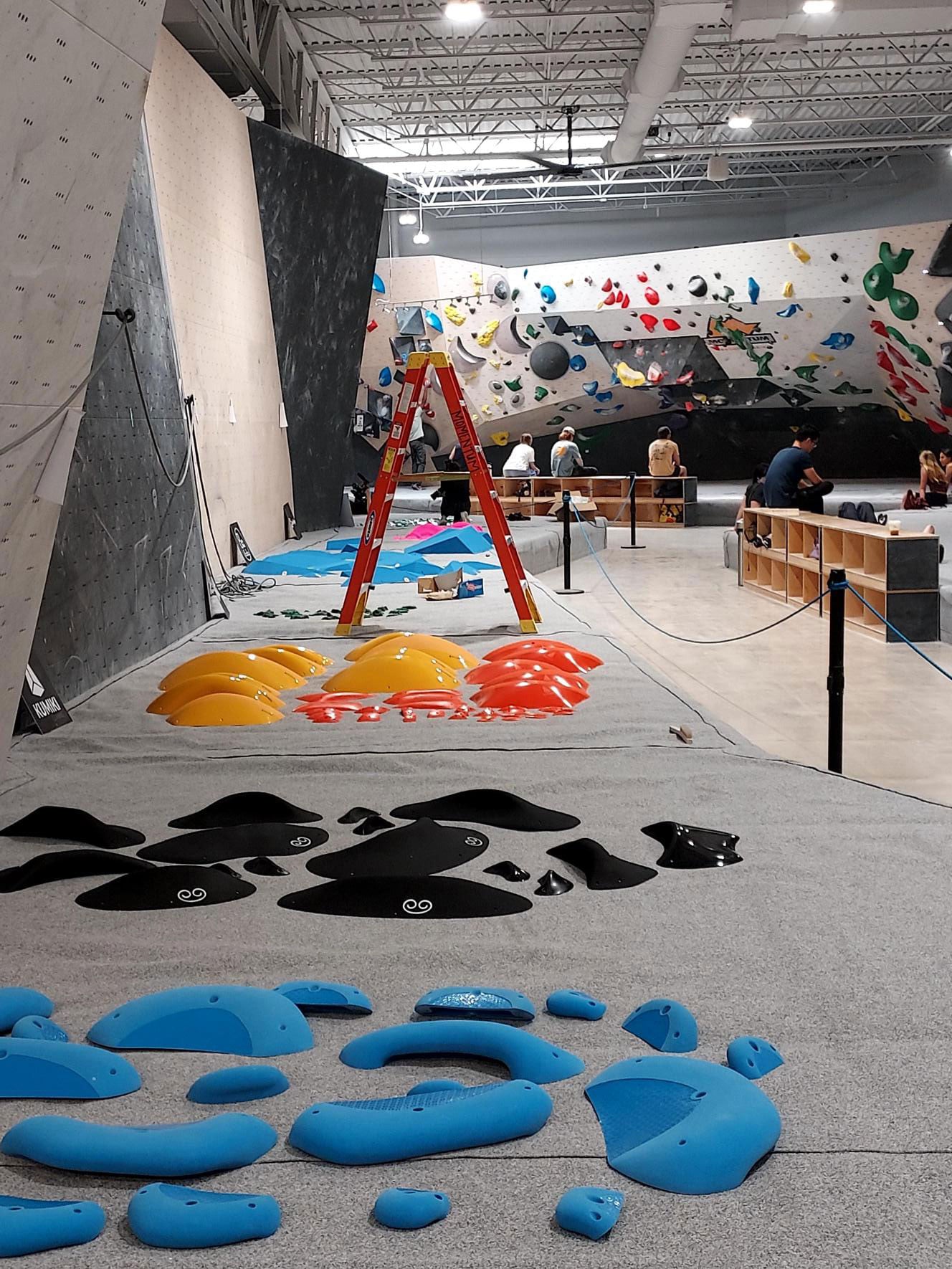
I was there on behalf of Climbing Business Journal, and it was one of those moments where you zoom out and realize how much work goes into creating the experiences we all get to enjoy on the surface. Earlier in the week, we spent hours unboxing and prepping for the Grip Showcase, working with routesetters and media teams to get everything dialed before climbers ever touched the wall.
This is my second CWA Summit, and my first looked very different. Back in 2022, I had just transitioned into the climbing industry. I felt like a new fish in a big pond. Now, it’s clear to me that while the industry is growing, it still operates like a small pond in the best way. There’s depth, history, and a tight-knit community that continues to evolve quickly.
The Energy Behind the Industry
By the time day one officially kicked off, the energy on the trade show floor was immediate.
Yes, people were tired from travel and long days. But the willingness to connect, share ideas and have real conversations stood out. I reconnected with people I had only worked with digitally and met others launching new gyms, new ideas and new chapters in their careers.
Some of the most impactful moments weren’t in sessions. They were in quick, in-between conversations with folks at the event: a former principal of 20 years now working as an operations director; a climber from one of our gyms now opening their own facility; industry veterans sharing stories from the early days.
Over and over again, I heard the same sentiment: this is what it’s all about.
That focus on people and connections aligns with what I continue to see at the CWA Summit each time. In addition to the sessions and trade show floor, the real value also comes from relationship building and bringing together people from across the industry for a shared experience.
From Posts to People: Rethinking “Viral”
One of the standout sessions for me was From Posts to People: How Climbing Gyms Go Viral.
I went in skeptical.
As a marketer, I’ve seen what “viral” often looks like across platforms, and it doesn’t always translate to meaningful business outcomes. But this session reframed the concept entirely.
Viral does not have to just mean more social reach. It can mean fostering community champions—people who believe in your gym enough to bring others in—and creating real, human experiences that extend beyond the screen.
That distinction matters, especially as gyms continue to invest more into digital marketing, paid ads and content. Coming away from that session, I felt even more strongly that the biggest opportunity for us as marketers is not just reach. It’s resonance.
AI, Data, and the Tension Between Scale and Trust
The topic of AI also surfaced throughout the week.
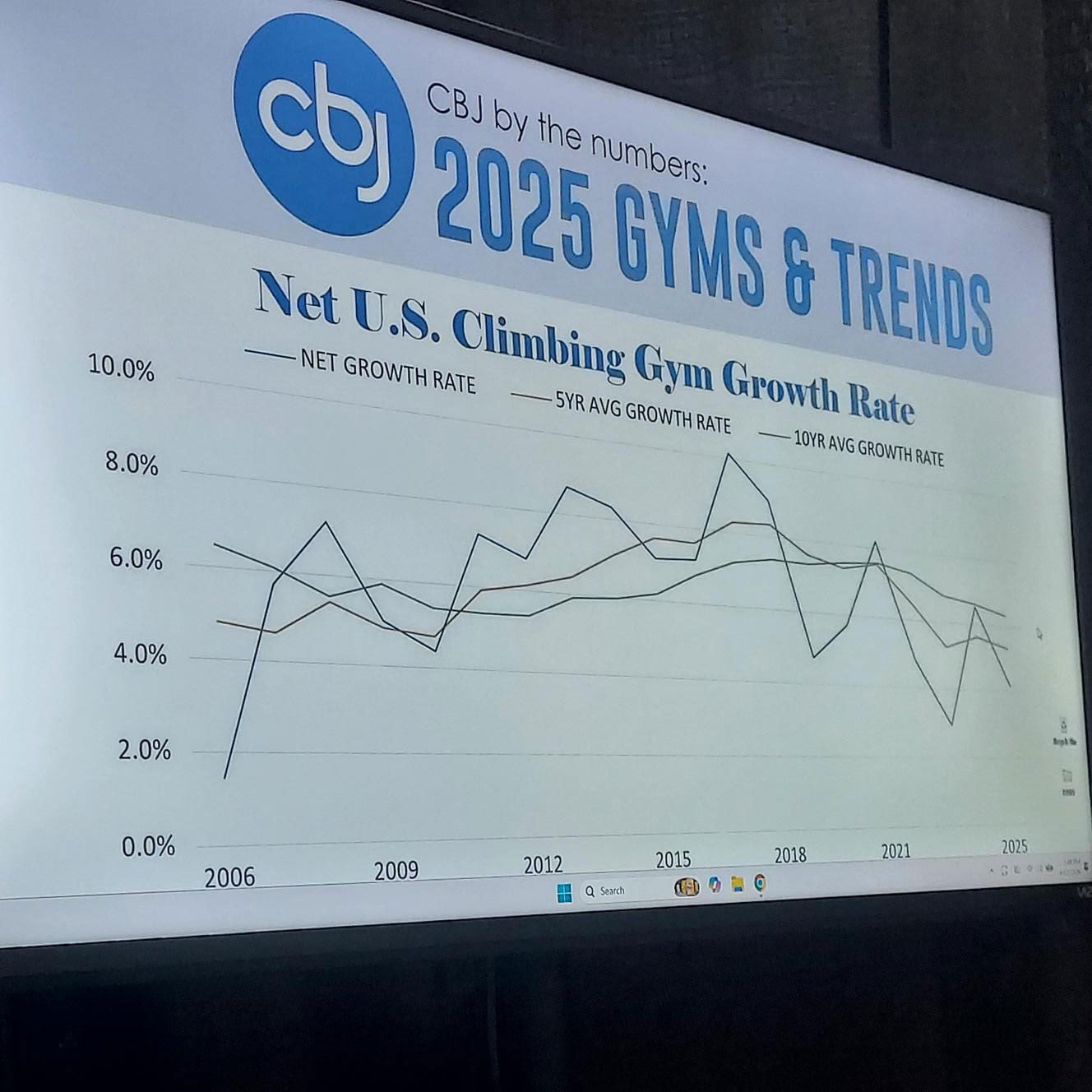
In talking with attendees, I could tell there’s clear opportunity to use AI to scale marketing, operations and decision making. At the same time, there’s a growing awareness around data usage, ownership and ethics.
The default is aggregation. Data gets collected, stored and used to train larger systems. While that process may not be identifiable in the end results, the broader question is still there: How do we use these tools without losing trust in the people they’re built to better serve?
At the same time, there was a consistent undercurrent across the conversations: As technology scales, people are craving human connection more than ever.
That dynamic creates an interesting tension and opportunity for climbing gyms.

The Myth of the “Top Rope Graveyard”
Another theme that kept coming up in conversations was the idea of longevity in climbing.
The “top rope graveyard” narrative is something many of us have heard: The assumption that as we grow older our progression slows, intensity drops, and participation changes in a way that feels like a decline.
But after multiple conversations, that narrative started to feel more like a myth to me.
There was a shared belief that with proper physical care, realistic expectations and intentional recovery, climbers can continue to push themselves well into later stages of life.
That shift in mindset feels especially important as the industry matures and retention becomes just as critical as acquisition.
The After Hours Reminder
The afterparty was a reset.
Founders, owners, operators, setters, coaches…Everyone climbing. No titles, no hierarchy, just people on the wall.
It was a reminder for me of why so many of us are here in the first place.
It’s easy to get caught up in the business side of the industry: growth, revenue, performance, marketing systems…But at the core, in many ways climbing is still about connection—to the sport, to each other and to ourselves.
Marketing, Growth, and Protecting the Core
In addition to my work with CBJ, I oversee marketing for multiple gyms across the East Coast. So, I’m constantly thinking about performance, growth, and how we encourage more people to try the sport.
That lens was present in many of the dialogues we had last week.
Yes, the technical side of marketing matters. Acquisition, lifecycle, paid media, conversion tracking…All of it plays a role in scaling a business.
But the overarching theme I heard us keep coming back to was this: We cannot lose the soul of what we are building.
We discussed how marketing is not just about driving traffic but about carrying the values of the business into every channel—digital, in-person, and everything in between.
Time and again, it was reaffirmed that if climbing genuinely makes people’s lives better, then that should be the thing that shines through most clearly, what creates long-term growth, and what turns first-time visitors into lifelong climbers.
Closing Reflection
The CWA Summit continues to be a place where the industry comes together to reflect, connect and recalibrate.
Even as the industry faces new challenges, evolving technology and changing consumer behavior, one thing felt consistent to me: This is still a people-first industry.
At CBJ, we came to meet you because we do this work for you.
And the question that feels most important to me coming out of the week is simple: How can we better support the people who make this industry what it is?
About the Author

Megan Cheek is a yoga teacher and climber who discovered climbing in 2017 and hasn’t looked back since. After starting her career in secondary education, she transitioned into the climbing industry in 2022—first as a program manager and later as the Director of Marketing for Climbing Collective. She’s passionate about bringing climbing to more people and enhancing lives through recreation and healthy living. Based in Charlotte, NC, Megan enjoys long walks with her dog, weekend trips to the beach, and listening to audiobooks.
CBJ is proud to be the official media partner of the 2026 CWA Summit.