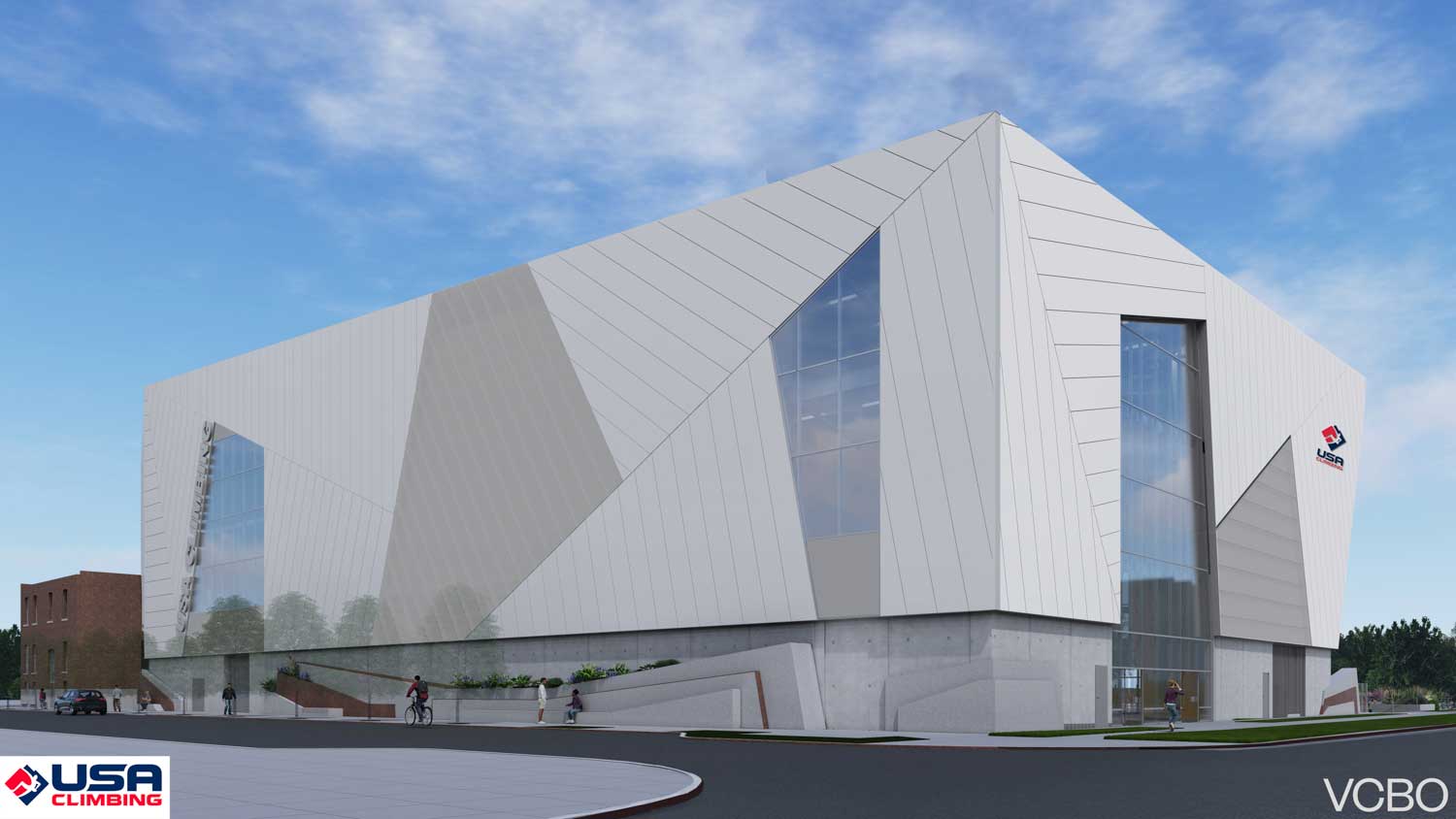
In one of the latest developments related to USA Climbing’s plans for a new National Training Center, signatories representing more than 100 climbing gyms recently submitted a letter to Salt Lake City’s city council objecting to the creation of the National Training Center in its current form.
The letter to city council members, authored by a self-described “coalition” of climbing gym owners and operators last month, stated, “Our facilities introduce most new climbers to the sport, train competition athletes, and host the events that sustain USA Climbing’s (USAC) mission and operations. The success of USAC’s proposed National Training Center depends on the support of the commercial climbing gym industry that forms the foundation of the sport. As currently proposed, [USAC’s National Training Center] project does not have broad industry support.”
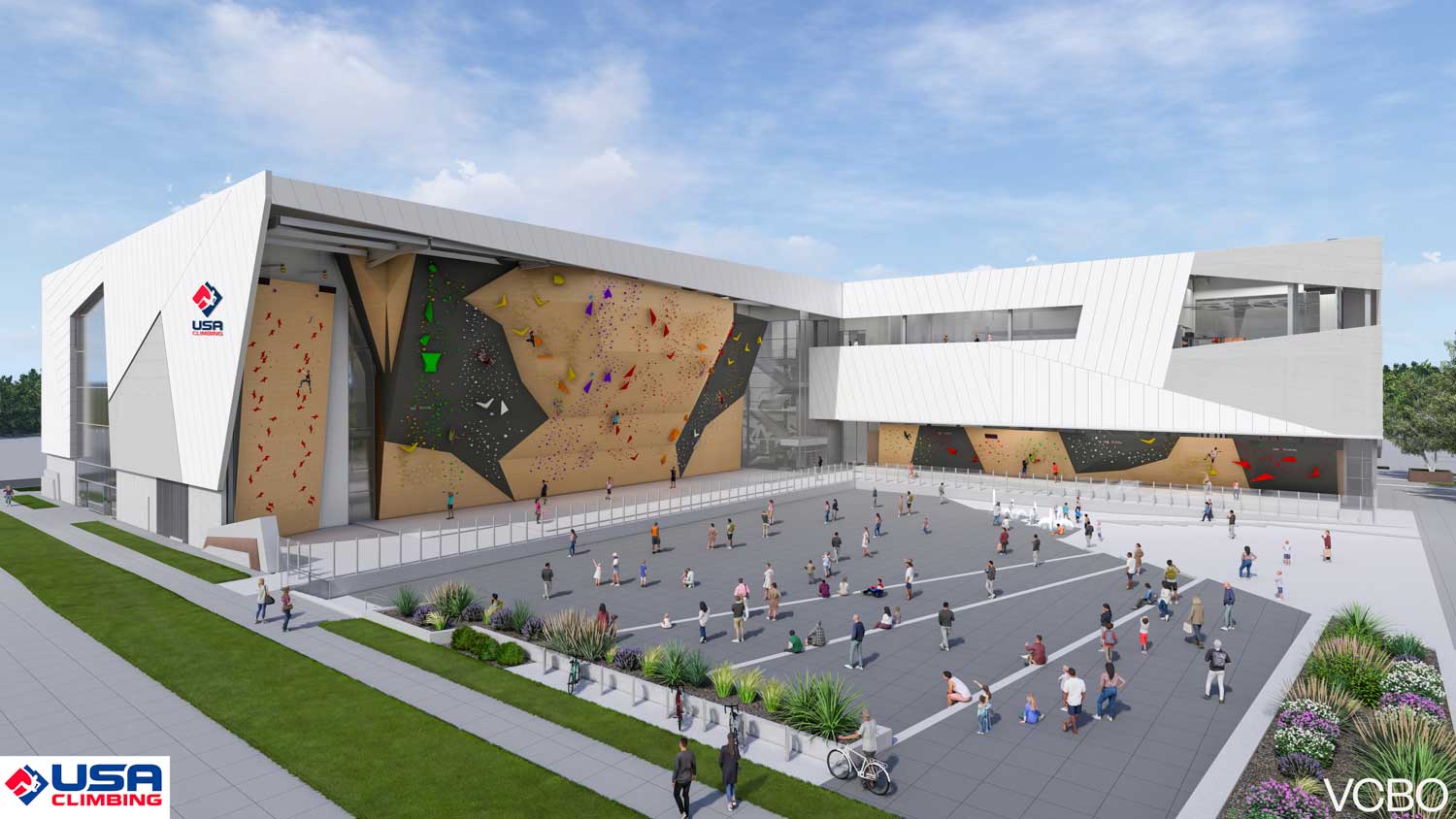
The gym operators’ main objection to the National Training Center pertains to the center’s planned “commercial gym” component. The new Training Center, as currently proposed by USA Climbing, would be located in Salt Lake City and would not only serve as a training space for Team USA climbers—such as would-be Olympians and World Cup trainees—but also as a climbing gym open to the public. (Although not named in the letter, it was announced in 2024 that Momentum would be USA Climbing’s gym partner for operating the National Training Center.)
The letter from gym operators specifies: “[Our] lack of support stems from [USA Climbing’s] failure to address industry concerns that have been raised…about its intention to own and operate commercial climbing gyms, including the facility central to the National Training Center project.”
What led to the February letter, and where do things currently stand with the National Training Center project? We overview the backstory and recent events below. (More coverage of past National Training Center pushback can be found in the CBJ news thread here.)

Ongoing Concerns
Pushback to the National Training Center from climbing gyms in Salt Lake City and around the country is not new. For more than two years, dozens of gym operators representing individual gyms and multi-gym chains have expressed concerns—formally and informally—that a commercial gym space within the greater National Training Center might draw customers away from other local gyms around the Salt Lake City region, siphon resources from USA Climbing’s other areas of focus, and possibly prompt favoritism toward the partnering gym brand (Momentum) from USA Climbing. There has also been broad objection to USA Climbing opening any profit-making commercial tier after the organization has spent decades holding competitions in gyms around the country that utilized volunteer labor provided by the gyms.
“We cannot and do not support…a commercial endeavor that conflicts with USA Climbing’s own non-profit structure, history of grassroots development of competition climbing, and cooperation with the national commercial climbing gym community,” stated an early letter from December 2023 signed by operators representing 75 gym locations.
In response to the objections over the years, USA Climbing has released detailed plans and press releases, formed Task Forces, invited feedback from gym operators, added a gym operator to the organization’s Board of Directors, and established a joint committee with the Climbing Wall Association. At one point, USA Climbing even paused all National Training Center plans and proceedings for 45 days. However, this recent letter from myriad gyms—including several large and small chains, such as Central Rock Gym, Touchstone, Bouldering Project, VITAL, First Ascent, Sender One, Mesa Rim, Vertical Endeavors, Edgeworks and others—indicates that USA Climbing’s efforts have not assuaged the concerns and objections of dozens of gym operators.
It should be noted that not all gym operators in the U.S. are in opposition to USA Climbing’s current direction. When U.S. gym operators taking CBJ’s 2025 Gyms & Trends Survey were asked how optimistic or concerned they were about their country’s governing body for competition climbing (USA Climbing), 29% of the 205 U.S. gym locations represented in the survey had operators who rated their concern level to be low (1 or 2 on a 5-point scale), compared to 18% who had a high concern level (4 or 5 out of 5). But the fact that 71% of those responses showed some level of concern beyond a low level suggests there is not unwavering optimism among gym operators at the moment, and, given the pushback, the commercial side of USA Climbing’s National Training Center project is likely contributing to this sentiment.
A Hefty Price Tag
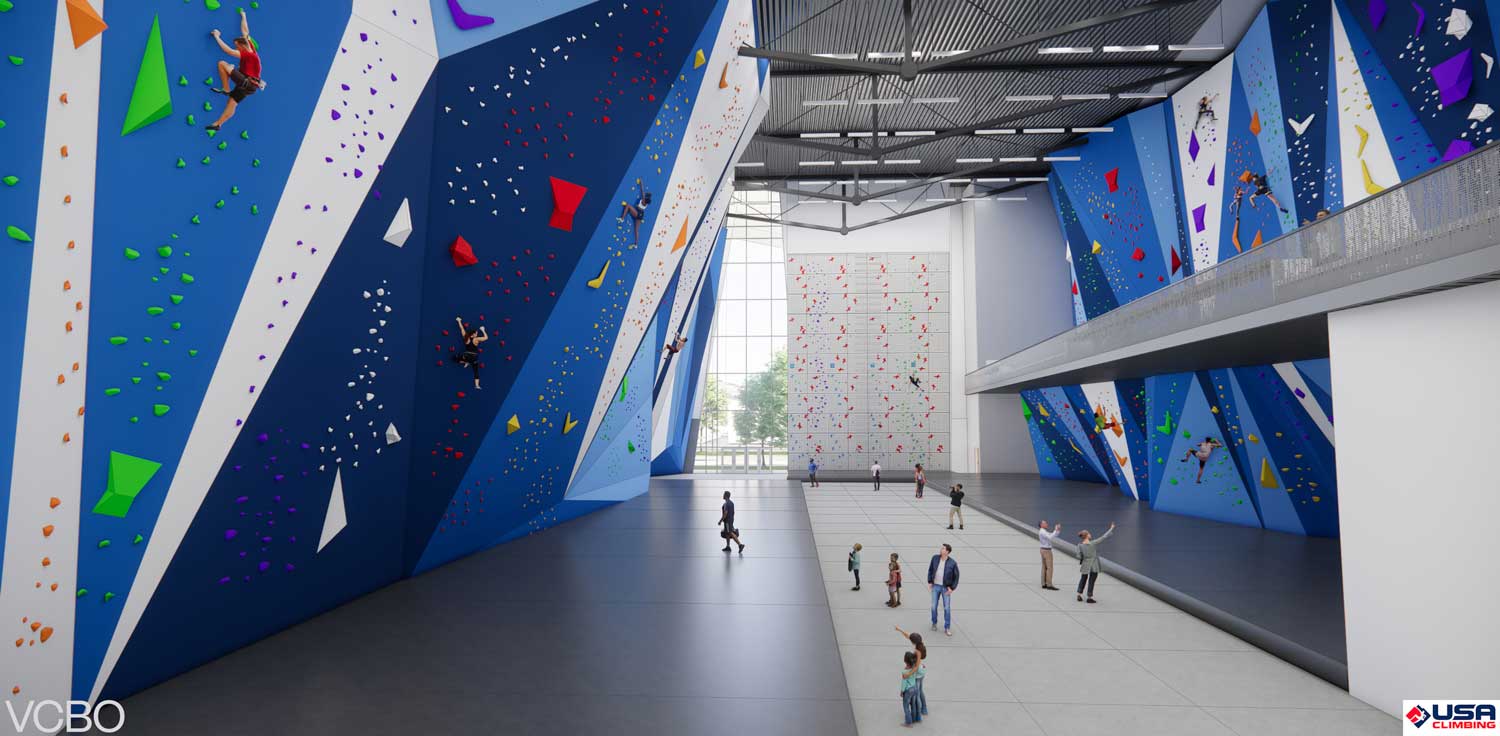
One of the core factors behind that commercial component is the cost it would take to complete and sustain such a project. The cost of building a new National Training Center was once estimated at $30 million, per USAC’s FAQ page on the topic. The elaborate facility would be built to accommodate approximately 400,000 visitors each year, according to USAC’s website, and it would host various events and competitions (and feature training resources and accouterments) for the youth, collegiate, para and elite divisions. What’s not clear at this juncture is whether (or how) USA Climbing would possibly be able to fund a National Training Center without a commercial gym component acting as a key profit-generator for the center.
The February letter to Salt Lake City’s city council from gym operators did not offer suggestions for alternative funding for the operation of the National Training Center. The letter simply stated, “The climbing industry wants this project to succeed—but our support is for a true National Training Center, not a commercial gym. We respectfully request that the commercial climbing gym component be removed before the project moves forward.”
Marc Norman, President and CEO of USA Climbing—which is headquartered in Salt Lake City—told CBJ that he is disappointed the letter was not shared directly with USA Climbing leadership. When asked about the next steps in the process amid the letter and its reverberations, Norman said, “USA Climbing is in process of finalizing the designs of the facility after receiving unanimous approval from the SLC Planning Commission and is focused on the capital campaign to secure the funds necessary to begin construction. We continue to support the Board-approved key project pillars of Performance, Events, Accessibility, and Community Access.”
The Road Ahead
Debate and discourse will likely continue among USA Climbing and gym operators around the country over the coming months, in various ways (and with varying measures). According to a Building Salt Lake article, the Salt Lake City Planning Commission’s approval of the design plans took place last month. However, the Board for the Community Reinvestment Agency (CRA) in the city—which is led by the city council—opted to not take a decision yet on the request from the center’s developer for an additional $250 thousand to $1.3 million in funding for the project, per the article. (The funding request is tied to an ongoing discussion about the reuse—or preservation—of an historic building in the area of Salt Lake City on which the training center would reside.)
Within the U.S. climbing gym industry, some operators have floated the idea of boycotting all USA Climbing events—a move of solidarity that has been proposed by gyms in the past but has yet to gain any uniformity among gyms at a widespread, national level.
Tod Bloxham, owner of Edgeworks Climbing, said he certainly expects collaboration and solidarity among gyms at a regional level to grow. “We are already seeing gyms across the country, like the coalition of California gyms launching the new Pacific Climbing Series, come together to create alternative competition circuits that better serve local athletes, expand access for different skill and interest levels, and build community in ways that aren’t tied to the traditional USAC model,” Bloxham noted. In addition to the Pacific Climbing Series, another competition series that has been gaining traction in recent years is the American Scholastic Climbing League, which originated in Colorado and now spans 12 states.

Aside from the National Training Center developments, USA Climbing’s current strategic plan (for 2025-2028), released last October, references intentions to establish “Regional Training Sites” around the country. According to the plan, these sites would be “established in partnership with gyms in multiple locations throughout the country,” which has heightened concerns for some gym operators in the industry. (As written in the gym operators’ letter to the Salt Lake City city council, “These concerns have been intensified by USAC’s partnership with a private, multi-state commercial operator and by its published strategic initiative to establish regional training sites across the country.”)
Bloxham at Edgeworks explained to CBJ, “USAC’s published strategic vision includes establishing similar regional training sites by 2028. It raises real concern that a regional training center model could involve partnering with a gym in our region, providing institutional backing that directly benefits one operator while competing with the broader market for competitors and coaching talent. Even with one of the largest and most successful teams in the Northwest, it would be difficult to compete on equal footing if a USAC-supported facility were positioned to recruit from the same athlete and coach base we have developed over the past two decades.”
Currently in Salt Lake City, the National Training Center project has been moving forward with the commercial component of the operating model intact, although the request for additional funding is pending the CRA Board’s approval. In the meantime, last month USA Climbing also announced a multi-year partnership with Bulgaria-based climbing wall company Walltopia—which is a major shareholder of Momentum—as the Official Climbing Wall, Official Training Board Frame and Official Permanent Padding of USA Climbing. Per the announcement, “The collaboration will play a key role in preparing U.S. athletes for the highest level of competition, especially as USA Climbing plans to open a new National Training Center and send a full team of athletes to the LA28 Olympic and Paralympic Games.”
Stay tuned to CBJ for more news on key developments related to USA Climbing’s National Training Center project and competition climbing in the industry.