Professionalizing the Climbing Gym: From Passion Projects to Ecosystem Thinking
By Cassim Ladha, Founder & CEO, Griptonite
1. A Time of Transition and Uncertainty
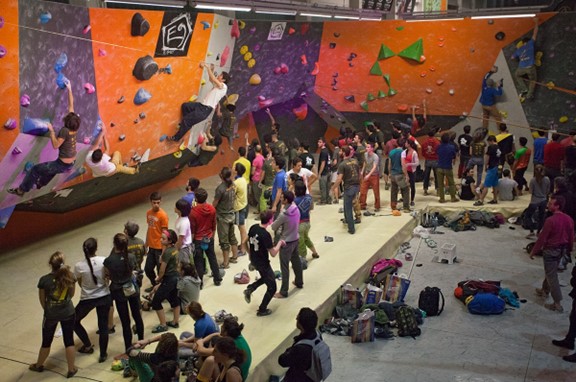
At this year’s ABC Conference, one theme echoed across sessions: change. Visitation has plateaued for the first time in over a decade, while venture capital and private equity money are flowing into the sector. Established chains are expanding, smaller independents are being acquired, and the sense of “community-led” climbing gyms is at risk of being overshadowed by scale.
For many gym owners, the future feels uncertain. Margins are tightening, competition is increasing, and the next few years will likely determine which businesses endure and which fade. But uncertainty also creates opportunity. The gyms that thrive through this next phase will be those that professionalise — introducing systems, tools, and processes that strengthen the business without diluting its personality. This isn’t about becoming corporate. It’s about becoming sustainable.
“Ecosystems drive value by creating more user connections so that people visit more often and spend even more time.” — Stuart Crainer, (Thinkers50)
2. The Human Foundation of a Climbing Gym
For most climbing gyms, staff costs represent between 60–65% of total outlay. That’s not just a financial burden — it’s a reflection of what makes our spaces special. Climbing gyms are powered by people: the instructors who remember every regular’s project, the desk staff who greet newcomers, the setters who build experiences that bring climbers back.
These people aren’t interchangeable; they are the brand and culture. And yet, in many gyms, much of their time is consumed by manual admin and repetitive tasks — scheduling, organizing rota-swaps, event logistics, membership queries, or reconciling payment discrepancies. Professionalization doesn’t mean replacing staff with software. It means using software to give them back time to do what they do best — connect, inspire, and build community.
“Leaders realise uncoordinated efforts are inefficient and risk demotivating internal employees. — Altman, Kellogg & Kiron, Orchestrating Workforce Ecosystems, MIT Sloan”
3. Professionalisation ≠ Homogenisation
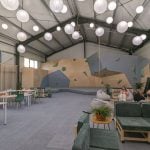
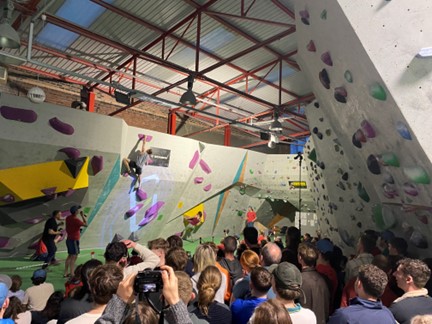
Every climbing wall is unique. Some are minimalist board-training studios. Others are sprawling co-working spaces with cafés, retail stores, yoga rooms, or even hotels attached. This individuality is part of what draws people in — and part of what must be protected.
Software should never flatten that character. The right systems bring efficiency while preserving flexibility — allowing a gym to operate playfully, creatively, and in a way that authentically represents its brand. The key is to view digital tools not as plug-and-play products but as extensions of your gym’s culture. A great system amplifies your personality and product. A poor one homogenises it.
4. Software as a Supportive Tool
There are dozens of time-consuming tasks that can be automated or streamlined: staff scheduling, payroll, event logistics, route-setting communication, marketing, membership management, and payment reconciliation. Each of these processes consumes valuable hours that could be spent on community-driven work. Automating them doesn’t just improve efficiency; it improves morale, consistency, and the member experience.
“Orchestrating workforce ecosystems aligns human effort and digital tools so that both contribute to value creation rather than competing for time. — Altman et al.”
5. The Myth of the “All-in-One” Solution
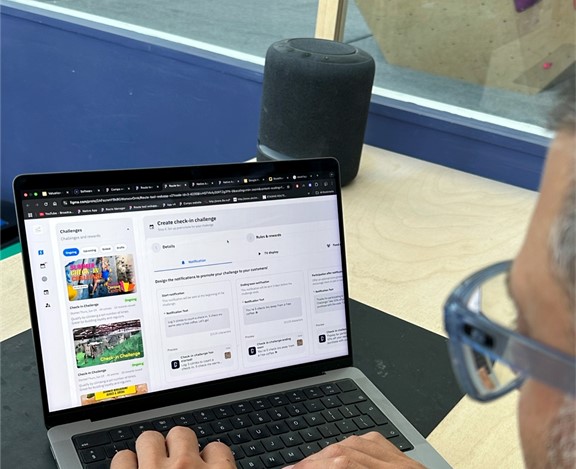
Last year as a company we visited six trade shows and industry events, it’s common to hear talk of finding software that offers a ‘complete feature set’ or that ‘runs the entire gym.’ It’s an appealing idea — one platform that does everything, from check-ins to payroll to POS. But in practice, this ‘holy grail’ approach rarely delivers what gyms actually need.
If we look across other industries, successful businesses don’t rely on one piece of software to do it all. Instead, they use systems of tools — each chosen for its specific strength — that work together to improve both customer experience and operational efficiency.
In a climbing gym, that looks something like this:
• Café systems that can note allergens, call out ready kitchen orders, and split bills.
• Competition software with live results, engagement stats and judged finals
• Retail tools that support gift cards, loyalty schemes, and online payments.
• Accounting platforms that report customer lifetime value and acquisition costs by discipline and ability
Each system serves a distinct purpose and even has an interface tailored to the use case (mobile, tablet, desktop). The power lies not in forcing them all into one platform but in linking them so they share data. This modular approach mirrors Sangeet Paul Choudary’s concept in The Power of Ecosystems: industries evolve from monolithic to modular, connected ecosystems.
6. Learning from Ecosystem Thinking
Across industries, there’s a clear shift from vertical monoliths to interconnected ecosystems. In The Power of Ecosystems, Sangeet Paul Choudary describes how modular architecture enables firms to stay innovative by connecting rather than consolidating. APIs and open standards make collaboration possible, and those who embrace it gain resilience.
“Ecosystems grow the pie so there’s more value for everybody. — Kalina Nikolova, Verizon Media / Thinkers50”
7. From Monoliths to Modular Departments
Instead of seeing the climbing gym as a single business, it’s useful to think of it as a network of smaller enterprises: Front of House, Café, Coaching, Route Setting, Retail, and Events. Each department has its own workflows and metrics. By departmentalising, responsibility becomes distributed, allowing efficiencies to develop and surfacing issues early.
This echoes the distributed orchestration model described by Altman et al. — local experimentation with central coordination.
8. Integration: The Missing Link
The climbing industry already has brilliant, purpose-built digital tools. We have tools built for our specific industry needs like route databases (Griptonite) and POS/CRM systems (like GymRealm, Capitan and Clava) and course booking and gift card software (such as Dr.Plano ). What’s missing isn’t innovation — it’s interconnection. Like healthcare’s move toward shared data standards, climbing gyms need a common interface for user profiles, check-ins, and spending data.
Griptonite has been actively building this connective tissue, developing integrations that link route-setting data, member engagement, and operations into one coherent picture; please contact us to find out more on this vision.

9. A Call to Collaboration
The next stage of growth in indoor climbing won’t come from more walls or bigger facilities — it will come from smarter operations. Gym owners should map their business into departments, identify where staff time is consumed by low-value tasks, and use technology selectively to automate, not homogenise.
Software providers should focus less on owning the whole stack and more on integrations. The future of climbing software is collaborative.
“The future of work is through ecosystems – integrating internal and external contributors to perform mission-critical work. — MIT Sloan”

References and Further Reading
(Thinkers50) – https://thinkers50.com/books/the-power-of-ecosystems/
Orchestrating Workforce Ecosystems – MIT Sloan – https://sloanreview.mit.edu/projects/workforce-ecosystems/
COVID-19 and the Rise of Platform Ecosystems in Healthcare – Sangeet Paul Choudary – https://platformthinkinglabs.com/
Climbing Business Journal – Industry Trends Report – https://www.climbingbusinessjournal.com/
ABC Conference – State of the Industry Discussion – https://www.abcwalls.org/
CBJ press releases are written by the sponsor and do not represent the views of the Climbing Business Journal editorial team.