University of Pittsburgh Recreation and Wellness Center
Pittsburgh, Pennsylvania
Specs: The University of Pittsburgh opened its new student Recreation and Wellness center on September 14th this year, unveiling new climbing walls built by Walltopia. Previously at the University, students could access a smaller climbing wall—built to scale for the climbing community in 2003—which is no longer in operation. Construction on the new rec center began with the demolition of a parking garage in November 2019. The official groundbreaking ceremony took place in September 2022, and the University began finalizing the wall designs and color schemes in 2023. “The climbing wall is a much bigger part of the University of Pittsburgh,” said Sarah Sleva, Assistant Director of Outdoor and Adventure Pursuits with Campus Rec. “It’s a part of our recreation and wellness center that’s nine stories tall and part of the Pittsburgh campus master plan to improve infrastructure across campus.”

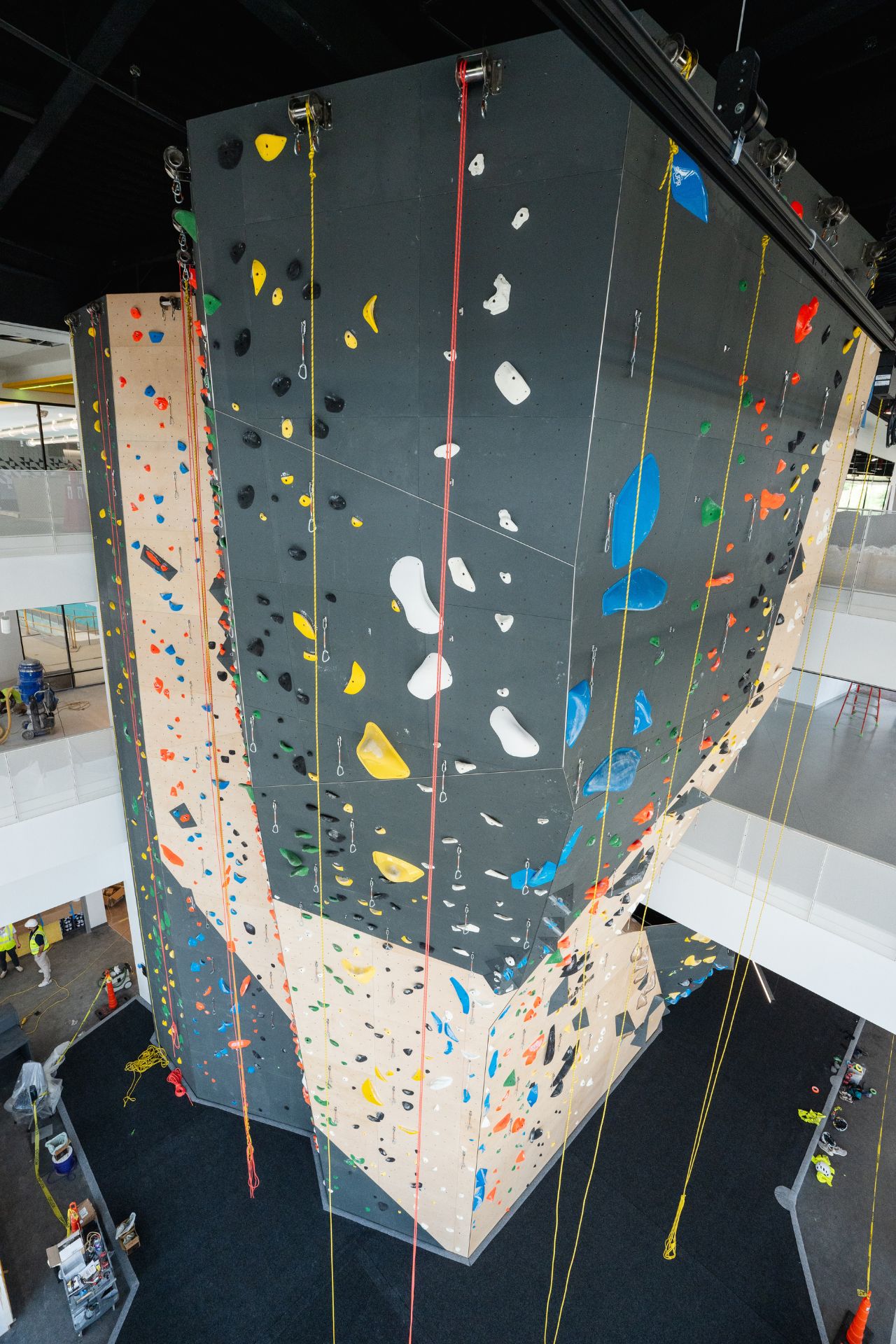
The 270,000-square-foot building houses all the campus’s main recreation options, including fitness and wellness amenities, intramurals, aquatics, and 5,000 square feet of climbing wall surface on roped walls reaching 49 feet and 14-foot boulders. The climbing section of the space features 13 top rope and lead climbing lines and a large section for bouldering, in what the developers describe as a World Cup-style layout, where one long wall with lead climbing wraps around and transitions into a main bouldering wall. There is also a smaller, vertical bouldering section in the back of the climbing area.
According to Sam Gotthelf, the Climbing Wall Supervisor with Campus Rec, the climbing program “[focuses] on everyone from novice climbers up to experienced climbers,” including the University’s competitive team. A wide variety of classes will be geared toward climbers of different skill levels and interests, such as bouldering basics, top rope 101 and a three-week lead course. There will also be a mix of group climbing events at the rec center, such as women’s climb night, BIPOC climb, queer climb, and nights for first-generation students. “A focus on creating a welcoming and supportive environment to feel safe” is a target of these community climbs, Sleva explained. Gotthelf said he hopes to hold other events, like competitions, at some point as well.
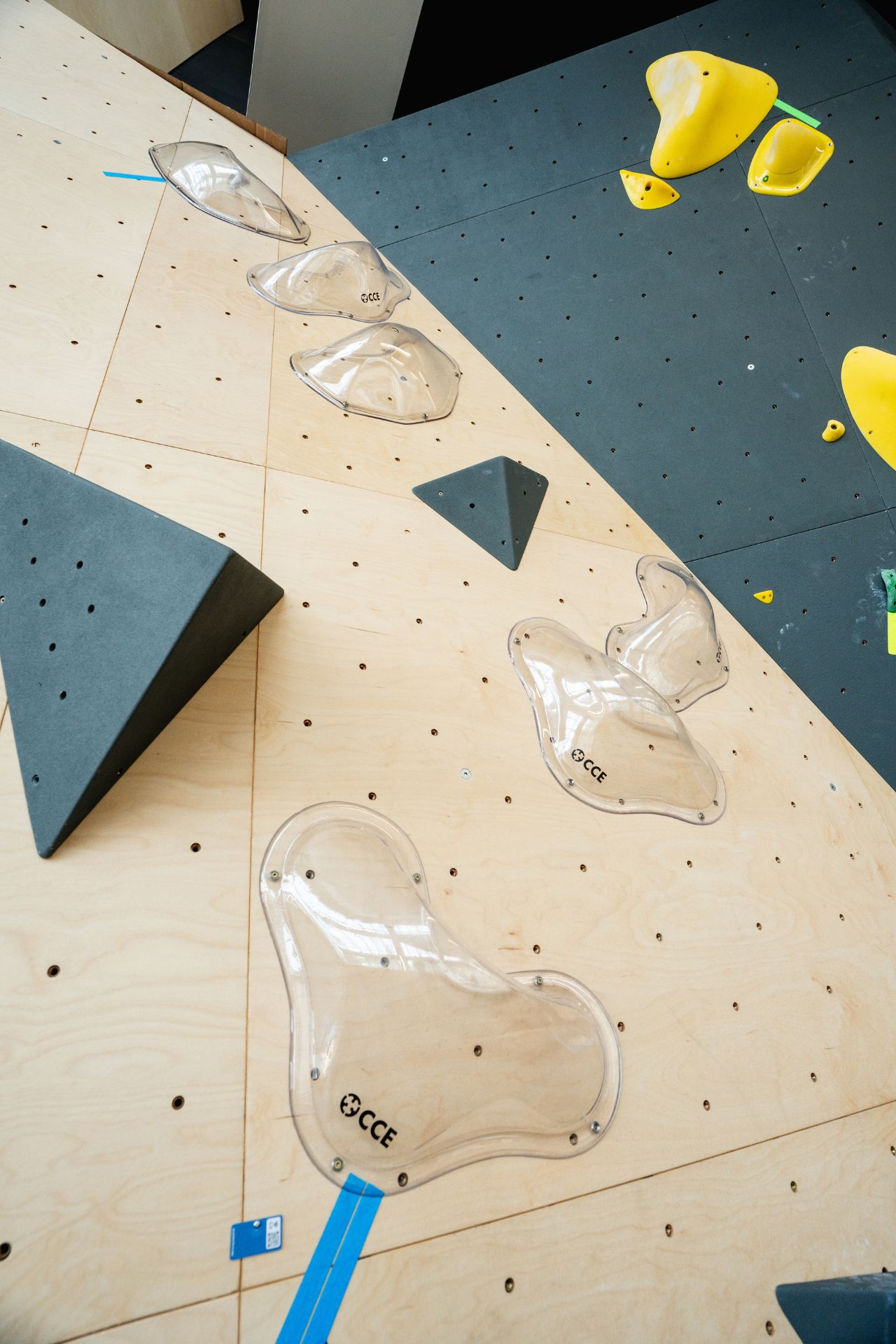
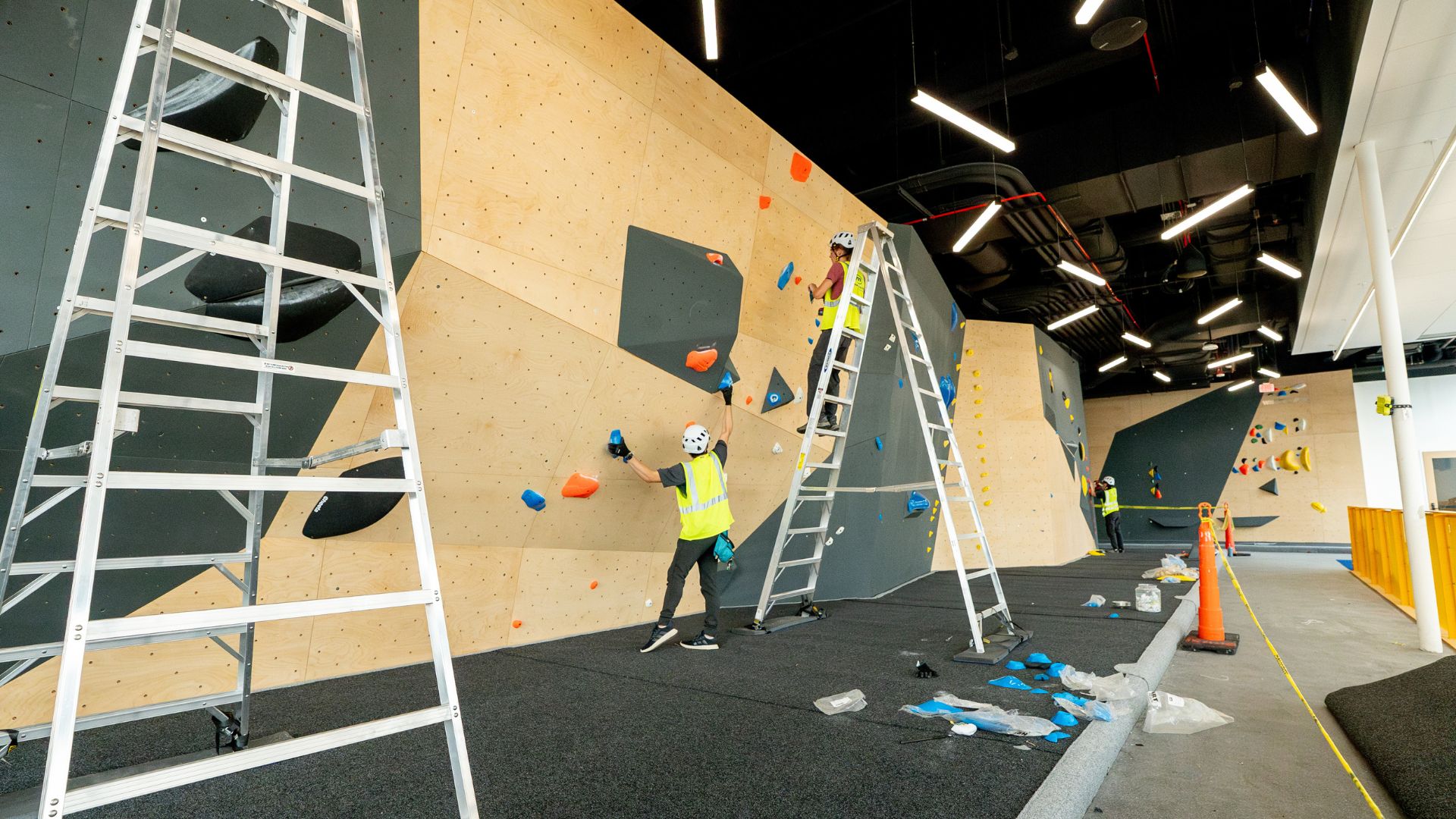
Gotthelf described the University’s routesetting program as something one may see at a commercial climbing gym, with Head and Assistant Head Routesetter positions, in addition to a team of dedicated setters. While most of the routesetters are students at the University, the rec center is partnering with Iron City Boulders—owned by Pittsburgh alum Dean Privett—to bring in guest setters. “[Privett] really sees the value in climbing and developing our students and our climbing team,” Sleva said. “We also have a partnership with him where our student staff get to participate in his climbing gym once a week for free with the day pass, so our student staff also get to experience his gym and so forth in that exchange of a great partnership.”
Walls: Walltopia
Flooring: Climbmat
CRM Software: Fusion
Website: www.reccenter.pitt.edu
Instagram: @PittRecCenter
In Their Words: “Just because you build the biggest, best, most expensive wall doesn’t mean you’re done. Constantly filling in your hold catalogs and having high-quality routesetting are really important aspects, because that is what really creates the climbing experience at the end of the day. Part of what’s so special about our sport is the fact that we have an ever-changing field of play, but that only goes so far if you’re not having high-quality routesetting and high-quality hold choices.” – Sam Gotthelf, Climbing Wall Supervisor with The University of Pittsburgh Campus Rec