Welcome back to the Setter’s Archive, where we explore the foundations of modern routesetting through classic wisdom. Here you’ll find setter essays originally published in The Art of Coursesetting and Fundamentals of Routesetting. We’re revisiting these stories in their original form because, while much has changed in the routesetting world in the last two decades, many core concepts remain the same. We hope these excerpts help you keep reflecting, learning, and growing professionally.
For more routesetting content, be sure to check out The Impact Driver podcast, Ask a Setter series, Truth Behind the Trade chapters, Behind the Wrench interviews and other routesetting-related articles on CBJ.

Intro by Holly Yu Tung Chen
Climbing competitions have been around for as long as climbing gyms, and there are even some that pre-date the oldest climbing gym. Back in the days of bring-your-own-crashpad bouldering comps, one of the key figures was prolific competition organizer and setter Scott Rennak.
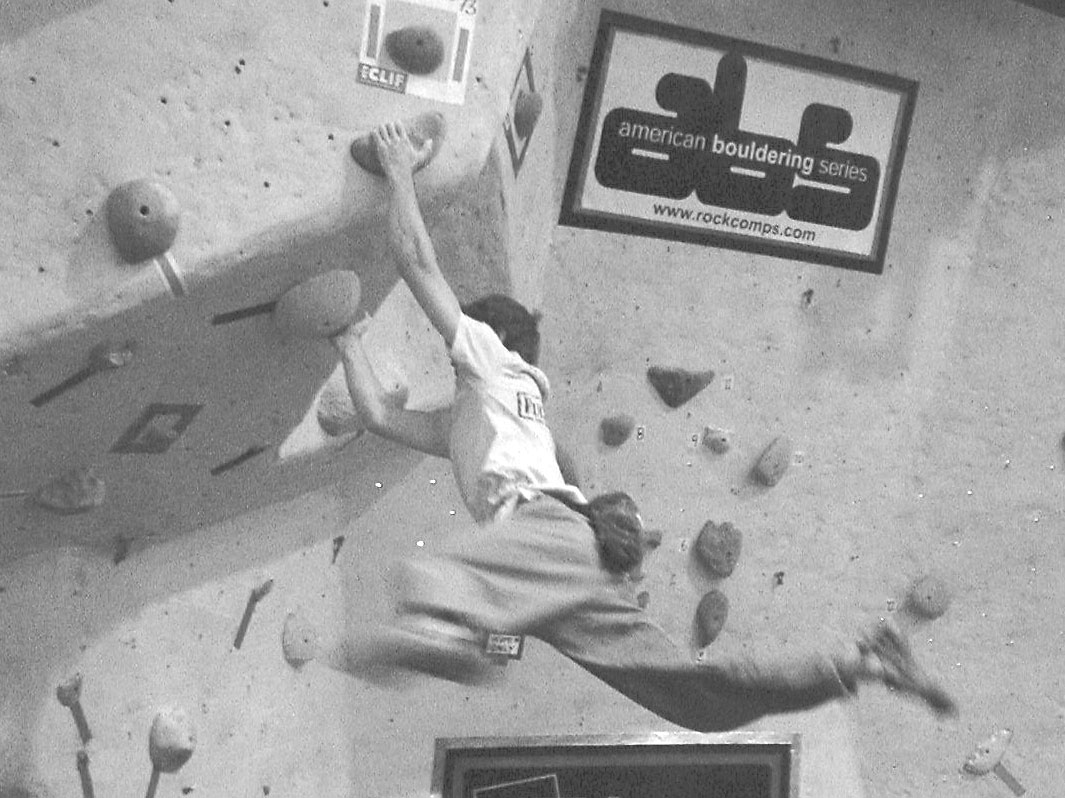
Rennak wrote Organizer Tips for Bouldering Comps for Louie Anderson’s 2004 edition of The Art of Coursesetting (republished in 2014 as Fundamentals of Routesetting), which was itself the 5th rendition of this material that originally appeared in the ABS Organizer Handbook. The collection of tips was from the days before dedicated bouldering gyms existed. “To my knowledge it was the first time anyone had ever put this stuff into written form,” says Rennak.
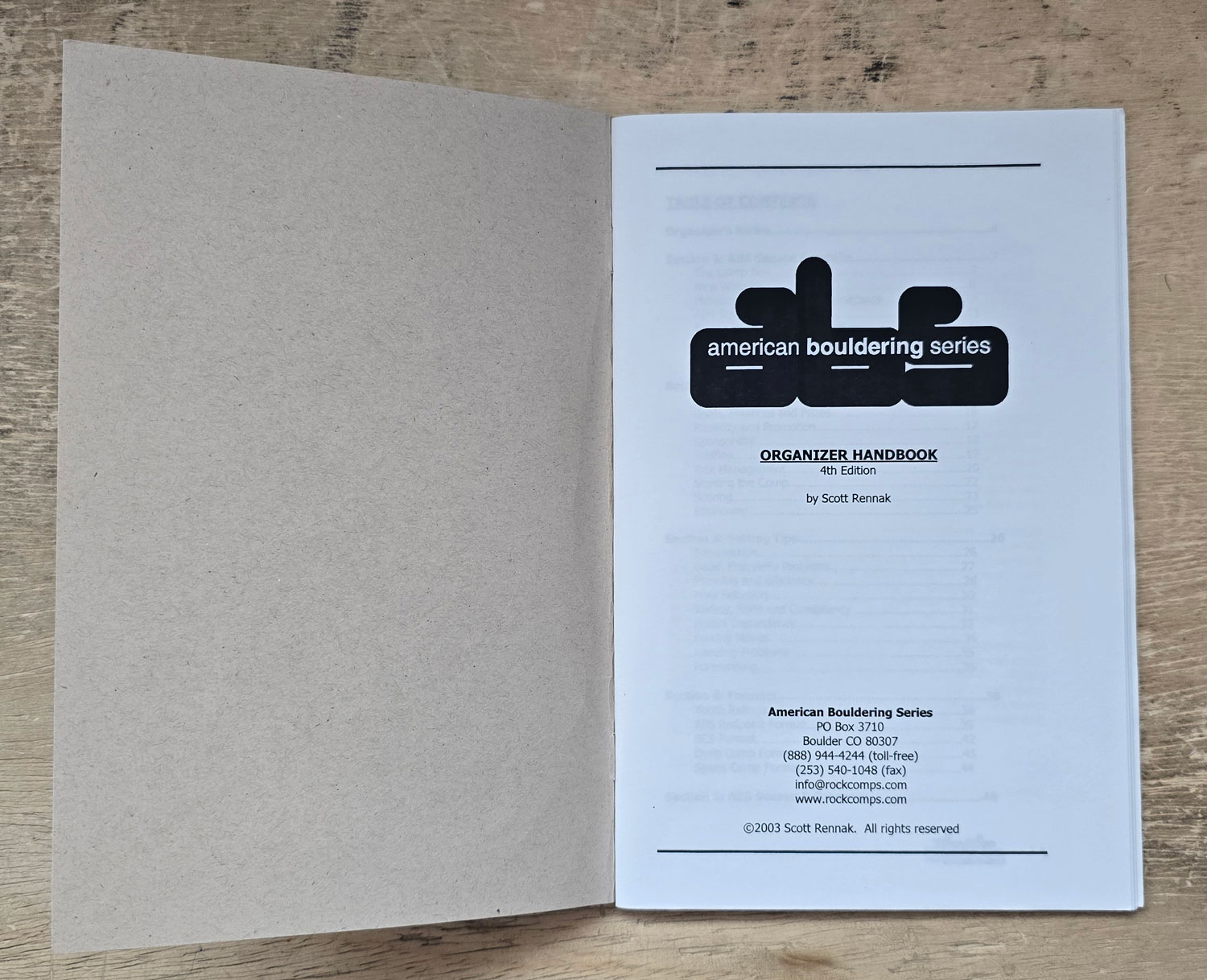
Having founded the American Bouldering Series (later acquired by USA Climbing) and set for more than 50 competitions over a busy five-year setting career, Rennak was among the handful of setters at the time who were leading the charge with their understanding of bouldering comp logistics.
Bouldering competitions today are filled with the latest macros and fiberglass shapes, boast bigger cash prizes, and rely on social media for promotion instead of paper flyers, but many aspects of the logistical side of organizing a bouldering comp remain largely unchanged, making these 20-year-old tips still a trusty companion for any organizer and setter to have on hand.

ORGANIZER TIPS FOR BOULDERING COMPS
by Scott Rennak
INTRODUCTION
There is no perfect formula for competition organization. Every gym has different facilities to work with, and every competitor field is unique. Careful planning helps ensure a good comp, although there is a learning curve. The more comps you organize, the less mistakes you’ll make.
Bouldering comps are the easiest type of event to organize. They also are the most popular among competitors—bouldering comps are fast-paced and fun.

The information here is intended to help organizers understand what makes a good bouldering comp. Like anything, there is always more to add. Contact us with your ideas, as we’ll be adding new topics and revising the existing topics in future updates. [Editor’s Note: This sentence appeared in the original text but these updates have since stopped.]
GOALS, FINANCES AND PRIZES
Before anything else, ask yourself why to hold a bouldering comp. To promote the gym? To excite regulars? To get a gym full of new problems? No doubt there’s a mix of influences—collectively they dictate what direction to head in, which helps you understand which aspects of the event need more attention.
Talking with gym owners, it’s often cited that “comps never make money.” While that can be the case, it doesn’t have to be. Effective planning can go a long way toward creating cost-effective events.
So, decide what kind of event you want to hold. Is it going to be a big weekend event where folks travel? Is it a weeknight locals-only type of comp? Both can yield great results, yet both can be botched by misunderstanding your goals as the organizer.
Do you intend to have a cash purse or prizes? Lots of comps these days only do a door raffle among competitors. It seems like the same people are always winning the stuff (and often selling it for peanuts just after the awards), and lots of the winners are sponsored already anyway. Maybe the competitors at your event would rather just recognize the winners and give the booty out randomly? If you feel you really need to give the winners something, maybe you should consider a modest cash purse. Ask around—most top dogs would prefer $50-$100 cash over gear.
Two major factors contribute to the cost of an event: loss of regular business and time spent setting. Both of these are highly avoidable. Unless you expect the revenues from a large turnout, why close the gym for a day? Maybe you can run the comp in the morning or evening, leaving half a day of regular business—weeknight events are very popular among gym owners for this reason. Likewise, why strip the entire wall only to re-set it the next day? Especially if you’re planning a low-key local comp, leave the extra holds on the wall and save yourself the time/effort.
PUBLICITY AND PROMOTION
Effective publicity can take time to organize, but it’s easily worth the trouble if taken seriously. There are two main directions to focus on: publicity to increase attendance and publicity to promote the gym.
To draw competitors, send fliers to all area gyms and shops (with week-before follow-up calls), and hype the event to your own regular members. Stress how much fun it’ll be, and how it’s open to all skill levels (not just the experts). Send the fliers at least a month before the comp and include all the important details about the event. You might also send them to area schools and youth groups that you know of—many schools now have climbing walls and teams that compete. Don’t underestimate how far someone might travel to come to your comp—send fliers out to a radius of a half-day drive. You might also include your waiver and a pre-registration form if you decide to have pre-registrations.
To promote the gym, mail or email press releases out to area radio stations, TV stations, newspapers and magazines in the area. Make sure you give follow-up calls—it can make the difference between a listing on the calendar and a full-page photo and article. Most of these media groups are interested in stories on different and exciting activities for their listeners/readers. Local sports magazines are always interested in both climbing and competitions, and they’d probably cover the event. Climbing comps are great community interest stories, especially if there is a large local youth following. Use your comp to show the community what your gym has to offer.
SPONSORSHIP
Good sponsorship is early sponsorship. Send out solicitation letters as soon as possible; 3-4 months is best.
There are many local sources for sponsorship. Send letters to area businesses such as fast-food chains, music stores, brewpubs, hotels…use your imagination. Getting local companies involved will foster community and possibly provide new customers for your gym. It also helps promote the growth of competition climbing and reduces the strain on the climbing industry. Not to mention that competitors love free food and refreshments!
Spend the time calling those that don’t respond within a reasonable time. Many companies receive tons of solicitations and won’t respond to everything. Taking the time to call lets them know that you are truly interested in helping promote their business. Also, be reasonable with the company. If they are small or new don’t expect or ask for a lot. Often, companies have a yearly sponsorship budget to adhere to, so don’t be surprised if there isn’t as much gear available at the end of the year.
Always remember: Sponsors are sending stuff to the event in exchange for the publicity they receive from you. Sponsors often send promotional items to display and hand out at the event—banners, stickers, samples, brochures, etc. Put them up in a visible place without impeding the climbing.
STAFFING
Volunteers
Volunteers are important ingredients to the success of any comp. Typical volunteer responsibilities can include setting the problems, cleaning the gym, stripping walls or helping out on competition day.
Treat them well! Incentives such as free passes and memberships can get help from climbers who might not have gotten a membership anyway. If you can, give them free comp t-shirts. Making volunteer t-shirts a different color can help competitors identify who is a judge during the comp, and the volunteers enjoy having a unique shirt. Try to have food and drink available for them while they’re helping.
Start volunteer sign-up sheets at least two weeks before the comp, and be sure to have them include their phone number. On the list, have shifts when you need help, and try to get the volunteers to show up for the set times. Post fliers to let your customers know that you will need volunteers the night before and the day of the comp.
Extra help the night before ensures that the setters can dedicate their time to putting up fun and thoughtful problems without worrying about cleaning or removing holds and tape. Instruct volunteers completely about what they should be doing—if possible, have them assemble at a given time for an instruction meeting. [Editor’s Note: More information about the ins and outs to the administrative side of volunteering can be found here.]
Setters
Well-set and well-graded events are a sure way to make the competitors’ experience a good one. It’s important to have several different setters. You might encourage your local members (that aren’t competing) to set a problem or two for the comp—the more variety you have the better.
Designate a head setter whose responsibility it is to have the problems set and graded by a reasonable deadline that allows enough time to print scorecards. The head setter should be present during the comp so as to answer any technical questions about the problems.
How to compensate your setters is completely up to you—some will set for memberships, others may want to set for gear. Especially if paying cash, clarify ahead of time what’s expected of the setters. [Editor’s Note: Today most routesetters will expect proper payment. Visit CBJ’s 2025 Compensation Report to see what other professionals in the industry have been paying/earning of late, based on CBJ’s survey of climbing gym staff.]
Judges
Judges are a sticky subject. Most often comps can be run without them—competitors initial each other’s scorecard to verify completion. The standard ABS format does not use judges. If judges are used, make sure plenty are available—not enough judges is a sure way to slow the comp down. One or two per wall section is recommended. Having many floating judges also works well.
A head judge should be designated in case of any competitor disputes during the event. This person should be present for the entire comp and should be familiar with the problems. The head judge can also be the competition organizer, the head routesetter or anyone else of responsibility.
RISK MANAGEMENT
All gyms have their own insurance regulations and policies concerning risk management, but there is little true advice concerning bouldering and bouldering walls. Bouldering is inherently more dangerous than roped climbing in a certain sense for one simple fact: every fall is a ground fall. Ankles get twisted or broken, heels get bruised, and just about anything else can happen in those five to fifteen feet to the ground.
- Bouldering areas should be well padded. As rudimentary as this statement seems, some gyms still don’t provide sufficient padding to reasonably prevent injury. Ideally, a climber should be able to fall off the top of every problem.

- Ask competitors to bring crashpads, in the flyer. Many competitors own pads and, unless you have incredible landing areas, you could use as much padding as you can get. [Editor’s Note: Visit the CWA’s 2025 Industry Practices resource for updated flooring information.]
- Encourage proper spotting. Just like belaying, spotting is a skill, one which most climbers don’t understand well. Provide instruction or demonstration before your event in proper spotting techniques.
- Bouldering areas should be free of obstacles, such as railings, benches or other hard objects. Climbers can come shooting off the wall in any number of unexpected ways, so there shouldn’t be any chance of landing on something or hitting something during the fall.
- Set easy down climbs for boulder problems. For youth especially, jump-offs can be a good distance. Any fall has potential for injury—give competitors the option to downclimb.
- Use back-up screws, especially for large holds. Back-up screws will prevent hold spinning, which can cause injury.
- Bouldering areas should not be too high. This is left ambiguous deliberately since different types of padding lend themselves to different wall heights. Just remember that climbers often fall off the last moves of a problem. Please keep most of the problems below a reasonable height.
- Qualified medical personnel should be present for the duration of the competition. Accidents do happen, especially in large groups of people pushing each other to their limits. Having a well-stocked first aid kit and someone who knows how to use it pays off if an accident happens. [Editor’s Note: More information about common accident response mistakes can be found here.]

STARTING THE COMP
Registration
Sign-in areas should be well equipped and staffed so as to minimize the time spent during sign-in. Competitors want to get in, warm up and look at the problems. If you can make registration short and easy, they will be in a good mood from the beginning.
The Pre-Comp Talk
About 15 minutes before the climbing starts, assemble the competitors and explain the rules. Be sure to discuss all of the following:
- The full scoring process
- The point system
- The scorecard and how to record their attempts and ascents. Let them know to turn their scorecard in when they are done climbing.
- How to handle technical incidents (hold spins, etc.)
Running Time
Once the comp gets started, be sure to keep things moving. Use a PA system to make announcements, troubleshoot issues quickly and efficiently, and treat all competitors fairly. Keep good, high-energy music playing, and circulate among the competitors to make sure they’re having a good time. If you’re having a raffle or fundraiser, announce it regularly during the comp.
Emergency Kit
A box of items should be assembled in case a problem arises during the comp. The following items should be included:
- Set of wrenches and a drill for spinning holds
- Extra problem-marking materials
- Spare holds (with bolts or screws) that are fairly universal (basic edges, pinches, pockets, jugs and footchips) in case a hold breaks
- Short ladder
- Well-stocked first aid kit
SCORING
Scoring is usually done in one of two ways: per hold or per problem. Problems scored per hold are usually upper-end onsight events with judges. Most bouldering comps are scored per problem—only complete ascents earn points.
There are many good scoring systems. The best thing to do is settle on a system and use it repeatedly in the majority of your comps. Most scoring systems have deductions for falls—some will subtract points for every fall, some just for the first couple falls. When choosing a scoring system, keep in mind the complexity of adding and the difficulty of enforcing (counting falls can sometimes be tedious).
Adding Scores
Don’t be afraid to ask competitors to circle the scores to be added and add them prior to remitting the scorecard. Then, as the cards are turned in, double-check the top finishers. This can save A LOT of time.
Have all necessary scoresheets and scorecards prepared ahead of time. Whether you use a computer to add scores or simply calculators and handwritten spreadsheets, have the system prepared, and fully instruct whoever will be using it. Include on the scorecard a spot for competitor comments and suggestions.
Add or check scores in a separate area away from competitors. Using a computer can sometimes be more efficient than using calculators by hand, but only if the people using it are familiar with its operation. Scoring by hand can be very fast but can mean spending a little more time the next day inputting everything into the computer for remittance.
After the scores have been added and double-checked, have one person compare and write down the standings. Check that the final scores seem appropriate. If it appears that someone has a lot more points than most others in their division, perhaps they belong in an upper division. Look at the difficulty of the problems they did—are they appropriate for their division? Often there are one or two over-rated problems, but if it seems they don’t belong in the division they entered, make the necessary adjustments.
Sandbaggers and Cheaters
Not all sandbaggers are doing it intentionally—every comp has folks that compete in divisions too low for their ability. In most cases, upon finalizing the scores, it’s obvious if someone doesn’t belong in the category they entered. Look at the difference in points between the top finishers in the division. As the event organizer, it’s your responsibility to move competitors into the appropriate division. A good rule of thumb: If they did 20% better than the next climber, bump them (sometimes 1st and 2nd are way above 3rd—bump them both!).
Cheating is a whole different animal and should be dealt with accordingly. It might be as blatant as claiming an ascent that didn’t happen, or as simple as weighting a foothold that wasn’t marked. Regardless, when noticed it cannot be allowed. Be firm but tactful—they might be cheating, but they’re also your customer.

POST-COMP
Raffle and Award Ceremony
Be enthusiastic when giving out the awards! Keeping people interested and having fun ensures even non-winners have a great time. Before starting the awards, thank the volunteers and sponsors.
- Hold prizes up for all to see before giving each one away. Announce who donated it. Competitors like to see what other people are winning, and sponsors send the stuff for it to be seen.
- Give prizes to alternative categories, like “best spotter”, “coolest pants” or “most problems completed”.
- Collect small items to toss out to the crowd, like keychains, energy bars or chalk.
- Have winners stand together for a picture.
Thank Sponsors
As soon as possible after the comp, write a letter to the sponsors letting them know how the comp went and thanking them. Include a list of the final scores, photos from the event, and if possible a copy of the promotional items that displayed their logo. Be sure to return sponsor banners if they ask.