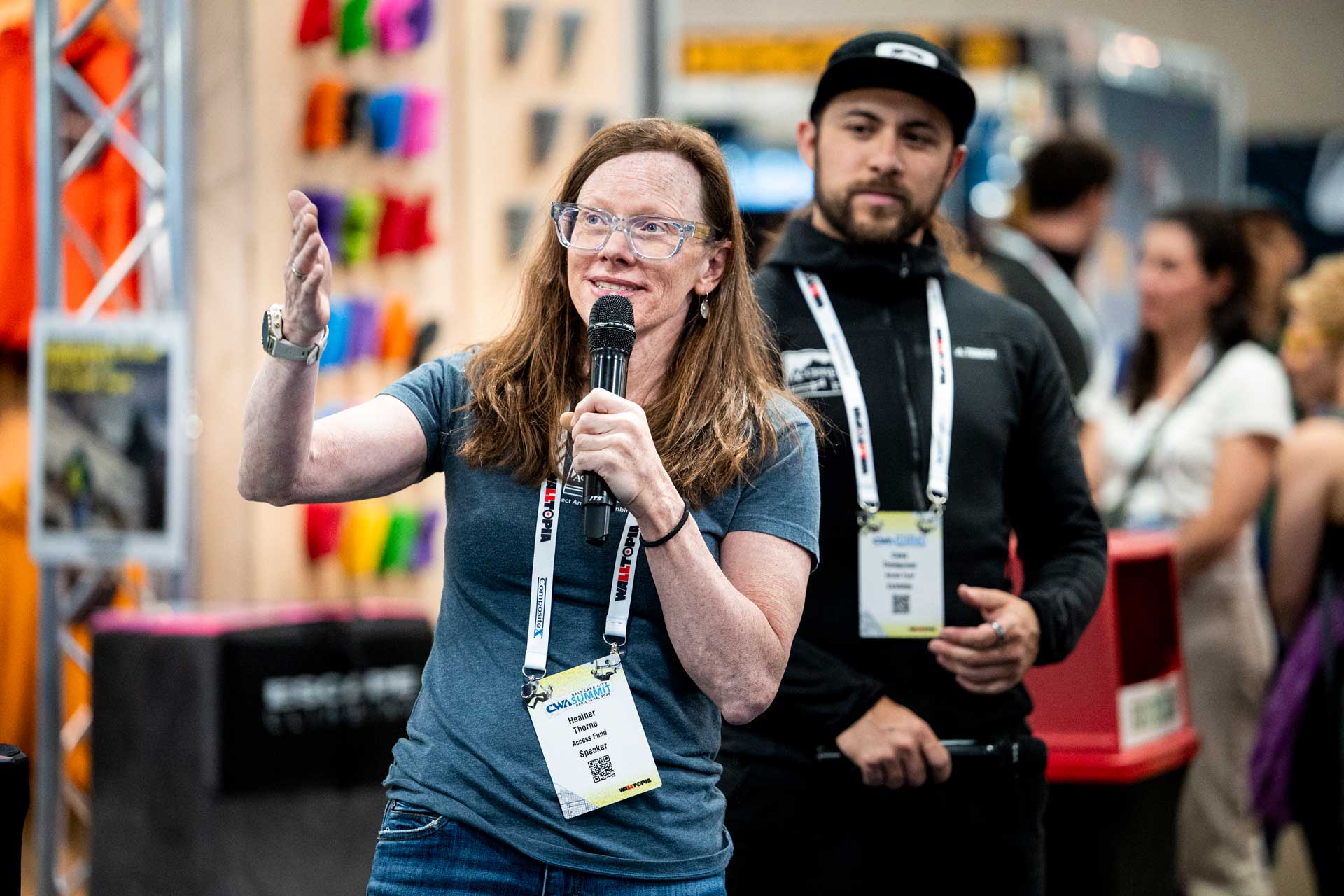
For indoor climbing gyms in climbing-rich cities, the climbing wall industry often feels close at hand. Owners can swap ideas with peers across town, routesetters can bounce between facilities, and staff can learn from the steady churn of competitions, events, and new members. Even a little bit of friendly competition can be fuel that drives innovation. But for communities far from dense climbing gym clusters, the CWA Summit serves as a central hub for gathering knowledge not locally available.
Ideas That Travel Home
Daniel Shaw, owner and manager of Coeur Climbing in Coeur d’Alene, Idaho, remembers the moment he realized his gym stood largely alone.
“The closest one’s in Spokane,” he said, “and it’s not horribly far, but it was far enough that I didn’t go very often.”
Shaw opened Coeur Climbing in 2023 because he believed the community needed a space to climb, but running a gym without nearby peers often meant figuring things out with little outside perspective. That changed when he went to his first CWA Summit in Pittsburgh.
“It opened my eyes to a bunch of stuff,” Shaw said. “I just didn’t know what I didn’t know.” From connecting with insurance providers to hearing ideas for kids’ programs, he came back with concrete tools that helped him shape his business. Later CWA Summits he attended in Portland and Salt Lake City were less about the basics and more about communication.
A Week for the Whole Team
Bryan Pletta, co-founder of Albuquerque’s Stone Age Climbing Gym and a climber for more than four decades, has a longer history with the event. He and his wife Christina opened their first climbing facility in 1997. Albuquerque, he points out, has no other commercial climbing gyms outside of Stone Age’s two locations. That makes the CWA Summit crucial not just for him but for his staff. Pletta has been attending the CWA Summit since it was a small gathering at the Boulder Outlook Hotel and Suites, over a decade ago.
“We try [to] bring a number of people,” Pletta said. Pletta explained how he learned at the CWA Summit how other gyms balance the often-different perspectives of owners, routesetters and coaches, and he carried those lessons back to his staff. “Last year, we brought maybe eight or ten [people]. It’s really their only outside perspective with the industry.” The team members at Stone Age now compete for the chance to go. “They definitely all want to,” Pletta added.
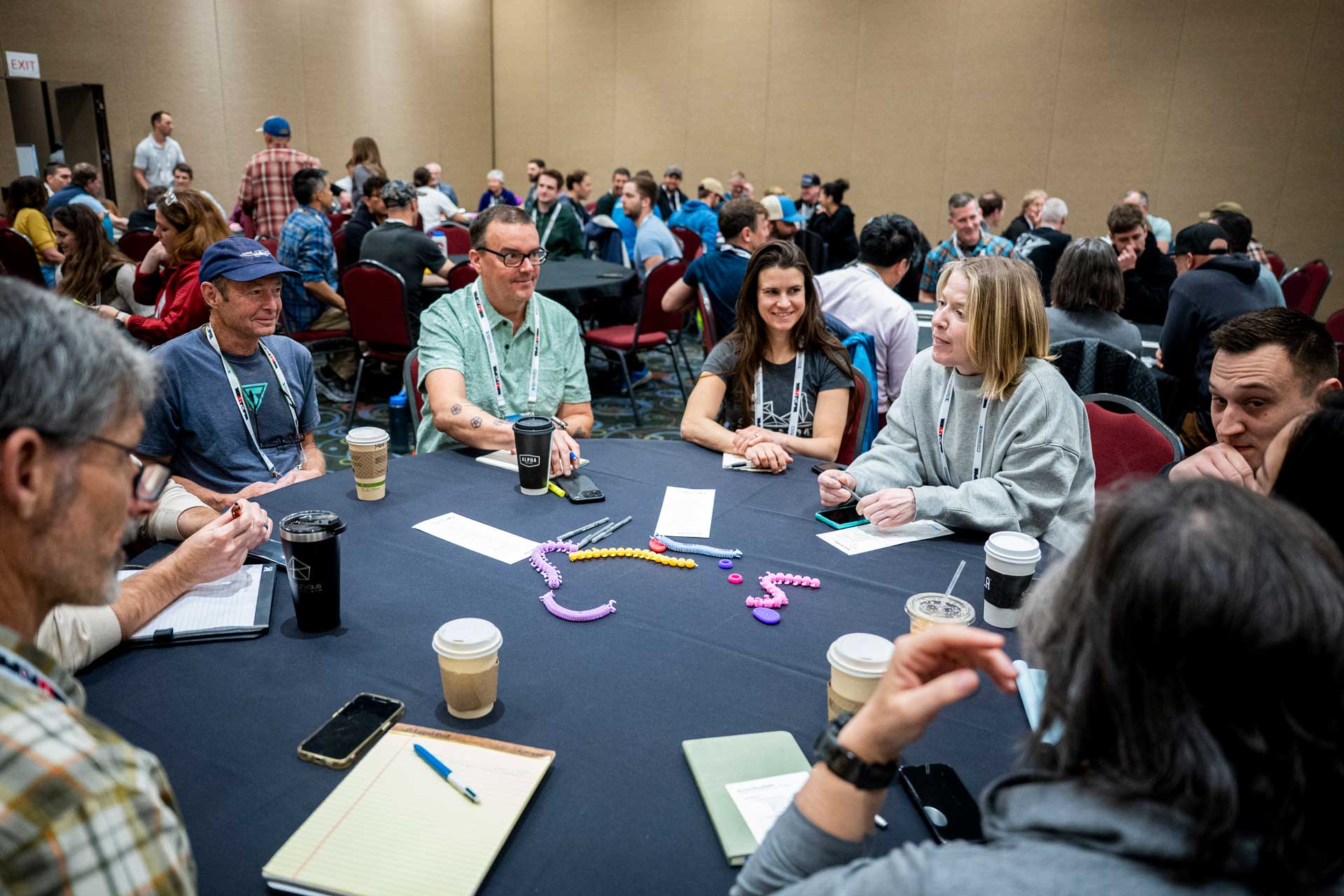
What do Stone Age staff members get out of attending the CWA Summit? For Pletta, the highlight has always been the gym owner roundtables—open sessions where peers can talk about their experiences and share wisdom. For the retail buyer at Stone Age, the CWA Summit has even replaced Outdoor Retailer as the key annual event. And for coaches and routesetters at the two gyms, the pre-conference sessions are a rare chance to learn directly from experts in their field.
Bridging the Gaps
Both Shaw and Pletta stressed one lesson: communication. Inside a climbing gym, team members working in different roles often have different priorities. Owners may be more focused on sustainability, routesetters on creativity, and coaches on athlete development. The CWA Summit brings all those perspectives together in one place. “It’s good to go to the [CWA] Summit and see how other gyms are doing it, bridge the gap between what the owners think should happen and what the [route]setters think should happen,” Shaw said.
Pletta echoed that sentiment, pointing to the value of cross-department exposure. A front desk manager might sit in on a Warrior’s Way clinic, or a head coach might come away with fresh drills from a pre-conference session. “It’s really about perspective,” Pletta said. “When you’re isolated, you don’t realize how other gyms are tackling the same challenges.”
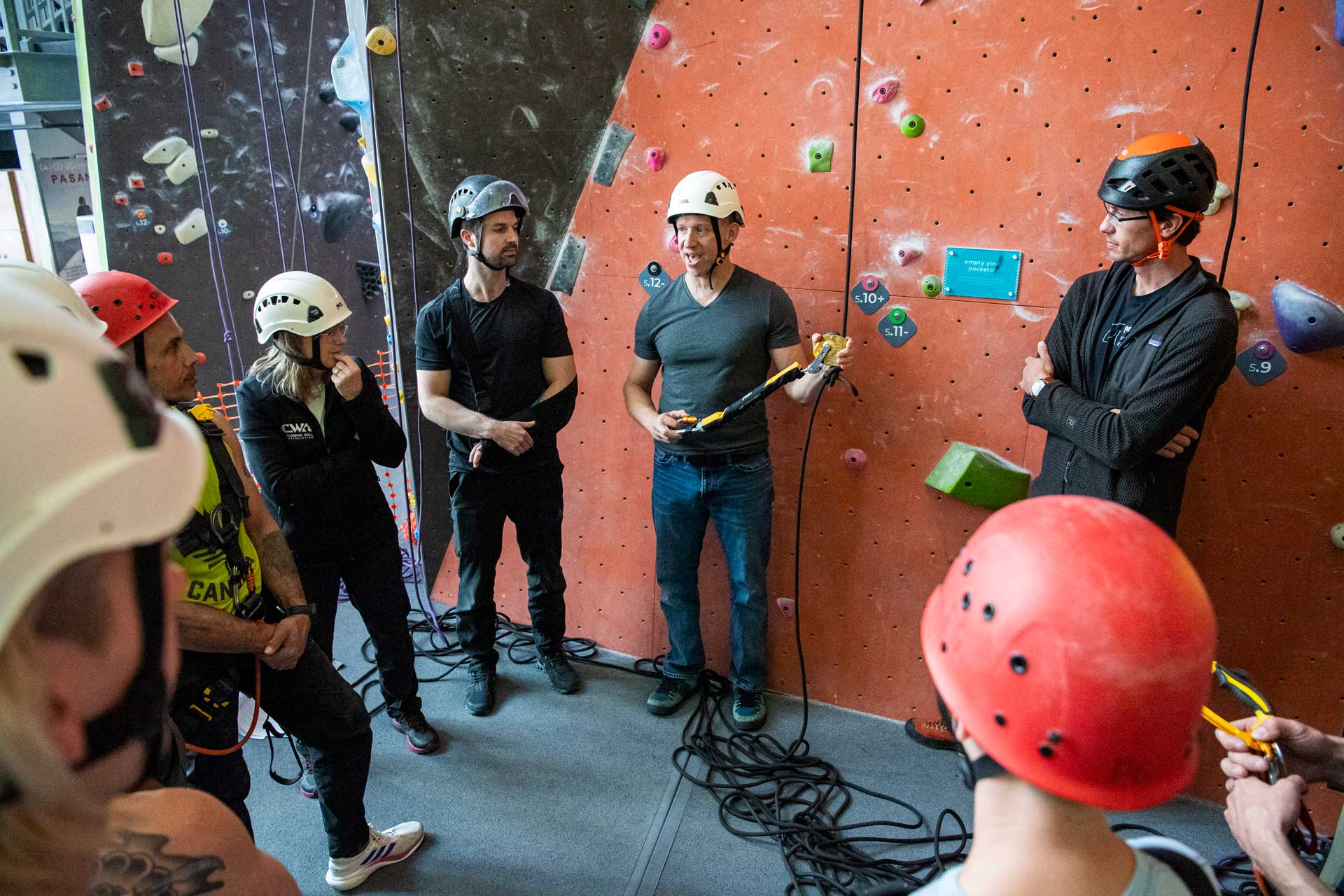
Some of the best lessons at the CWA Summit happen before the main event’s bustling exhibit hall, roundtables, and education sessions have gotten underway. Pre-conferences like the one Pletta attended bring together the people who build, teach and run our industry—people who are immersed in its daily challenges and successes.
Pre-conference workshops have limited capacity and sell out fast, so it’s always a good idea to register well in advance. Registration is now open for the upcoming CWA Summit in Salt Lake City next April.
Tangible Takeaways at Every Turn
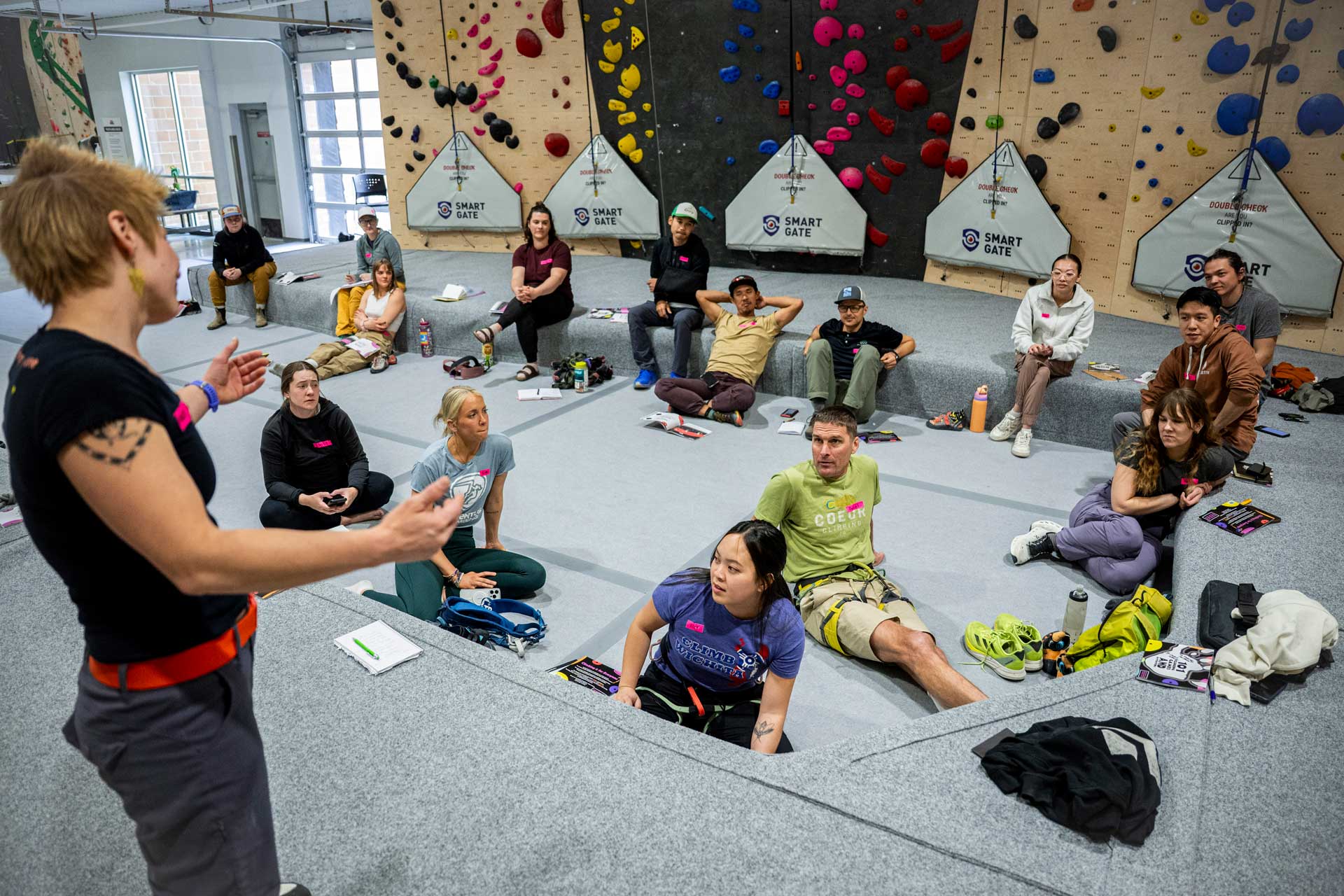
For facilities outside major climbing hubs, the CWA Summit is a rare chance to test assumptions and bring home practical solutions. Shaw credits a pre-conference session on youth programs, taught by Hailey Caissie, for reshaping his summer camps and team structure: “We took what we learned there, made our program based on it, and had a lot of success.” Pletta noted similar benefits for his staff, from retail buyers who found insights on new gear and vendors to front desk managers who came back with tools for improving the customer experience.
Caissie’s youth programming pre-conference, now titled “Revolutionizing Your Youth Programming,” will be returning to the 2026 CWA Summit. Don’t forget that registration is already open, so be sure to grab a spot before they sell out.
Both Shaw and Pletta stressed that these lessons go beyond technical skills. Gym owner roundtables and casual hallway conversations have introduced them to new business models, insurance providers, and ways to bridge communication between owners, routesetters and coaches. For operators in cities where one gym may stand alone, the CWA Summit provides a welcoming peer group and an annual moment to compare notes.
As Shaw emphasized again and again, “You just don’t know what you don’t know.”
And for Pletta, even after decades of attending, the value hasn’t diminished: “Every owner has some perspective I can take something away from.”
This story was paid for by the sponsor and does not necessarily represent the views of the Climbing Business Journal editorial team.