Authored by Foxman McCarthy-James
I’m so excited to be writing this.
As the Routesetting Education Consultant for the Climbing Wall Association, I realize my excitement could be written off as bias, but the sentiment is unabashedly genuine. I joined the CWA’s Routesetting and Work at Height committees as a volunteer because I believe deeply in the need for robust educational paths for those of us working at height in climbing gyms. Now, after years of effort, the CWA Certifications for Professional Routesetting (PRS) are a reality, and I can’t wait to share more about them.
The PRS Program Matters for All of Us
Let’s jump in with the big question: Why should setters be getting their CWA PRS Certifications? Will it help them land a dream job? Will it help them get paid more?
The short answer to the latter two questions we hope will be a resounding “yes,” but the first question is more nuanced, so I want to spend more time on that one here.
There are a few things we know for sure: First, it can be difficult to find trained setters. More gyms are opening every year, and with attrition due to aging, injury and burnout, the pool of experienced setters isn’t big enough to meet the growing need. Hiring managers are looking for more concrete methods to judge applicants’ experience level.
Second, while there has always been routesetting education, there haven’t been many concrete credentials that routesetters can put on their resume when they’re looking to get hired at a commercial gym. Climbing gyms often train their teams up from scratch, leaning on the mentorship of more experienced setters to develop new talent. Clinics have long existed for setters seeking to broaden their skillset, and many gym chains have in-house programs designed to train their routesetting team, but these opportunities can vary gym to gym, and training at one gym doesn’t mean that a setter will be a qualified candidate for another. While USAC Certifications are a valuable tool for gauging a setter’s capacity on an event crew, they don’t always translate to commercial work. Without standardized practices (how many set screws should I put in this volume?), hiring managers have often had to rely largely on references, competition-related certifications, and vibes.
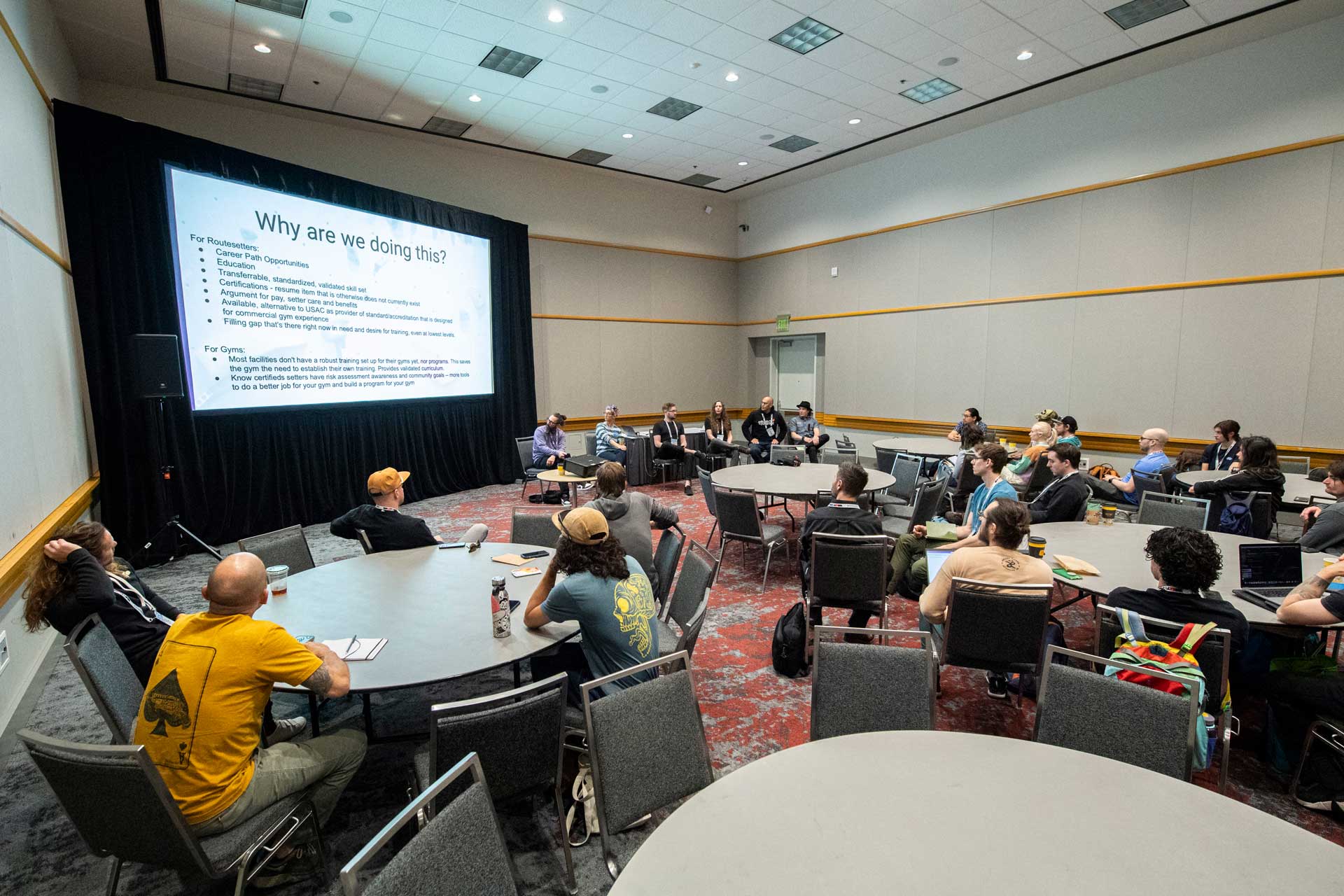
Additionally, as the industry expands, so does the pressure to align with health and safety practices. More gyms are looking for ways to ensure that their routesetting practices meet the current industry standard, leaving behind the cowboy days of yore. We all know someone who’s had a close call while routesetting. Some of us know people who’ve had life altering incidents while working at height. At any given point, there’s a video of ladder shenanigans or a hold ripping off the wall that’s doing the rounds on social media. We can never prevent all incidents, but training ourselves and our coworkers to understand and adhere to best practices is a significant step toward preventing as many as possible.
And the importance of establishing and proliferating those standards isn’t just an issue for routesetters—it’s an issue for gym operators everywhere. Other larger and more mainstream industries (construction, manufacturing, medicine, etc.) have dealt with regulatory oversight for decades, and it has hugely shaped their workplaces and business costs. Although our industry has matured and grown dramatically since its inception, that level of oversight hasn’t yet arrived in the climbing industry to that extent. Developing more of our own certifications is an opportunity for us to better control the outcome—to grab the bull by the horns, so to speak, and define what workplace safety looks like ourselves, which can also shape our insurance landscape.
Addressing these growing pains is where the CWA Professional Routesetting Certification Program comes in. The Climbing Wall Association is a trade association that has been at the center of defining industry standards for engineering, instruction, Work-At-Height and now Professional Routesetting. In addition to giving managers better criteria for making hiring decisions and upping the quality and skills of our workforce, programs like the CWA’s PRS Program—as well as the CWA’s WAH and CWI Programs—give our community solid ground to stand on when facing inquiries from regulatory groups.
A Brief History of the PRS Program
Maybe now is a good moment to talk about the CWA Routesetting Committee. Founded in 2019 by CWA Board Member Kennith Cronin (Canada) and independent setters Jackie Hueftle (USA) and Peter Zeidelhack (Germany), the original committee invited some 16 highly experienced routesetters from all over the world to help refine what it meant to be a professional routesetter. Over the years of committee work, some members have left and others have joined to continue the important task of creating and delivering a program that’s useful for routesetters at gyms of every size. We’re all opinionated, we’re all respectful, but we’re also not afraid to disagree with each other. Most importantly, we all care deeply about routesetting and the climbing industry as a whole.
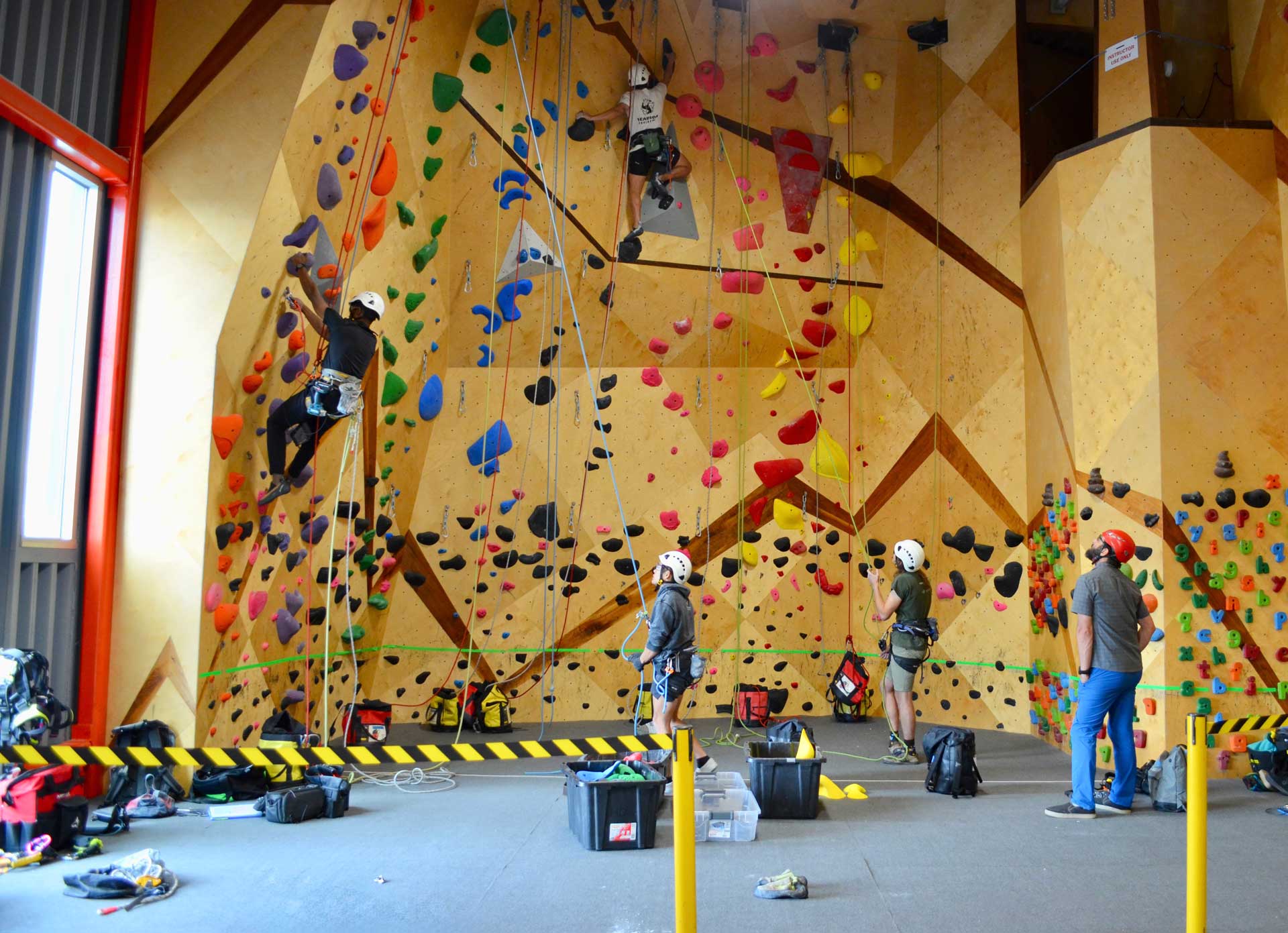
Starting with the CWA Routesetting Guide, published in 2023 after years of review, the Routesetting Committee has been working to develop the PRS Certification. The goal has always been to create a system for setters of every level, and we started with an Intro to Routesetting course, which was piloted at the 2023 CWA Summit in Pittsburgh. While the reception was positive, the majority of routesetters and managers we spoke to had one question:
“When will the CWA roll out a certification program that meets the needs of experienced routesetters?”
At the 2024 CWA Summit in Portland, the committee ironed out the framework for the entirety of the PRS Certification program. We folded the Intro course into Level 1 and split Level 2 by discipline (Boulders and Ropes). We decided to hold off on Levels 3+ for future development in favor of developing the PRS Provider Certification, which would qualify successful candidates to provide Level 1 and 2 Certifications to their own teams—ideal for head setters and directors looking to provide certifications as part of their in-house professional development. We set an ambitious goal for ourselves: presenting a pilot Provider Course at the 2025 CWA Summit in Salt Lake City.
After a year of hard work, the committee was ready to debut a pilot of the PRS Provider Certification for expert review. We invited eight routesetting and WAH industry professionals to join us to workshop the program the CWA had created, gathering feedback to ensure a relevant, useful program. The CWA is now incorporating that feedback in order to finalize the Provider Certification. Once that is done, providers will be authorized to teach PRS Certification courses around the country, providing ample points of entry to routesetters across North America.
This progress brings us to the current status of the CWA Professional Routesetting Certification program. There are currently three courses available, with the Provider certification (PRS Pro) pending finalization and PRS Levels 3 and beyond still in development. Each course is a blend of online and in-person teaching, followed by an assessment that candidates need to pass before a certification is granted.
- PRS Level 1 is a single day course focused on the technical foundations of setting boulders. Participants learn best practices when working on ladders, how to securely attach holds to the wall, and the foundations of movement. It is designed to prepare participants for work as an apprentice on a routesetting crew.
- PRS Level 2 Boulders focuses on what it means to be a professional routesetter. Participants are expected to be able to set a complete bouldering problem within an allotted time, objectively and productively assess the viability of that boulder for a specific audience, work well with a team, and adhere to industry best practices.
- PRS Level 2 Ropes combines the routesetting skills of Level 2 Boulders with the technical skills of Work at Height 1. Participants must be able to set and forerun a complete rope route in the allotted time while adhering to the CWA WAH standard. This certification assesses the candidate’s ability to work efficiently on ropes and recognize and control for hazards posed to both workers and customers alike, preparing them for work as professional routesetters at full-service facilities.
Since Work at Height Level 1 Certification is a key part of the Professional Routesetter program, PRS Providers will be required to maintain a WAH Provider Certification, which qualifies them to teach WAH Level 1.
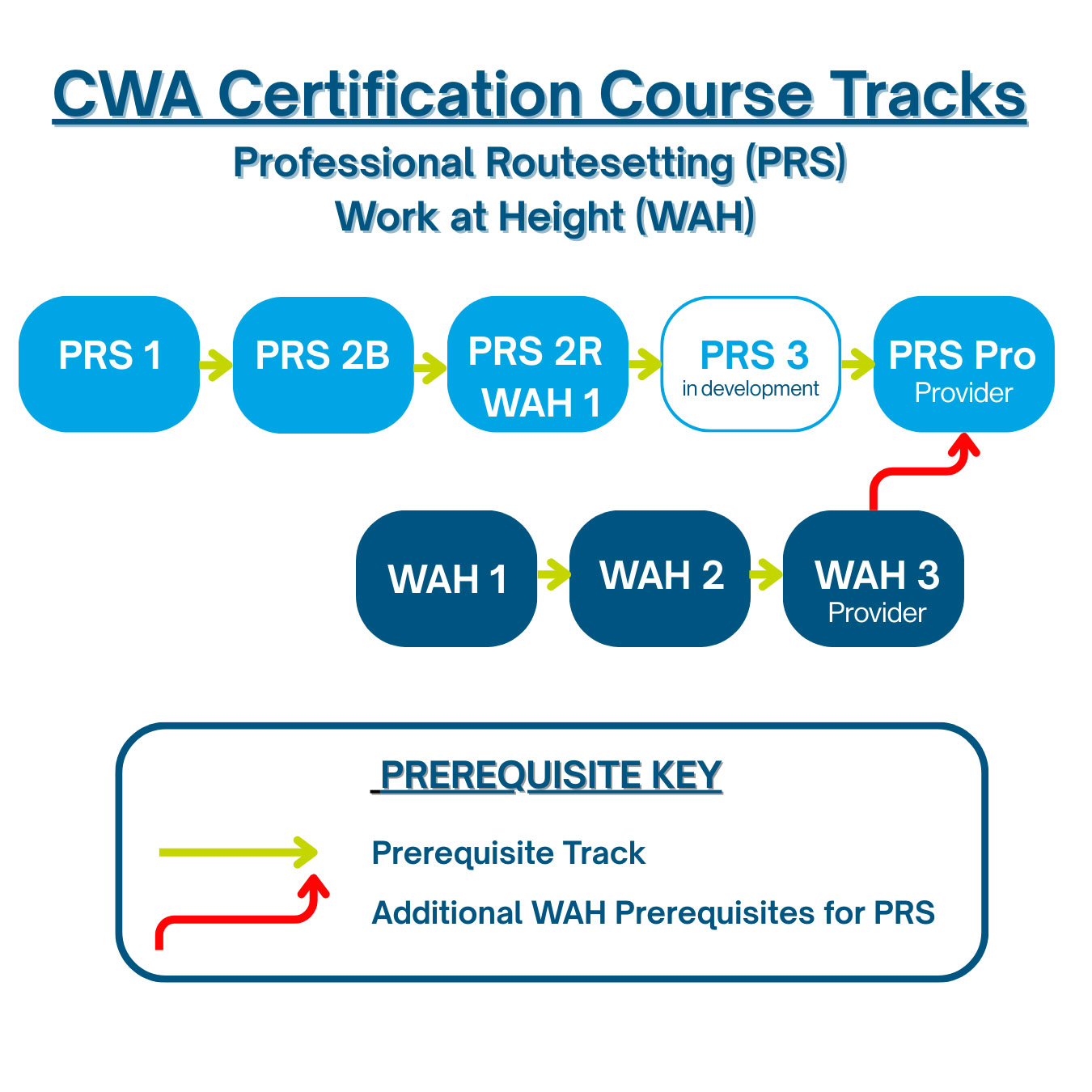
Routesetters and gyms who are interested in getting their CWA PRS Certifications can currently find all that information on the CWA website. Information about the Certification program can be found on the Certification Dashboard, and all upcoming events are listed on the Events page. The CWA usually aspires to host four Certification Summits each year in cities across North America, so there may be an event near you soon. Once the PRS Provider course goes live, there will be even more opportunities to get certifications.
About the Author

Foxman McCarthy-James is an owner and consultant with Vortex Routesetting. She has brought her background in education into her routesetting career, serving on the CWA Routesetting and Work at Height Committees and teaching routesetting clinics around the country. She is passionate about continuing the conversation on how we can make our industry more welcoming and inclusive.
This article is a sponsored story and does not necessarily represent the views of the Climbing Business Journal editorial team.