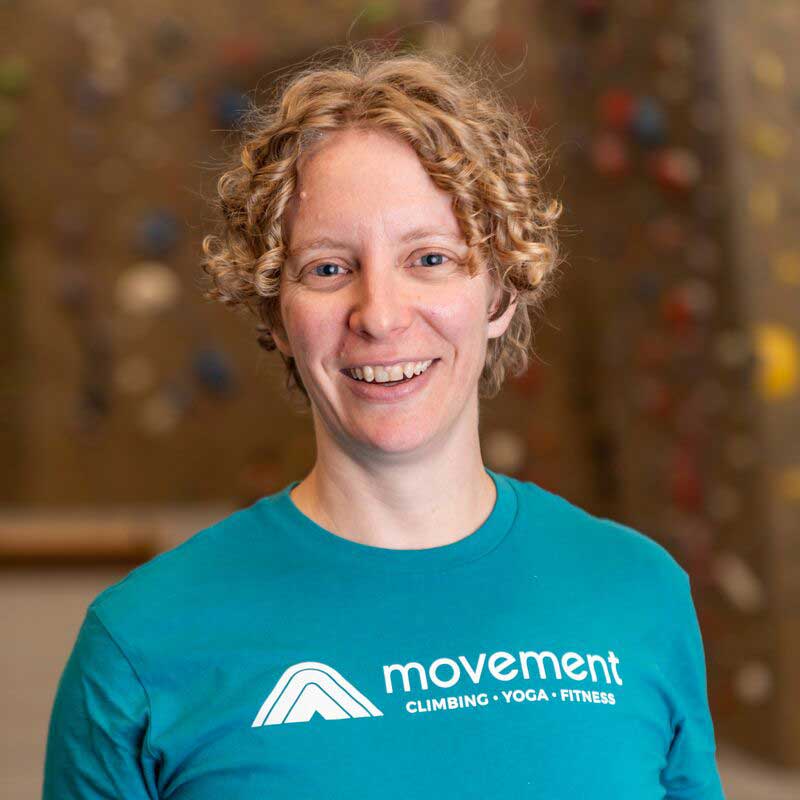
Janet Hirsch’s climbing origins lie in an outing taken with her older brother’s Boy Scouts troop, but there wasn’t exactly an immediate, heartfelt connection to the activity. “Honestly, at first I hated it,” Hirsch admits, noting that she had difficulty putting her full trust in the belayers. However, five years later, Hirsch tried climbing again as part of a Girl Scouts’ trip, and the meticulous instruction from the guides assuaged any lingering trepidation. Hirsch was hooked, and her interest in climbing aligned well with an “inherent love of teaching,” all of which led to instructional work at ropes courses and, eventually, a summer camp staff position at Earth Treks in 2009.
Other staff positions at Earth Treks soon followed, including coaching the gym’s youth team and working as a lead instructor. And in 2013, Hirsch was asked to manage all of the indoor climbing instruction programs for the gyms. “I’ve had basically some variation of that role ever since,” she says. (All Earth Treks facilities, along with Planet Granite gyms, were rebranded as Movement facilities in 2021.)
Hirsch estimates that approximately 75 percent of Movement’s programs are youth-focused, and the other 25 percent are adult-focused, but those percentages can vary across Movement’s 34 facilities. Overseeing all those various programs for the country’s largest climbing gym business is far from an easy task, but for Hirsch it’s a role that has come with a premium opportunity to help foster the meaningful connections—among program participants as well as the staff teams she leads—that is such a big focus of her work. We sat down with Hirsch to learn more.

CBJ: So, what does being Director of Programs at Movement entail?
HIRSCH: As Director of Programs, I provide guidance in the form of guidelines and consult-support to Youth Team and Program Managers in each of our 34 facilities across the country. This includes writing and updating curriculum (or getting other experts from around our gyms to collaborate on content creation), providing risk management guidelines, and providing structure for trainings, as well as coaching our Managers on being great managers and instructors/coaches. I also have a team of four regional Assistant Directors of programs who provide more direct content area support in the Colorado and NY/PA regions.
Is there a specific memory from your role thus far that sticks out?
There are so many great memories, but I really love getting to see former campers, athletes or coaches continue to develop their skillsets as educators. There are so many former campers/athletes—Colin Meyer, Liberty Runnels, Drew Hill and many others—who are now coaches themselves or even Managers themselves of Teams or Programs and are helping coach up the next generation.
What is a personal quality or characteristic that helps someone in the role of a Director of Programs?
Organization and good communication skills. With 30+ gyms, two Managers and a Gym Director at each, there’s a lot to keep track of! And it’s a really cool role in that I get to connect with folks at all levels in our staff and customer base. And that requires being able to communicate effectively with a wide range of people, from our athletes up to our CEO.
Do you have a tip you could share for communicating effectively as a programming leader?
Use the tools available to you and be consistent. If your company has something like Asana or Teams, that can work great to have a board or chat for sharing updates to information on a regular cadence. And we use monthly newsletters to promote consistent communication between our managers and the customer base in recurring youth programs, like our youth teams especially.
What’s an aspect of your role that people might not realize…or might not see on a day-to-day basis at the gyms?
Gathering and compiling feedback. As a company we really value getting input on what’s going well and what we can do better. We have systems for staff, as well as customers, to provide feedback. One of the systems we currently use is Asana forms—one for participants, one for coaches/instructors. The results come into a board that is accessed by the local team and myself, and I’ll share out great feedback or ideas that come in through those forms.
That is a super fun and exciting part of my job—to review this feedback and see what updates I can make to our guidelines…and share back the best practices from across all our facilities. It’s so much more fun to have 30+ other people to reach out to for ideating how to make the most exceptional climbing experiences for our members and guests.
What are some keys to running a successful gym program for kids?
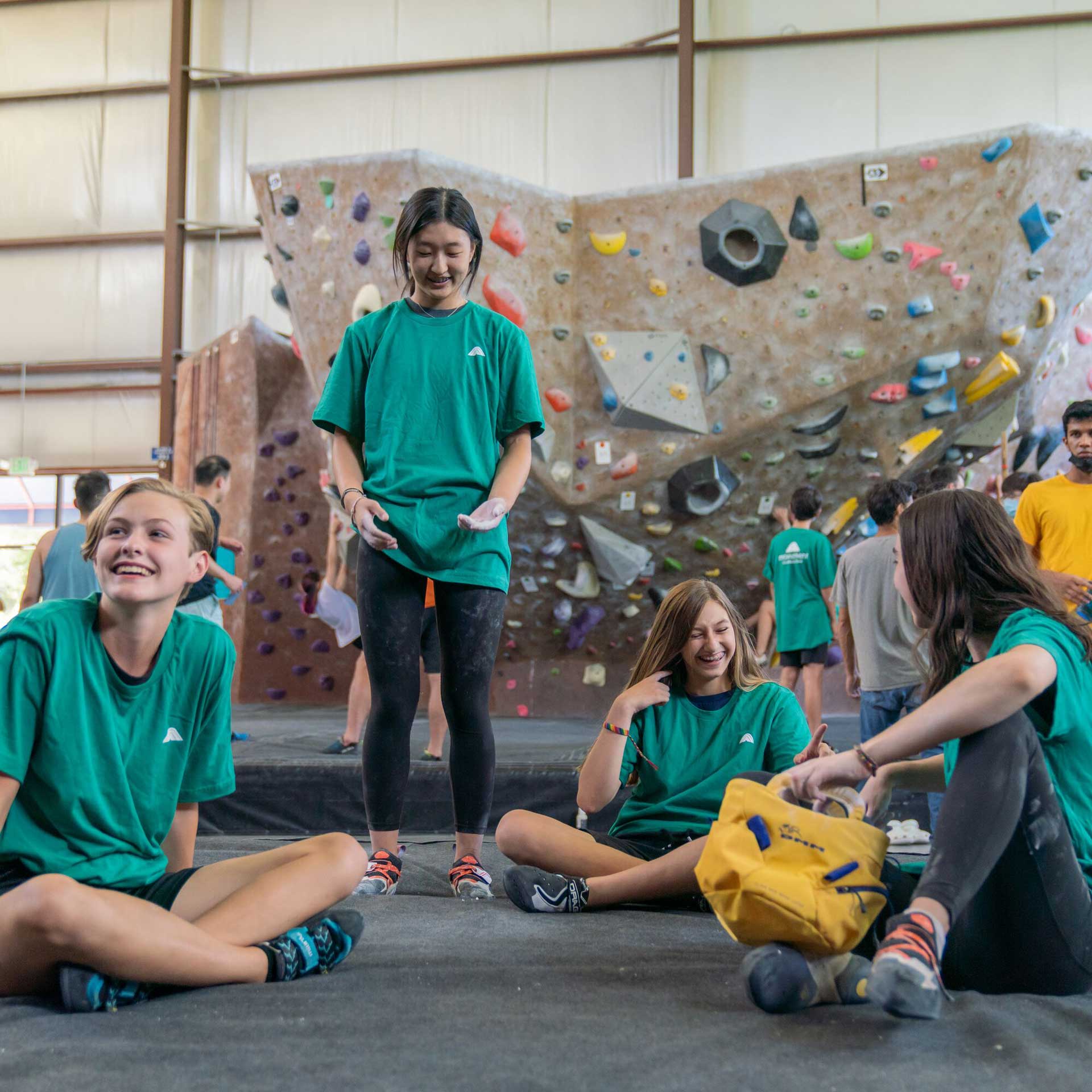
Successful youth programs require staff who are stoked to work with kids, and who understand (or can be trained in) how to develop their participants’ climbing and risk management skills. The connections between coaches, athletes and parents, and the positive connections with the rest of the climbing community, really seem to make or break a program.
So, show genuine interest and engage with those around you. Our coaches will connect with parents at drop-off or pick-up sharing something that went well or something that was maybe scary or challenging their child faced that day. Our coaches will also help connect the athletes to the rest of the community, sharing what activity or drill they are doing and helping with taking turns, sharing beta, etc.
Also, youth programs require so many more fun props than adult programs, though I still think we can pull off a parents’ summer camp—complete with all the classic fun camp games!
Great—so, what are some props (and materials and resources) that a gym should have on hand at all times for its youth programs?
Hula hoops, pool noodles and a soft ball (or some stuffed animals) go a long way for the non-competitive programs, as does tape for things like playing elimination, etc. We’ve also found that having little items that can be hidden in holds or around the gym really engages our younger climbers (ages 8 and under). For competitive team programs, good quality routesetting or higher density hold areas—where you can make up problems—is a real game changer!