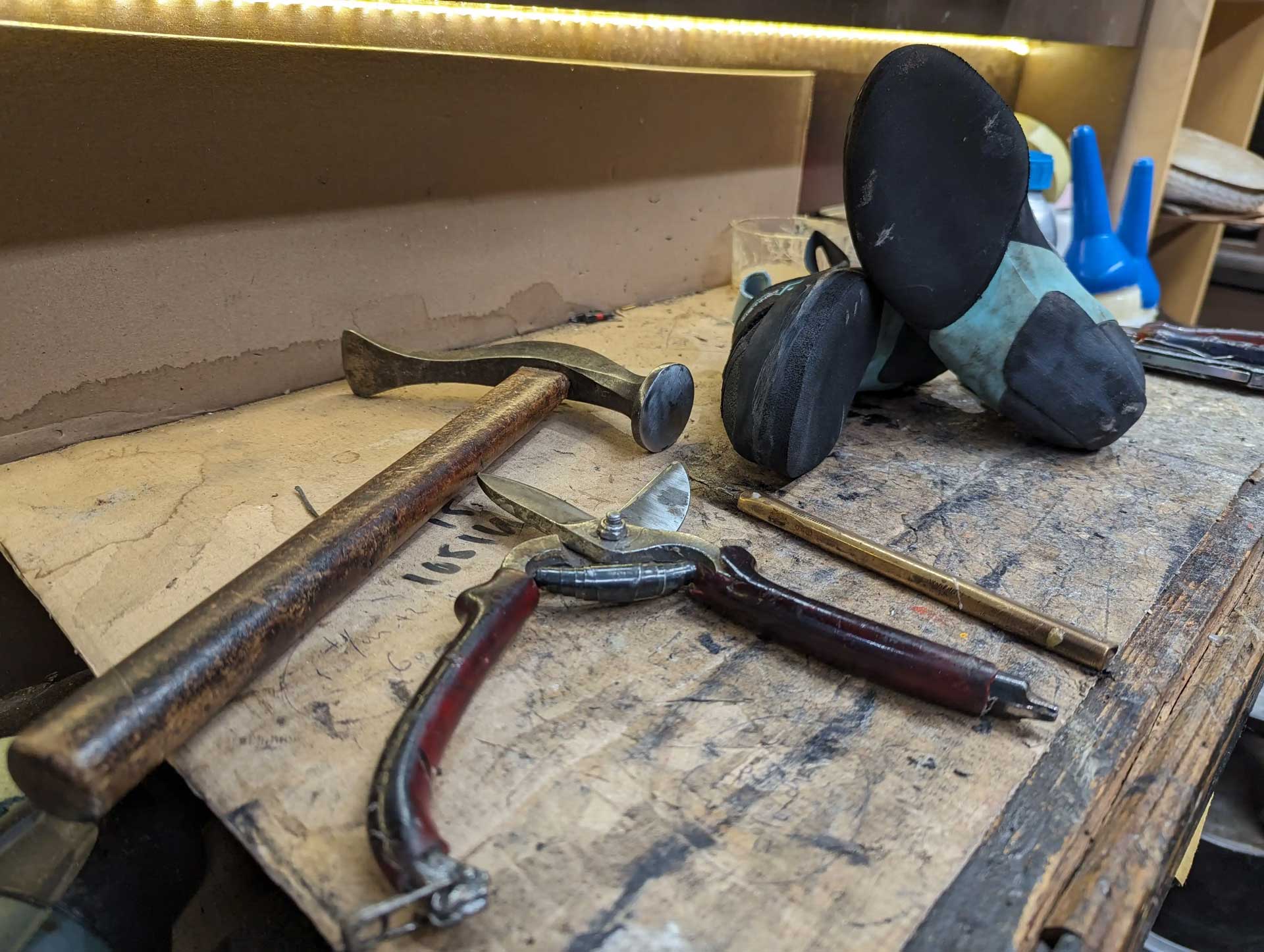
Picture this moment: You’re working on a project that’s been shutting you down for weeks. You’ve dialed in the beta, your strength and technique are on point, but you’ve been noticing the footholds that once felt so secure have been starting to feel more slippery and uncertain lately. Looking down, you know your once-trusty climbing shoes have been wearing thin. Determined to send, you still give it a go, but right as you’re finally about to stick the crux move, your foot blows off a crucial hold. Sound familiar?
This scenario plays out in climbing gyms just about every day. For climbers, our shoes are everything; they’re the critical interface between us and the rock or plastic, the foundation that allows us to trust our feet on the tiniest holds. Yet they’re also the gear that in many ways take the biggest beating, and how quickly they wear depends heavily on how much we climb and our technique on the wall.

While many climbers have resigned themselves to constantly buying new pairs, cycling through $150 shoes every six months to a year or so, there’s another way forward. Shoe resoling, the practice of replacing worn rubber with fresh soles, can extend a shoe’s life dramatically while cutting costs in half. And climbing gym managers are uniquely positioned to lead the charge in making these sustainable practices more widespread.
Below are five reasons why your climbing gym should care about resoling, with simple tips for getting started at the end, but first let’s begin with some shoe wear basics.

1. The reality of shoe wear means resoling is relevant for all of us.
Climbing shoe wear depends on a fascinating interplay of factors that many climbers don’t fully understand. The shoe model itself plays a crucial role. Shoes with soft rubber compounds tend to wear out significantly faster than those with harder rubber formulations. While soft rubber can provide superior grip and sensitivity, those benefits can come at the sacrifice of durability, making high-performance shoes prime candidates for resoling.
The climbing environment matters enormously, too. Indoor climbing shoe wear depends heavily on the grittiness of the walls, holds and volumes your gym uses. Some surfaces are more aggressive and abrasive than others, often leading to faster wear patterns. Outdoor climbing presents its own challenges; sandstone environments, for instance, can wear out shoes remarkably quickly due to the abrasive nature of sand particles that act like sandpaper against rubber soles.
Climbing frequency often creates the most predictable wear patterns. The more you climb, the faster your shoes wear out. It’s simple math: A climber hitting the gym four times a week may burn through soles in a few months, while someone climbing twice weekly might make their shoes last nearly a year or longer.
A climber’s technique plays a massive role as well. Climbers often place more pressure on one foot than the other, which can lead to uneven wear, where one shoe deteriorates much faster than its partner. And poor footwork typically accelerates wear dramatically. Beginners who drag their feet up the wall or rely heavily on smearing usually thin out their rubber much faster than climbers with precise, efficient foot placement.
The key insight for gym managers: Your members’ shoe longevity varies wildly based on all these factors, but everyone’s shoes will wear out at some point, which makes resoling education valuable for every climber at your gym, from weekend warriors to daily crushers.
2. Resoling can alter the hidden economics of shoe waste, advancing sustainability.
Let’s talk numbers that matter to climbers’ wallets and the planet. Although high-performance shoes can cost much more, let’s say an average pair of quality climbing shoes costs around $150. A dedicated climber may go through two pairs annually, meaning they can spend $300 on footwear alone. Multiply that cost across a gym’s core membership base, and you’re looking at tens (or hundreds) of thousands of dollars in shoe purchases.
Here’s where resoling changes the game: Each resole may cost between $65-80, so roughly half the price of a new pair (or less). When climbers resole instead of replace their shoes, they cut those annual costs down from $300 to around $150, based on these estimates. That money saved can be reinvested into memberships or classes at your gym, additional gear purchases from your retail shop, or even a second pair of shoes that a climber can use while the first pair is being resoled.
Quality climbing shoes can typically be resoled one to three times before retirement, meaning one initial purchase can provide years of climbing performance instead of months. This longevity can transform the economics of climbing footwear.

But the impact extends far beyond individual savings. According to estimates published in the International Federation of Sport Climbing’s 2019 Annual Report, there were more than 40 million climbers worldwide in 2018 (although that number has surely increased since then). If we assume that only 5% of those climbers are regulars who throw out one pair of shoes per year, that’s over 2 million pairs of climbing shoes that could be ending up in the landfill each year. Factor in the multiple pairs that avid climbers go through as well as those worn by casual climbers, and it’s not hard to imagine the scale of potential shoe waste worldwide.
That’s not just an abstract environmental problem; it’s a massive waste of resources that resoling can help reduce. Every shoe that gets resoled instead of discarded represents rubber, synthetic materials, and manufacturing energy saved from the waste stream.
In an industry where sustainability is highly valued, resoling is a way for you to put that core value into action, signaling to your members that you take caring for the planet seriously.
3. It’s time to bust the myth…resoling can actually improve shoe performance.
Despite its benefits, resoling has faced persistent stigma in the climbing community. Many climbers worry that resoled shoes won’t perform as well or will somehow be “lesser” than new pairs. When resoling is done properly and at the right time, this misconception often couldn’t be further from the truth.
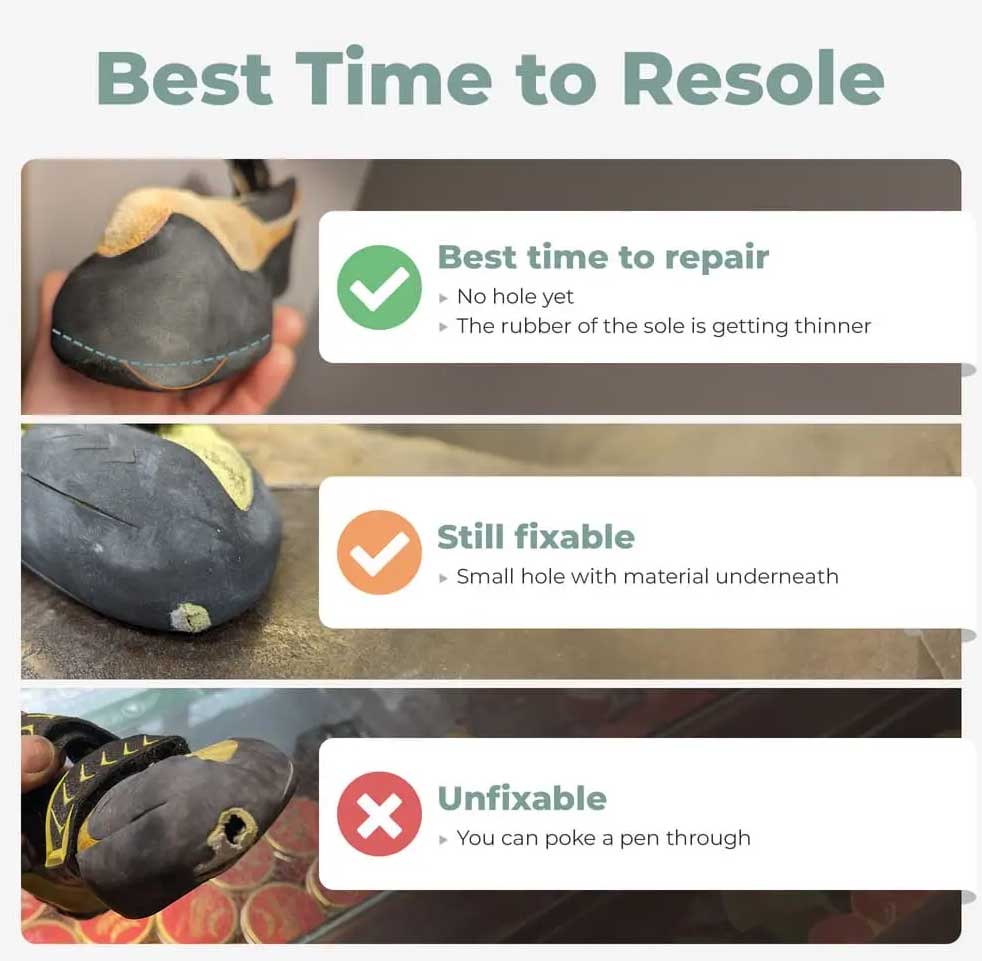
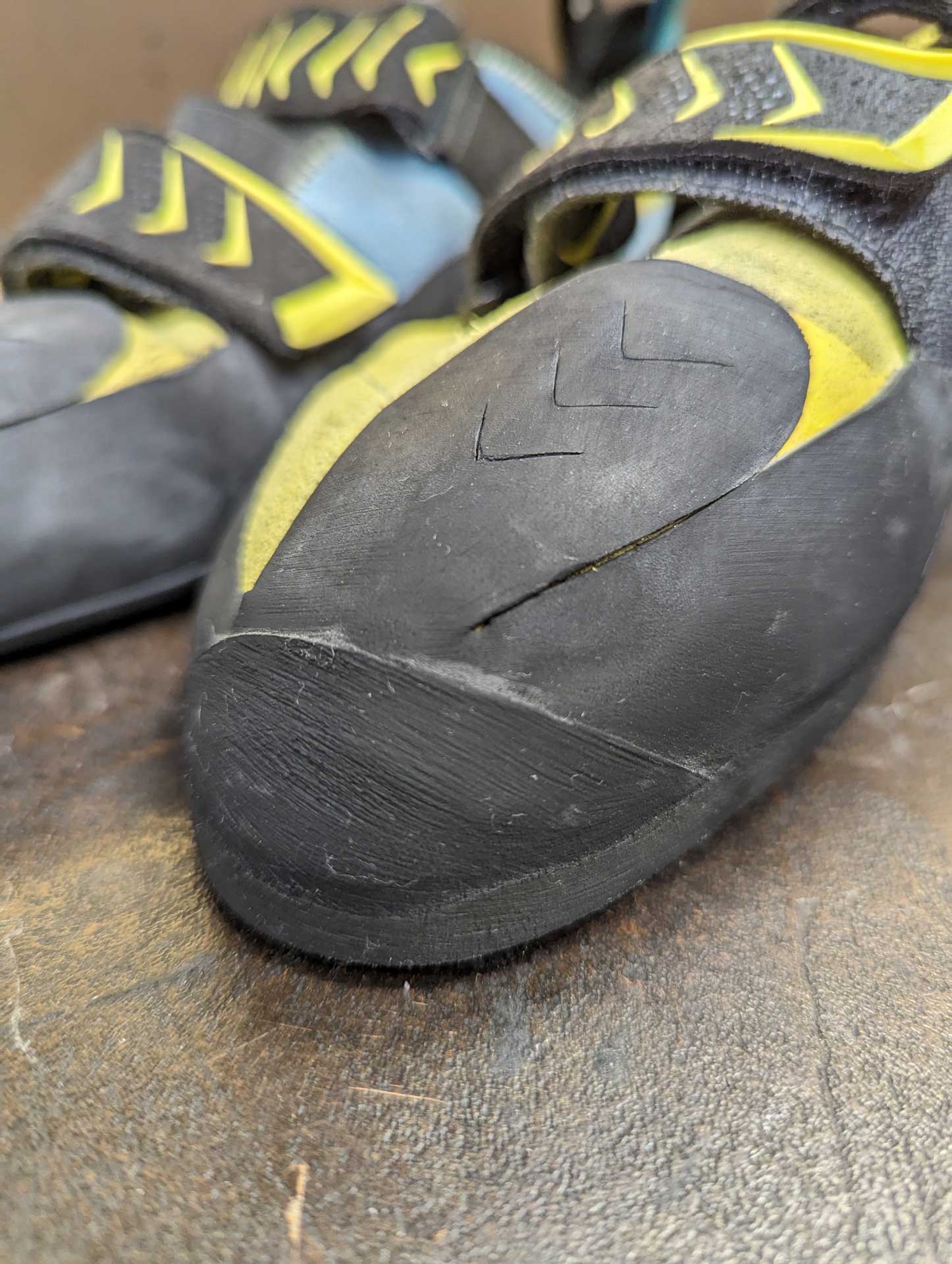
The key to successful resoling largely comes down to timing. The sweet spot is when the sole is showing significant wear but a hole hasn’t appeared. At this stage, an authorized resoler usually can completely restore the shoe’s performance. Even if small holes have developed, skilled resolers can patch them, although doing so may slightly compromise the shoe’s performance depending on a patch’s placement.
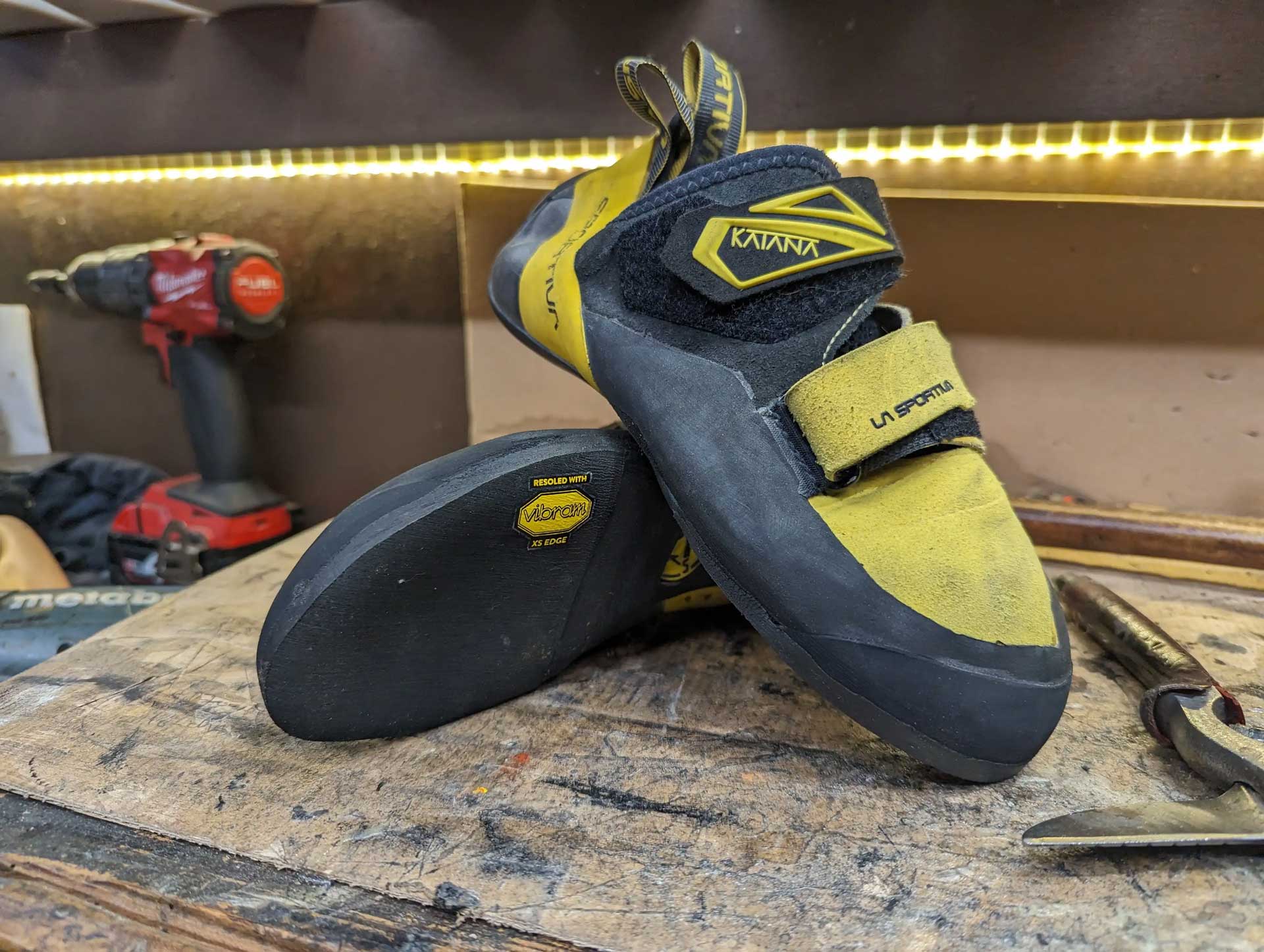
The magic happens when you work with authorized resolers who possess the specialized skills, knowledge and tools to do the job right. In some cases resoled shoes can actually perform better than their pre-worn state because you get fresh, grippy rubber combined with the comfort of a shoe that’s already molded to your foot. A well-resoled shoe may have no break-in period, just immediate performance and comfort that can give your climbing a boost.
If a climber is still concerned about not having shoes to use while waiting for that favorite pair to come back with fresh rubber, consider suggesting the two-pair strategy. Since the resoling process typically takes a few weeks, smart climbers often maintain two sets of shoes, so one can always be in rotation while the other is getting resoled. This approach ensures you have broken-in shoes underfoot and can prove more economical than constantly buying new pairs.

4. In addition to sustainability, resoling can show you care about your members, fostering community.
Supporting resoling isn’t only about sustainability, although that is an important factor; it can also be a smart business strategy that strengthens the climbing community at your gym.
The cost of new climbing shoes can be intimidating for newcomers and limit existing members’ progression. By helping connect them to resoling options, you’re providing an additional valuable service that can increase member stickiness. Climbers who can handle all their climbing and training needs, feel connected to a community, and take care of gear maintenance through one trusted facility are more likely to remain loyal, long-term members.
Members notice when gyms actively help them save money and get more value from their gear, while simultaneously contributing to a more circular economy. It’s a small gesture that can encourage them to keep coming back and generate powerful word-of-mouth marketing as well, helping expand the community at your gym.
By promoting resoling, you’re also planting seeds that can grow into broader sustainability thinking, with impacts that extend beyond your gym’s walls. Climbers who learn to value gear longevity and resource conservation in their shoe choices often extend this mindset to other gear decisions and lifestyle choices. It’s a cultural shift that can have benefits across the board, helping climbers to save money and get better-performing gear, the environment to benefit from reduced waste, skilled craftspeople to receive support for their specialized work, and the industry at large to embrace more sustainable practices.
5. Taking action is easier than you think, and you can get started today.
Another perk of resoling lies in its accessibility: You don’t need major infrastructure changes to get going and have an impact right away. All you need to do is partner with existing authorized resolers in your region or country to provide pick-up and drop-off services at your gym, reducing friction for members. Some resolers even offer bulk processing discounts for gym partnerships.
Several platforms around the world are already making these services more accessible. Below are a few examples:
- In North America, V12 Resole, New England Resoul and Ontario Resoles all offer pick-up and drop-off programs. On the Front Range of Colorado, Rock And Resole also handles approach shoes, running shoes and boots.
- In the United Kingdom, Llanberis Resoles offers a mail-in service for professional resoling.
- In the Netherlands, Resole.nl partners with certified local shoemakers to provide convenient drop-off and collection services. They also offer a resoling service for rental shoes at bouldering gyms.
- And in Scandinavia, Norway’s Pust Resoling Lab has drop-off and collection spots in climbing gyms.
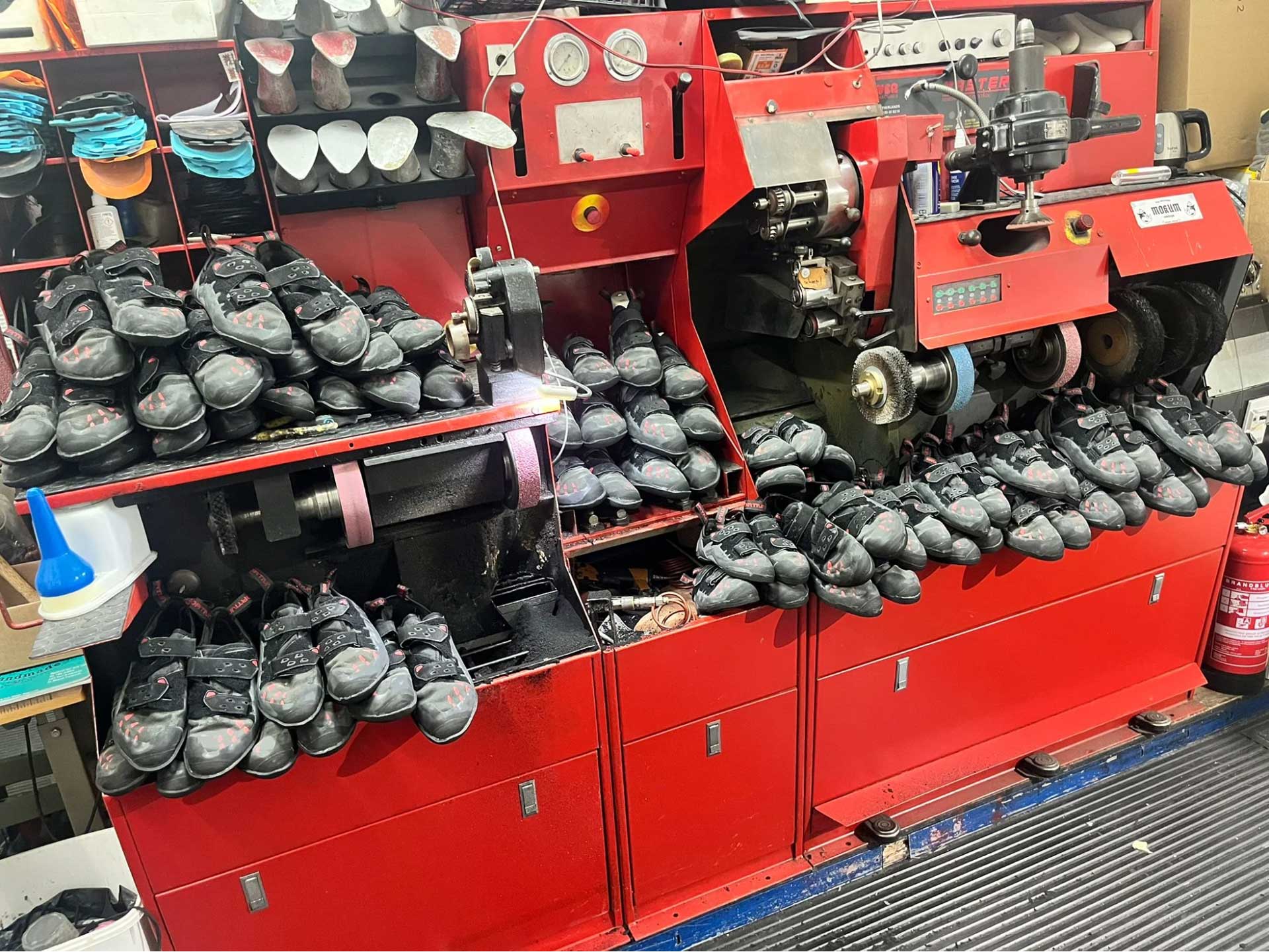
When identifying reputable, authorized resolers in your area, the emphasis on “authorized” cannot be overstated. Working with experienced professionals who specialize in climbing shoe resoling helps ensure quality results that maintain the performance standards climbers have come to expect. Poor resoling can indeed damage shoes, but skilled craftspeople consistently deliver results that restore the original performance of a shoe.
Once you’ve got a partnership with a resoler underway, consider featuring their work on your website and social channels, building trust and familiarity with the process among members. You could also host educational “resole evaluation” sessions, where experienced resolers assess members’ shoes and provide timing advice.
Remember that supporting resoling sends a clear message about your gym’s values: You care about climbers’ success, their financial wellbeing and our environmental impact. In a climbing community that increasingly values authenticity and stewardship, that’s exactly the kind of leadership that helps build lasting relationships and thriving businesses.