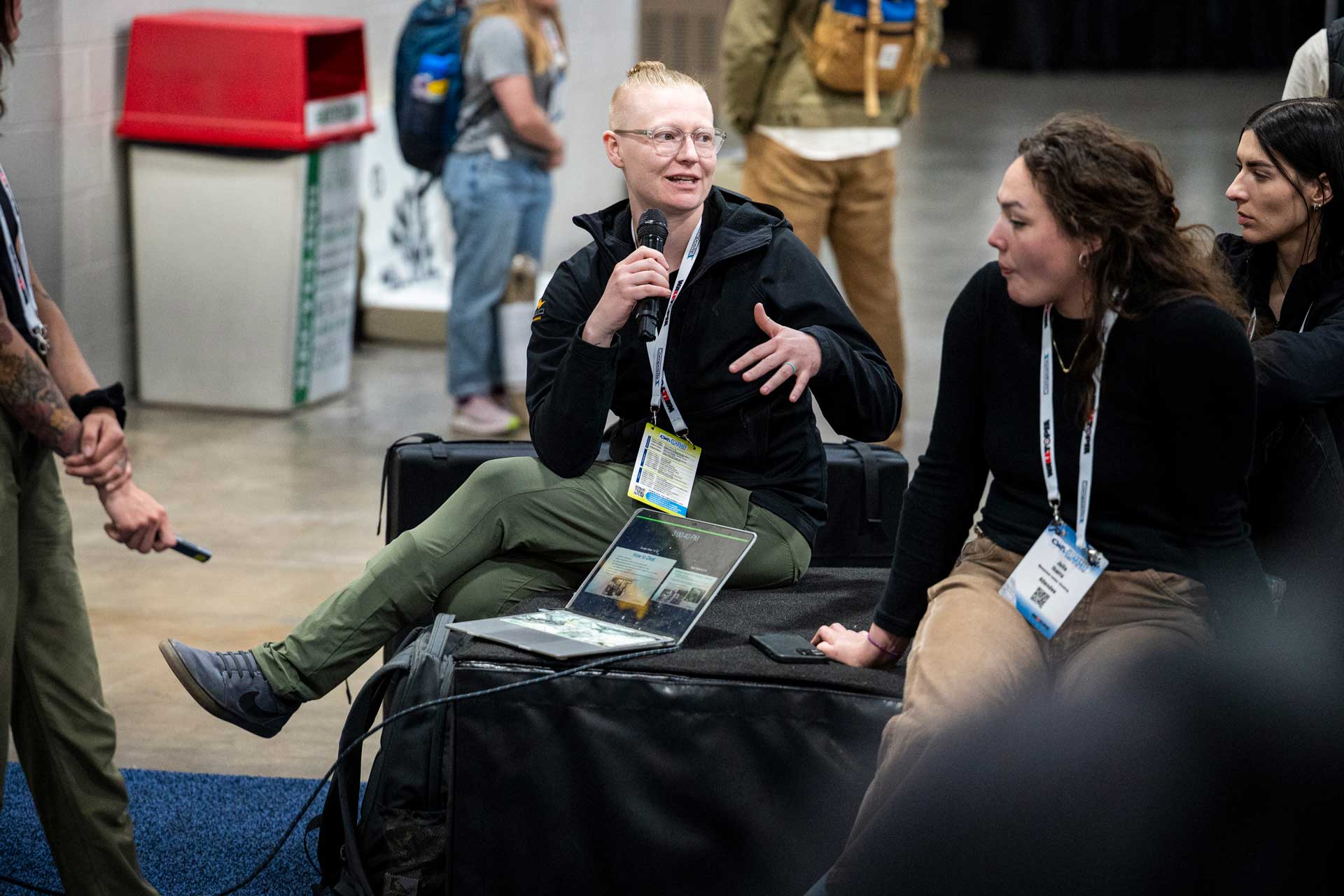
Running a modern indoor climbing gym now requires navigating a web of decisions that no single role fully controls.
Gym managers juggle staffing, safety, culture and margins. Routesetters work at the intersection of creativity, customer service and manual labor. Coaches balance athlete development with retention and burnout. Facilities also have retail managers, marketing directors, coordinators, specialists; each of these roles is highly specialized and increasingly interdependent.
That’s where the CWA Summit plays a quieter but critical role: not by delivering answers, but by helping people make sense of complexity together.
When experience alone stops being enough
Erik Durgin, General Manager at Momentum, has been managing climbing gyms for more than 15 years. Despite that depth of experience, he continues to encourage more staff to attend the CWA Summit each year.
“We send department managers every year,” Durgin said. “And we send more and more people. It’s great for professional development, and it expands their understanding of the gym industry.”
Research on organizational sense-making from the University of Michigan, led by Karl Weick, shows that as systems become more complex, individual judgment alone becomes less reliable. Leaders in these environments depend on shared interpretive frameworks to understand risk, align decisions and adapt to uncertainty. Studies of high-complexity organizations, ranging from hospitals to aviation companies, have found that leaders increasingly rely on shared mental models to interpret uncertainty and align judgment.
By hearing how peers frame the same constraints, gym leaders can recalibrate their own assumptions and avoid relying solely on personal experience.
In other words, the CWA Summit helps attendees answer a foundational question: Is this problem just ours, or is it systemic? Exposure to how other gyms frame the same pressures helps operators adjust their mental models beyond their own experience.
Orientation matters as much as information
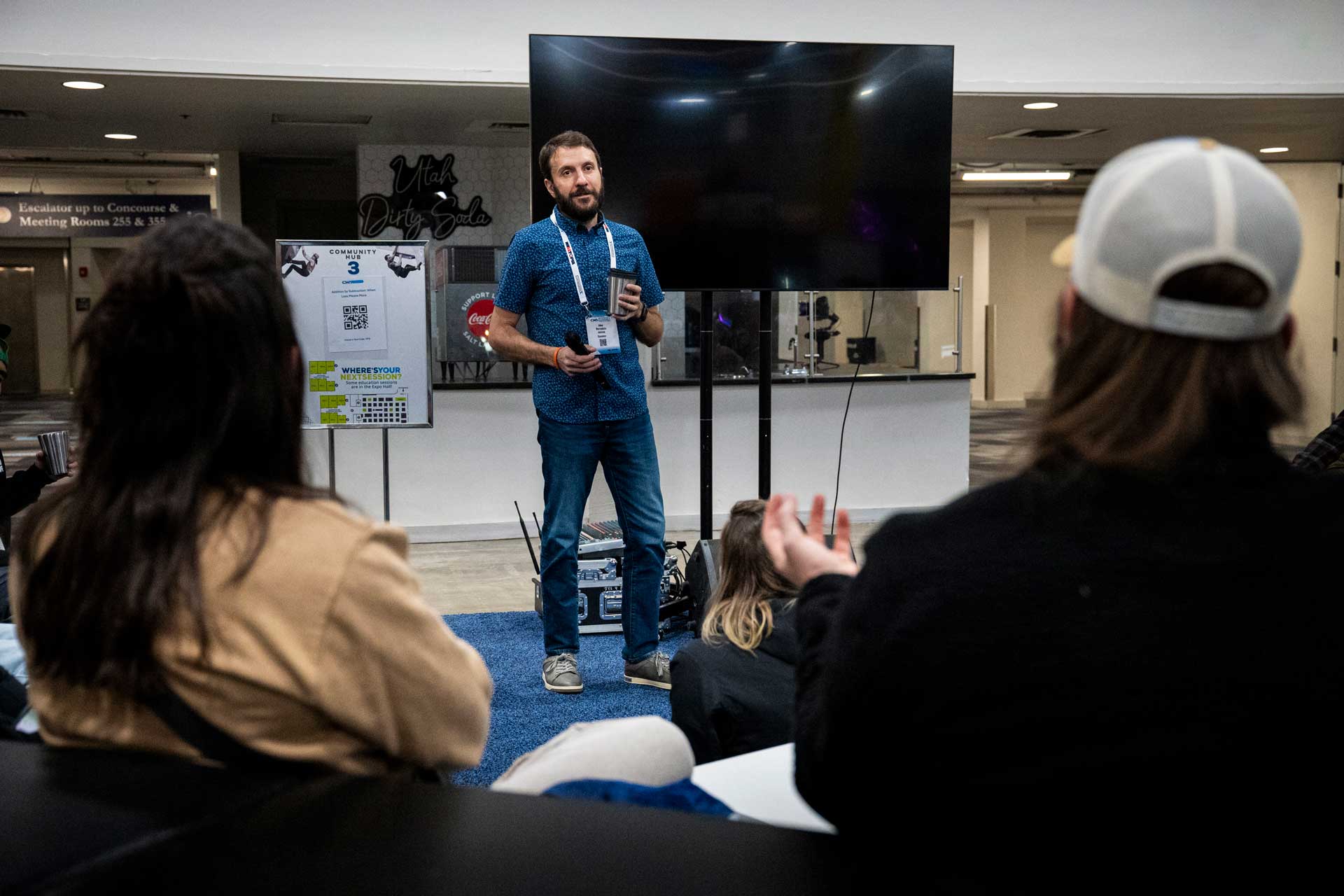
Alex Bernstein, CEO of Ascend, first attended the CWA Summit nine years ago. Since then, Ascend has grown to three gyms, and Bernstein now comes to the conference with multiple staff members when it is held locally.
“I attend the [CWA] Summit to be a sponge,” Bernstein said. “But what I really value are the smaller format sessions.”
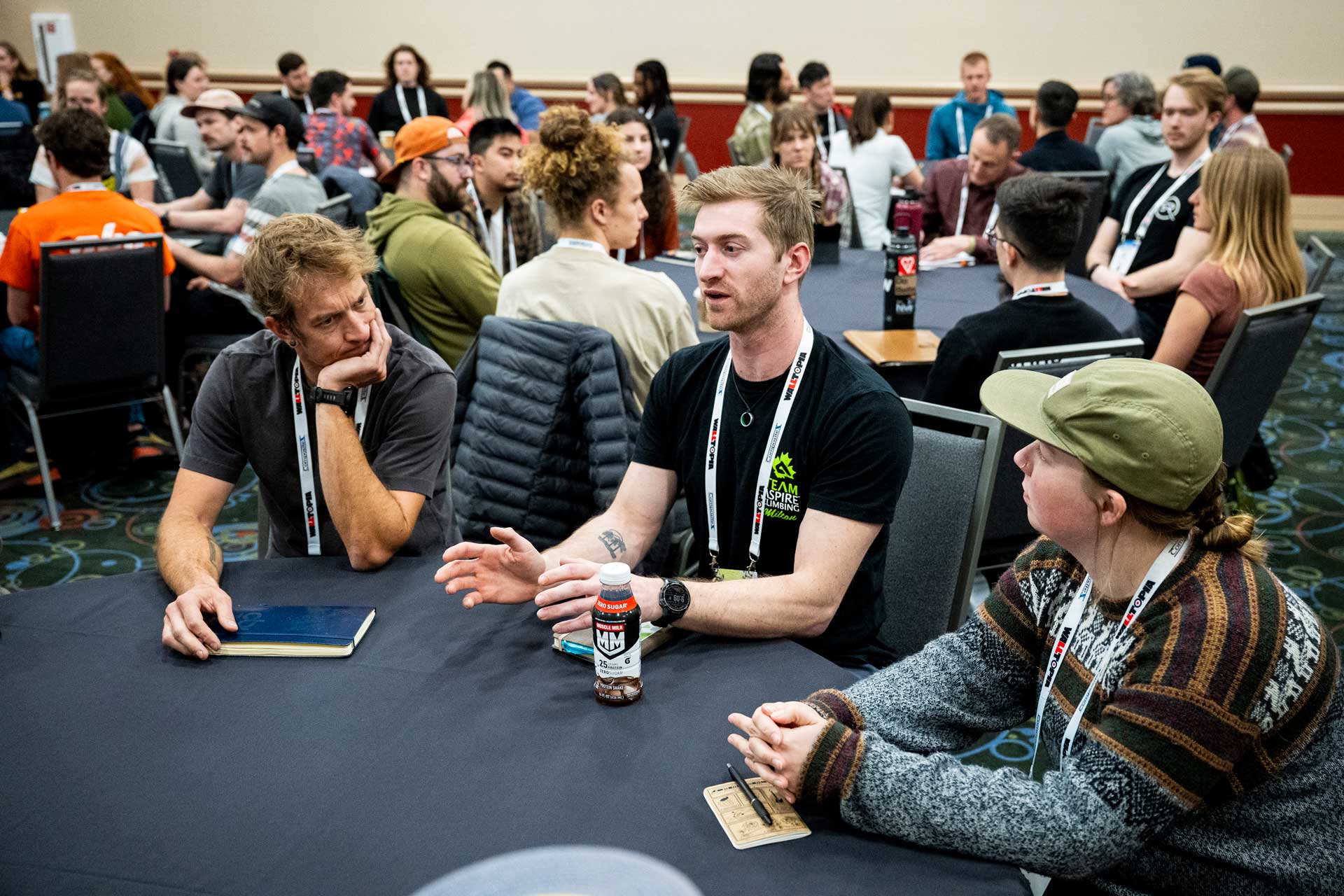
As an educator in a Community Hub Session last year, Bernstein experienced the format from both sides. He described it as a space between formal presentation and informal conversation—one that encourages collaboration rather than performance.
“I’m best engaged in a small setting,” he said. “I got to listen to other experienced gym managers, routesetters, and people in other roles, and that inspired me to bring ideas back to my gyms.”
Cognitive science helps explain why that structure works. Weick’s study on organizational sense-making also shows that people understand complex systems by comparing experiences and constructing meaning collectively. Hearing how peers frame similar challenges helps leaders refine their mental models and navigate uncertainty more effectively. That refinement can reduce decision fatigue; problems feel more navigable not because they disappear, but because they’re placed in context.
Interested in leading a Community Hub Session? Educator proposals are now open for industry members who want to guide peer-driven conversations at the CWA Summit.
The value of confronting discomfort together
Bernstein also pointed to another function of the CWA Summit: surfacing hard conversations.
“The [CWA] Summit forced us to participate and confront topics that may be uncomfortable,” he said, “and validated our concerns that others feel too.”
In a Harvard University study on team dynamics, researchers observed how this kind of shared discomfort is linked to psychological safety. When people see others naming the same tensions—whether around staffing, safety thresholds or program scope—uncertainty becomes a collective experience rather than an isolating one.
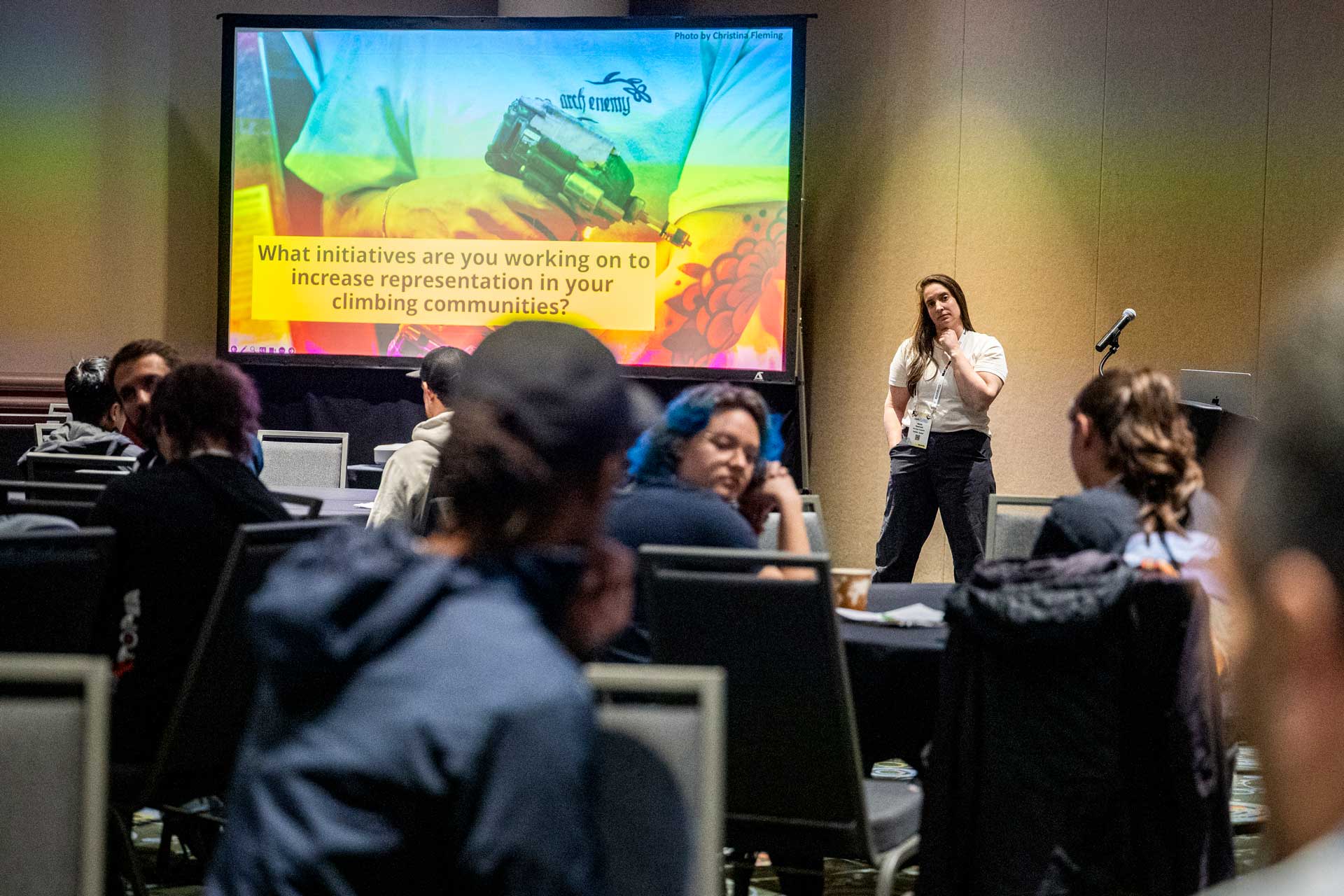
In-person settings can amplify this effect. Physical presence in a shared space can increase trust and openness, particularly when ambiguous or emotionally charged topics are being discussed. Facial cues, informal side conversations, and unstructured time all help people interpret nuance.
That difference matters in an industry where many decisions don’t have clear right answers.
A shared map for a shared terrain
The CWA Summit doesn’t flatten differences between gyms. If anything, it makes those differences clearer. But clarity is one of the key ingredients that allows people to navigate complexity without becoming overwhelmed.
For attendees, the value lies in realizing where their experience fits within a broader landscape. Hearing how others interpret similar challenges gives leaders reference points they can return to months later, often without realizing it.
Bernstein described the in-person aspect as the most valuable part of the CWA Summit. “It makes the climbing industry feel smaller,” he said, “and it pushes you out of your comfort zone.” When working in fields that continue to professionalize and diversify, that shared orientation around our experiences and objectives is no small thing.
And in a complex industry, knowing where you stand is often the first step toward deciding where to go next.
This article is a sponsored story and does not necessarily represent the views of the Climbing Business Journal.